


































Updated July 10, 2026

Skilled trades in West Virginia carry their risk to the job site each morning: ladders, vehicles, client property, and physical work. West Virginia adds a legal floor here, because workers compensation is required from the first employee [1]. Flood exposure in West Virginia matters here because standard property coverage typically excludes rising water. The sections below break down those cost drivers and the coverage that answers each.
Recommended Coverage for Skilled Trades in West Virginia
Skilled Trades businesses face unique risks that require specific coverage types. Here are the policies most skilled trades operations need:

General Liability
Essential coverage for every business, protect against third-party bodily injury, property damage, and advertising claims.

Workers Compensation
Help cover your employees' medical expenses and lost wages for work-related injuries and illnesses.

Commercial Auto
Protect your business vehicles and drivers with comprehensive commercial auto coverage.

Inland Marine
Protect tools, equipment, and goods in transit or stored at locations away from your primary premises.

Commercial Umbrella
Extend your liability limits beyond your primary policies for extra protection against catastrophic claims.
Skilled Trades Insurance Overview in West Virginia
Your skilled trades business in West Virginia has to match how you actually work. Jobsite visits, tools in transit, and client-site projects all create different demands on your policy. Trades contractors often move between homes, commercial spaces, and mixed-use buildings where client site insurance certificates and contract stipulations can come up fast. State licensing rules, commercial vehicle registration, and local permit alignment also shape what you need on paper before you pull onto a job site. A policy that fits a one-person operation may not fit a growing crew, a multi-vehicle shop, or a contractor who carries ladders, meters, and portable equipment every day.
Why Skilled Trades Businesses Need Insurance in West Virginia
Trades businesses here often work in places where small mistakes can turn into third-party claims, property damage, or legal defense costs. A plumbing repair in a home, an HVAC service call on a rooftop, or electrical work in a commercial space can create real exposure if a customer's property is damaged or if someone gets hurt at the jobsite. General liability is often a core starting point because it may help with bodily injury, property damage, advertising injury, settlements, and legal defense tied to covered claims. West Virginia's overall climate risk is high, with very high flooding risk, high landslide risk, and moderate severe storm and winter storm exposure. That matters when your work involves equipment in transit, mobile property, or service vehicles traveling across hilly, weather-affected routes. If tools, ladders, or materials are damaged or stolen, inland marine coverage can be an important consideration. Workers compensation is also key in West Virginia because it is required for businesses with at least one employee, with limited exemptions for sole proprietors, partners, and some agricultural workers. For crews that handle installation, maintenance, or field service, it may help address medical costs, lost wages, and rehabilitation tied to workplace injury or occupational illness. Commercial auto is another common need when vans, trailers, or employees travel between job sites. For businesses with larger exposures, umbrella coverage and excess liability may provide extra financial cushion if a major claim exceeds your standard policy limits.
West Virginia requires workers' comp for businesses with employees (exemptions may apply: Sole proprietors; Partners). Non-compliance can result in fines and personal liability for owners. Commercial auto minimums are $25,000/$50,000/$25,000.
Key Risks for Skilled Trades Businesses
Each of these risks can lead to claims that cost thousands, or more. Make sure your policy addresses every one:
- On-the-job injuries
- Property damage at client sites
- Tool and equipment theft
- Faulty workmanship claims
- Vehicle accidents during service calls
Cost Factors for Skilled Trades Businesses in West Virginia
Skilled trades insurance cost in West Virginia varies based on the work you perform, the number of employees, annual payroll, vehicles, and the value of tools and equipment you carry. A solo electrician doing mostly service calls may have different pricing than a plumbing contractor with multiple crews or an HVAC business working on rooftops, installations, and emergency maintenance. In 2024, the state's premium index was 96, with 240 insurers active in the market. That score sits just below the national baseline of 100, which means your premiums here may run slightly lower than in many neighboring states. About 2% of business establishments are classified as small. In practical terms, that means you are operating in a market where local reputation and proof of coverage can set you apart from larger competitors. Charleston, Huntington, and Morgantown are among the top cities for industry employment. Businesses in those areas may need client site insurance certificates, commercial vehicle registration details, and coverage that fits contract terms. As a baseline, general liability, the coverage nearly every skilled trades business carries, averages about $65 to $210 per month in West Virginia, a bit above the national average. That range reflects the reality that your final premium depends on payroll, annual revenue, claims history, and the specific risk class of your work.
Skilled Trades businesses typically carry several separately priced policies. The ranges below are typical figures for West Virginia for each line, except workers compensation, which is rated per $100 of payroll; a quote prices each one against your own operations.
| Coverage | Typical range | What moves your price |
|---|---|---|
| General Liability Insurance | $65 - $210 per month | Industry and risk classification, annual revenue, number of employees |
| Workers Compensation Insurance | $0.75 - $2.74 per $100 of payroll | Employee classification codes, total annual payroll, experience modification rate |
| Commercial Auto Insurance | $160 - $440 per month | Fleet size and vehicle types, driver records and experience, coverage limits and deductibles |
| Inland Marine Insurance | $15 - $70 per month | Total insured value of the scheduled property, type and age of the equipment, where it is stored and how far it travels |
| Commercial Umbrella Insurance | $45 - $150 per month | Umbrella limit requested, limits carried on the underlying policies, loss history on those underlying policies |
Prices shown are general estimates, not guaranteed rates or quotes. Your actual premium will depend on the insurer, coverage selected, business details, location, claims history, and other underwriting factors. Learn about our pricing methodology.
State Requirements
Insurance Regulations in West Virginia
Key regulatory requirements for businesses operating in WV.
Regulatory Authority
Workers' Compensation InsuranceRequired
Required for employers with 1+ employee.
Exempt categories
- Sole proprietors
- Partners
- Some agricultural workers
Commercial Auto Minimum Liability
$25,000/$50,000/$25,000 (bodily injury per person / per accident / property damage)
Source: West Virginia Department of Insurance, U.S. Department of Labor
What Drives Skilled Trades Insurance Costs in West Virginia
Damage at the client's site
Client-site damage claims are the routine trade loss. General liability insurance pricing follows the trade's risk class, crew size, and claims history.
Tools, trucks, and travel
Service calls put crews on the road daily, which makes commercial auto insurance a core line. Tool theft typically needs inland marine insurance rather than a base property policy.
Flood coverage
Flood damage typically sits outside standard commercial property policies, so ground-floor stock and equipment need a separate answer. That separate answer is a dedicated flood policy, through the National Flood Insurance Program or a private market, priced off the property's flood zone and elevation.
Payroll and workers compensation
Average pay in this sector runs $34,400 a year in West Virginia [2], which matters because workers compensation premiums are computed on payroll. The rate applied to that payroll varies by class code, so how each role is classified matters as much as headcount.
Climate Risk Profile
Natural Disaster Risk in West Virginia
Understanding climate-related risks helps determine appropriate insurance coverage levels.
Flooding
Very High
Landslide
High
Severe Storm
Moderate
Winter Storm
Moderate
Expected Annual Loss from Natural Hazards
$420M
estimated economic loss per year across West Virginia
Source: FEMA National Risk Index
Insurance Tips for Skilled Trades Business Owners in West Virginia
When you are ready to request a quote, gather a few details first. List every service you perform, including repairs, installations, maintenance, and emergency calls, so your general liability policy reflects your full operation.
If you work as an electrician, plumber, or HVAC technician, ask how your policy responds to property damage at client sites, bodily injury, and legal defense tied to covered third-party claims.
Schedule ladders, meters, portable equipment, and other mobile property under inland marine coverage so a stolen or damaged tool does not come out of pocket.
Review workers compensation insurance if you have employees, since West Virginia requires it for businesses with at least one employee, with limited exemptions for sole proprietors, partners, and some agricultural workers.
Make sure commercial auto insurance matches your vans, trailers, and service-call driving between Charleston, Huntington, Morgantown, and surrounding job sites.
Check whether your coverage limits are high enough for larger installations, rooftop work, or commercial projects where a single loss could become a catastrophic claim.
Ask about umbrella coverage if your contracts or project size create exposure above your underlying policies.
Keep copies of client site insurance certificates, commercial vehicle registration, and contract documents ready before bidding or starting work.
Get Skilled Trades Insurance in West Virginia
Enter your ZIP code to compare skilled trades insurance rates from top carriers.
Business insurance starting at $25/mo
Skilled Trades Business Types in West Virginia
Find insurance tailored to your specific skilled trades business. Select your business type for coverage recommendations, pricing, and quotes:

Alarm Contractor Insurance
Request an alarm contractor insurance quote built around installation, service, and client contract needs. Coverage can help with faulty-install claims, on-site damage, and other business risks.

Cleaning Service Insurance
Get a cleaning service insurance quote built for crews working in homes, offices, and other client sites. Compare coverage for liability, employee protection, and service vehicles.

Tree Service Insurance
Get a tree service insurance quote built for trimming, removal, and arborist work. Compare liability, workers comp, auto, and equipment coverage options.

Landscaping Insurance
Get a landscaping insurance quote for client property, tools, vehicles, and jobsite exposures. Choose coverage that fits lawn care, tree work, and mobile crews.

HVAC Technician Insurance
Get an HVAC technician insurance quote built around your trucks, tools, jobsites, and crew. Compare coverage options for liability, workers comp, and commercial auto.

Plumbing Insurance
Get a plumbing insurance quote built around your jobs, tools, trucks, and crew. Compare plumbing contractor insurance options for local plumbing businesses.

Pest Control Insurance
Get pest control business insurance built for applicator liability, property damage, and route-based operations. Request a pest control insurance quote with the coverages your contracts may require.

Locksmith Insurance
Get a locksmith insurance quote for a lock service business that needs liability, premises, and tools protection. Review coverage for shop-based and mobile work before you apply.

Welding Business Insurance
Get a welding business insurance quote built around your shop, job sites, equipment, and work type. Coverage can be tailored for fire risk, property damage, and work-related injuries.

Appliance Repair Insurance
Get an appliance repair insurance quote built around service errors, property damage, and equipment liability. Coverage can be tailored for solo technicians and repair shops.

Carpet Cleaning Insurance
Get a carpet cleaning insurance quote built for rug discoloration, upholstery work, equipment issues, and day-to-day business protection. It’s a practical fit for local carpet cleaners serving residential and commercial clients.

Handyman Insurance
Get a handyman insurance quote for home repair work that can involve property damage, slip and fall claims, tools, and vehicle use. Coverage options vary by policy and job type.

Pressure Washing Insurance
Get a pressure washing insurance quote built for residential and commercial jobs. Compare coverage for property damage, surface etching, equipment, and more.

Moving Company Insurance
Get a moving company insurance quote built around your trucks, crews, and customers' belongings. Compare coverage needs before you request pricing.

Septic Service Insurance
Get coverage options built for septic pumping and installation work, including contamination liability, equipment breakdown, and property damage. Request a septic service insurance quote based on your services and location.

Garage Door Installer Insurance
Garage door work can involve spring accidents, property damage, and costly jobsite mistakes. Get garage door installer insurance coverage built for installation and repair businesses.

Snow Plowing Contractor Insurance
Get coverage built for winter weather operations, from parking lots and driveways to municipal contracts and roadside service. A snow plowing contractor insurance quote helps you compare protection for property damage, injuries, and vehicle accidents.

Lawn Care Contractor Insurance
Get a lawn care contractor insurance quote built for local lawn care contractors working on client properties across your service area. Compare coverage for property damage, equipment theft, vehicle use, and employee protection.

Paperhanger Insurance
Get a paperhanger insurance quote built for wallpaper installers who work in occupied homes, offices, and retail spaces. Coverage can help with liability, property damage, and client-site claims tied to adhesive, moisture, and prep work.

Floor Waxing Service Insurance
Floor waxing crews work around active businesses, polished surfaces, and valuable interiors. A tailored floor waxing service insurance quote can help protect against slip hazards, property damage, and day-to-day jobsite claims.

Garbage Collection Service Insurance
Get a garbage collection service insurance quote built for waste hauling operations. Compare commercial auto, workers compensation, general liability, and optional umbrella protection.

Janitorial Service Insurance
Get janitorial service insurance built for cleaning crews working in offices, facilities, and client properties. Compare coverage options and request a janitorial service insurance quote fast.

Window Cleaning Service Insurance
Compare coverage built for ladders, lifts, tools, vehicles, and client jobsite requirements. Request a window cleaning service insurance quote that fits your operation.
Skilled Trades Insurance by City in West Virginia
Insurance rates and requirements can vary by city. Find skilled trades insurance information for your area in West Virginia:
FAQ
Skilled Trades Insurance FAQ in West Virginia
A typical quote package bundles general liability, workers compensation if you have employees, commercial auto, and inland marine coverage into one portfolio. Depending on the scope of your work, umbrella coverage may also be worth reviewing for larger projects.
Skilled trades insurance cost in West Virginia varies based on your services, payroll, number of vehicles, tools, and overall liability exposure. A residential service business may price differently than a contractor handling commercial installations or rooftop work.
Workers compensation insurance is required for businesses with at least one employee, with limited exemptions for sole proprietors, partners, and some agricultural workers. Other requirements can vary by state licensing rules, city permit rules, contract terms, and client site insurance certificates.
Coverage varies by policy. Inland marine coverage is commonly used for tools and portable equipment, while commercial auto is used for service vans, trailers, and driving between job sites.
General liability is often used to help with bodily injury, property damage, advertising injury, settlements, and legal defense tied to covered third-party claims. Exact terms and limits vary by policy.
If you have employees, West Virginia generally requires workers compensation insurance. How subcontractors are treated can vary, so it is important to review your crew setup and confirm how each worker is classified.
Share every service you perform, the cities you work in, your vehicle and tool details, payroll, and any contract stipulations. That helps a quote reflect your actual West Virginia operations across places like Charleston, Huntington, and Morgantown.
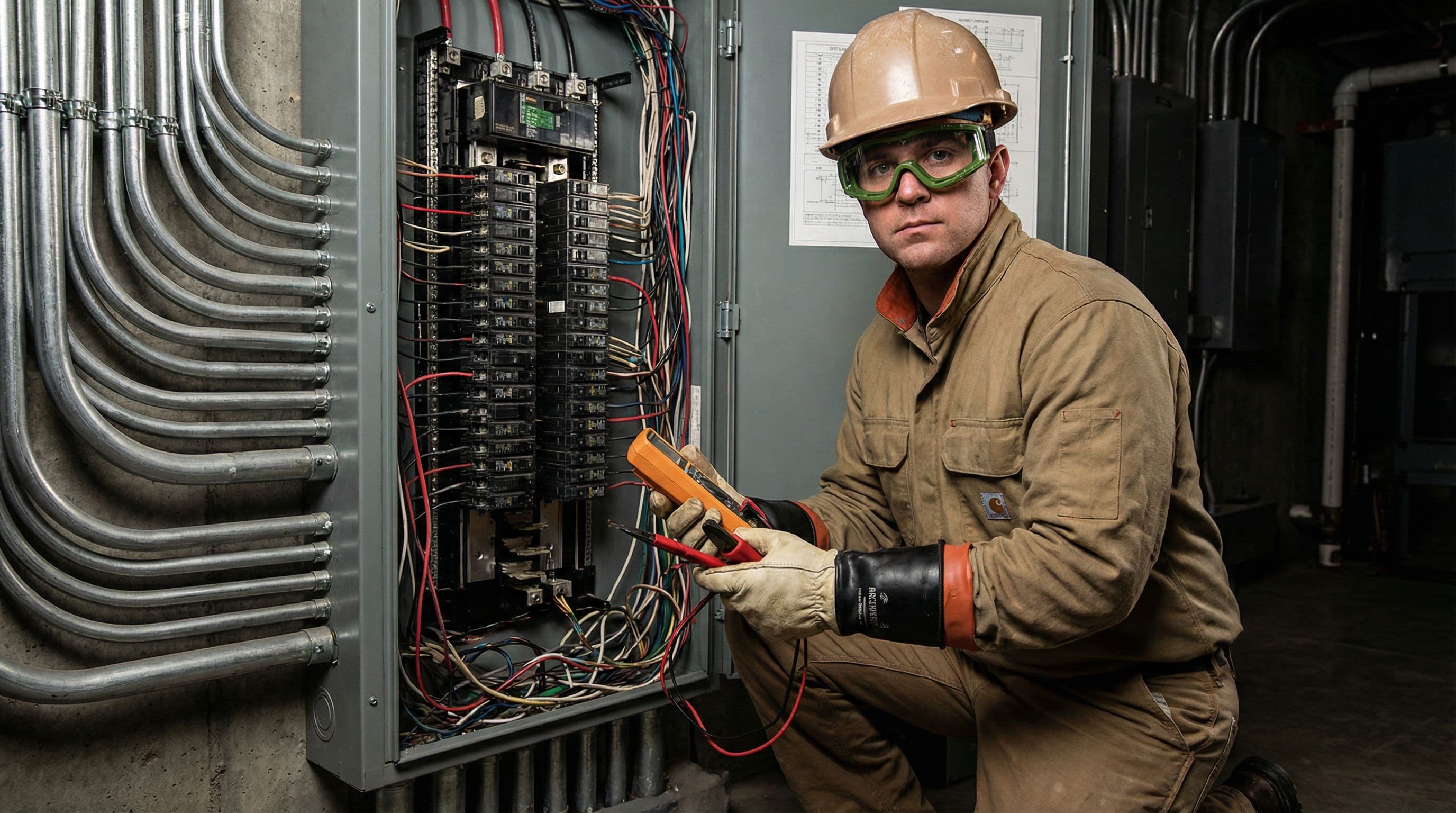
General liability and workers compensation form the base for most electrical contractors, with commercial auto added once service vans are in daily use. Inland marine coverage matters when expensive testing equipment travels between jobs, and an umbrella policy enters the picture when commercial contracts demand higher limits than your primary policies carry.
Sources
- 1.West Virginia Offices of the Insurance Commissioner(West Virginia requires workers compensation coverage from the first employee.)
- 2.BLS Quarterly Census of Employment and Wages (2024)(Trade workers in West Virginia earn an average of $34,400 a year.)