Updated July 16, 2026

On-Hook Towing Insurance in Los Angeles
The decision usually lands here when you are about to sign a yard lease near Downtown, submit vendor paperwork for a private property account, or line up financing on another truck and the other side asks for proof that your towing operation can handle customer vehicles while they are in transit. That is where on hook towing insurance in Los Angeles becomes a practical buying issue, not a box to check. Local operators often move between dense retail corridors, medical campuses, office properties, and mixed residential streets in the same day, so the question is less whether you tow and more what kinds of vehicles, properties, and handoff points your contracts put in front of you. Los Angeles County has 304,305 business establishments, which means more property managers, fleet clients, and commercial accounts are likely to scrutinize your certificate before they let you start work. If your book includes private property towing, light-duty recovery, or vendor work for larger accounts, take time to review how your on-hook limit, service radius, and any vehicle-type restrictions line up with the jobs you are actually accepting before you send over proof of coverage.
On-Hook Towing Insurance Risk Factors in Los Angeles
Los Angeles's top risk factors include Wildfire risk, Drought conditions, Power shutoffs, and Air quality events.
California has a very high climate risk rating. Top hazards: Wildfire (Very High), Earthquake (Very High), Drought (High), Flooding (High). The state's expected annual loss from natural hazards is $9.8B, which influences on-hook towing insurance premiums and may affect coverage availability in high-risk areas.
What On-Hook Towing Insurance Covers
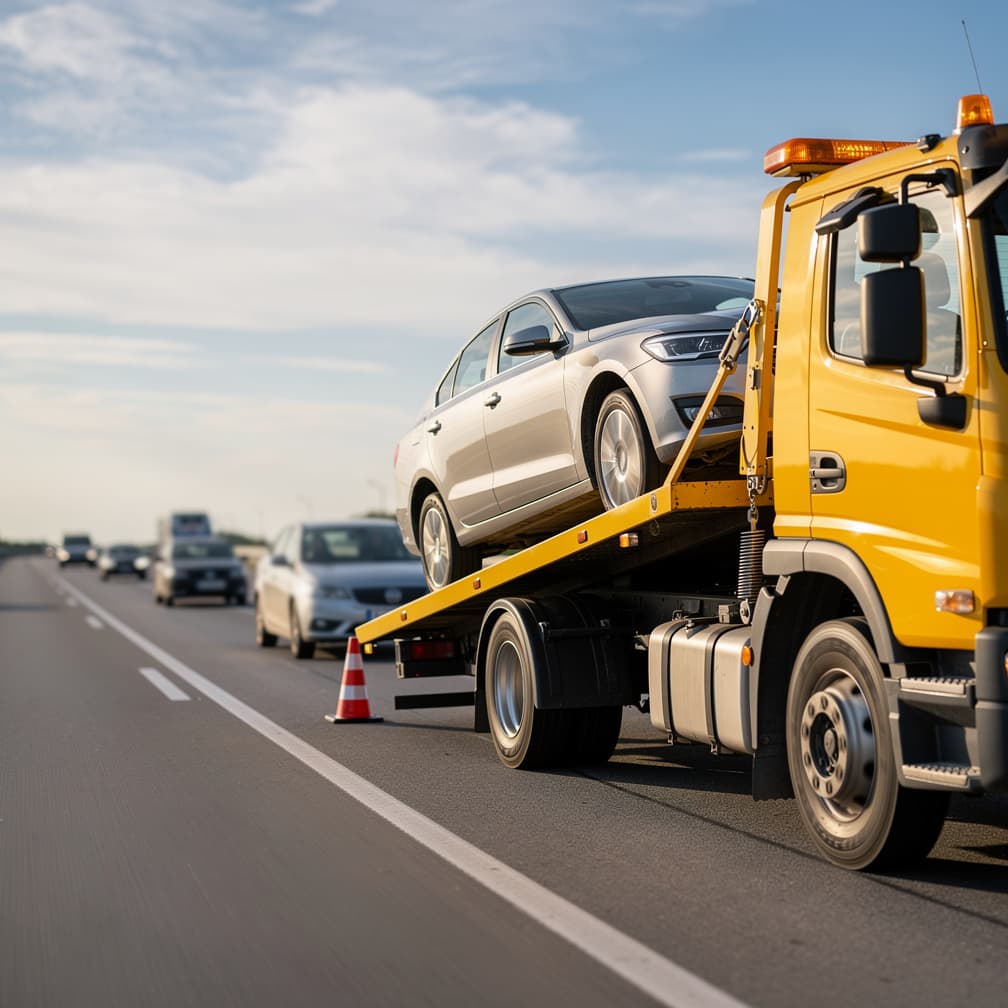
In this state, coverage review often means looking closely at urban pickups with tight curb access, freeway shoulder work with limited room to load, mountain or canyon routes where grade and braking matter, and longer transports between metro areas where a small loading issue can turn into a larger claim by the time you arrive.
For many towing operations, the important review points are the vehicle types you accept, the equipment you use to move them, and the handoff points where responsibility can be disputed. If you tow low-clearance cars, luxury vehicles, motorcycles, electric vehicles, or heavier commercial units, ask how those exposures are treated. If you run both flatbeds and wheel-lifts, make sure the quote reflects both. If your drivers perform winching, recovery, dealer transfers, impounds, or police-directed tows, ask whether those job types change underwriting appetite or require added review.
Regional conditions also make route and hazard planning part of coverage review. Wildfire zones, flood-prone streets, earthquake-related roadway damage, and mudslide areas can complicate access, loading, and unloading. Those conditions do not change every policy the same way, so you should ask how claim handling works if a loss involves evacuation conditions, blocked roads, or unstable surfaces. Before committing, compare exclusions, deductibles, reporting timelines, and any requirements for photos, dispatch logs, or signed condition reports. That gives you a policy you can actually use when a customer disputes when damage occurred.
Coverage Included

Collision on Hook
Covers damage to towed vehicles from collisions during transport.

Comprehensive on Hook
Covers theft, fire, and weather damage to vehicles being towed.
Loading & Unloading
Covers damage during the process of loading and unloading vehicles.

Winching Coverage
Covers damage to vehicles during winching and recovery operations.

Multiple Vehicle
Covers all vehicles on multi-car carriers and rollback flatbeds.
Industries & Insurance Needs in Los Angeles
County business mix is part of the buying conversation here because it shapes the kinds of accounts a tow company may pursue. In Los Angeles County, the largest establishment shares are professional, scientific, and technical services at 14%, health care and social assistance at 12.4%, and retail trade at 9.6%, so a local towing book can lean toward office properties, medical facilities, and shopping sites that expect fast documentation and clear vendor compliance. Those accounts often care about how a vehicle is handled from hookup through drop-off, not just whether you carry a policy. If you want commercial property work, ask for specimen contract language before you renew and compare it against your on-hook terms, covered vehicle classes, and any exclusions tied to storage, impound, or subcontracted work.
What Makes Los Angeles Different
What changes the calculus here is how many contracts you juggle at once. In a market tied to large property portfolios, medical sites, retail locations, and office users, you are often not buying this coverage only for roadside work. You are buying it so your paperwork stands up to repeated review by landlords, property managers, fleet clients, and finance partners who want the same business name, addresses, and limits to match across every document. That pressure is stronger in a county with a very large commercial base, because there are simply more business relationships where a certificate problem can slow onboarding or suspend work. Treat your policy review the way you would a contract review. Confirm named insured details, check whether your on-hook limit fits the vehicles you actually move, and make sure any endorsements you rely on are ready before a client asks for updated proof.
Our Recommendation for Los Angeles
Start with your job mix, not a generic towing application. If you handle private property calls around retail centers, office buildings, or medical campuses, ask whether your current on-hook setup matches the vehicle values and operating conditions those accounts create. When you add another truck or change yards, sit down with every address and entity name on your certificates and trace each one through your lease, lender file, and vendor packets so nothing bounces over a mismatch. Los Angeles households report median income of $80,366, meaning a damaged or lost vehicle is more likely to trigger a serious dispute than a quick handshake settlement. That figure does not set your premium, but it is a reason to look hard at your deductibles, claims reporting procedures, photo documentation habits, and whether your limit still fits the vehicles you are willing to hook. Before you renew, ask for a quote that is built around how you actually dispatch and what your contracts require.
Get On-Hook Towing Insurance in Los Angeles
Enter your ZIP code to compare on-hook towing insurance rates from carriers in Los Angeles, CA.
Business insurance starting at $25/mo
FAQ
Frequently Asked Questions
Los Angeles commercial accounts often review more than a basic certificate because your work involves customer vehicles while they are being towed. Because vendor onboarding can be document-heavy, it pays to confirm limits, named insured details, and endorsements before submitting paperwork.
Yard leases can trigger an insurance review before you move trucks or start storing vehicles. Check that your business name, operating address, and on-hook terms match the lease packet, then ask whether the landlord wants specific certificate wording or additional insured treatment.
Los Angeles County business patterns matter because office, health care, and retail establishments make up large shares of local commercial sites. If those are your target accounts, ask for a quote that reflects your actual vehicle types, service locations, and contract language.
Los Angeles has a median household income of $80,366, so a vehicle you tow may be one of the owner's largest personal assets and a damage claim can escalate fast. That makes it worth checking whether your on-hook limit and documentation process still fit the vehicles you are willing to move.
Landlords, motor clubs, public agencies, dealers, and lenders often ask for proof before they approve yard space, vendor status, rotation access, or truck financing. Bring those contract requirements into the quote process so the policy can be reviewed against what you must show.
Yes, and that regulation works in your favor. It means you have a right to clear policy documents, a formal complaint process, and straightforward claim handling rules. Use those protections by reading exclusions carefully and asking questions about claim steps before committing to coverage.
Pricing can change with your service mix, territory, vehicle types, and documentation practices. Freeway recoveries, mountain routes, parking structure work, and specialty vehicles can all increase claim severity potential, so your quote should reflect the jobs you actually accept.
Contracts often do affect how you should review this coverage, because public agency rotations and impound work can require specific proof, limits, or wording. Provide those documents before quoting so the policy is matched to the contract, not guessed at later.
Sources
- 1.U.S. Census Bureau, County Business Patterns, Los Angeles County(Los Angeles County has 304,305 business establishments, so property managers, fleet clients, and commercial accounts can require cleaner certificates and tighter contract review before they let you start work.; In Los Angeles County, the largest establishment shares are professional, scientific, and technical services at 14%, health care and social assistance at 12.4%, and retail trade at 9.6%, so a local towing book can lean toward office properties, medical facilities, and shopping sites that expect fast documentation and clear vendor compliance.)
- 2.U.S. Census Bureau, ACS 5-Year Estimates, table B19013(Los Angeles households report median income of $80,366, so many customer vehicles you tow may represent meaningful personal assets and disputes can escalate quickly after a damage allegation.)
Updated July 16, 2026