Updated July 16, 2026

On-Hook Towing Insurance in San Diego
Property managers for apartment communities, lenders financing wreckers, hospital vendors, and private parking operators often want proof that your towing operation can respond if a vehicle is damaged while attached to your truck. For on hook towing insurance in San Diego, satisfying them usually means current certificates, business details that match your permits and contracts, and limits that fit the mix of private property, roadside, and fleet work you actually accept. That review matters here because your drivers might run a private property tow in Hillcrest in the morning, a freeway call at lunch, and a retail lot pickup in Mission Valley by afternoon. If your paperwork describes one kind of operation but your dispatch log shows another, a contract review can slow down. You are also working in a county with a large commercial base, so there are simply more landlords, vendors, and commercial accounts that may ask for evidence before assigning work. Before you request quotes, pull together your truck schedule, service area, storage setup, and a realistic read on the most expensive vehicles you will hook up. Having those details ready lets the quote reflect what your trucks actually face on a given night.
On-Hook Towing Insurance Risk Factors in San Diego
San Diego's top risk factors include Wildfire risk, Drought conditions, Power shutoffs, and Air quality events.
California has a very high climate risk rating. Top hazards: Wildfire (Very High), Earthquake (Very High), Drought (High), Flooding (High). The state's expected annual loss from natural hazards is $9.8B, which influences on-hook towing insurance premiums and may affect coverage availability in high-risk areas.
What On-Hook Towing Insurance Covers
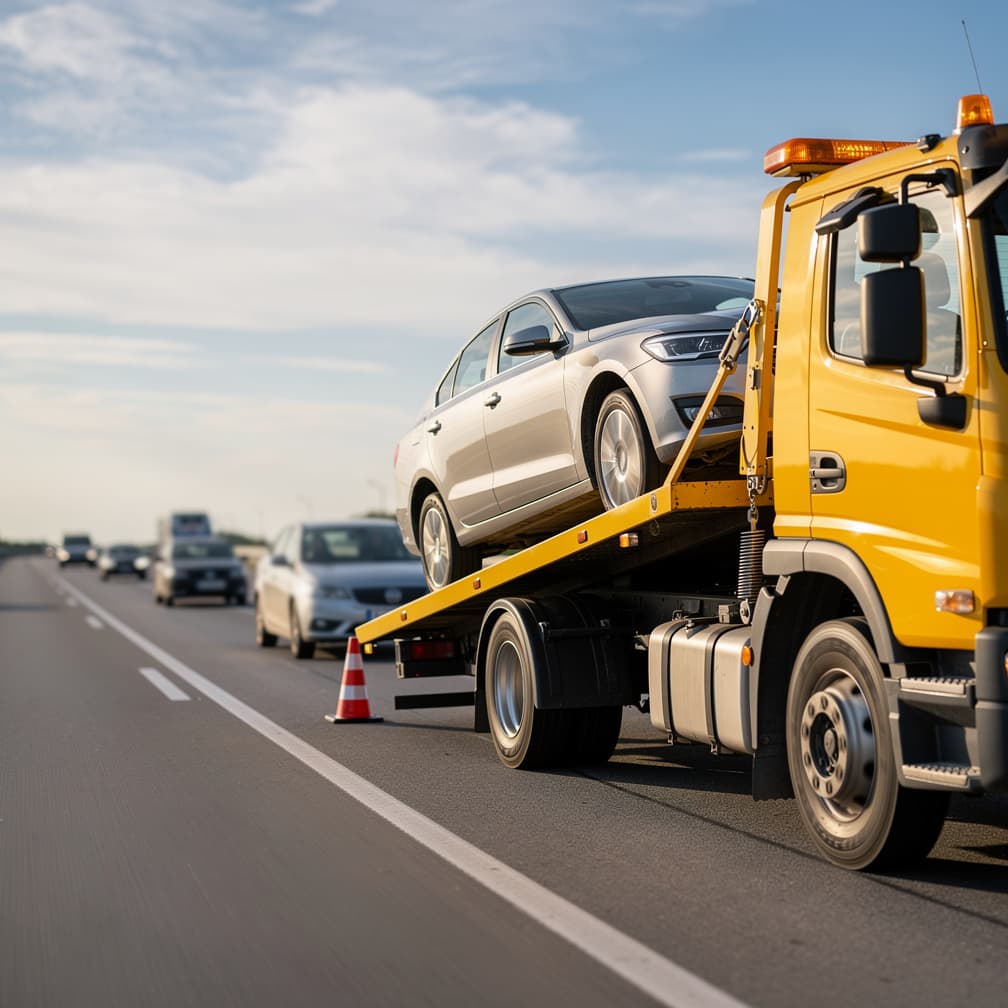
In this state, coverage review often means looking closely at urban pickups with tight curb access, freeway shoulder work with limited room to load, mountain or canyon routes where grade and braking matter, and longer transports between metro areas where a small loading issue can turn into a larger claim by the time you arrive.
For many towing operations, the important review points are the vehicle types you accept, the equipment you use to move them, and the handoff points where responsibility can be disputed. If you tow low-clearance cars, luxury vehicles, motorcycles, electric vehicles, or heavier commercial units, ask how those exposures are treated. If you run both flatbeds and wheel-lifts, make sure the quote reflects both. If your drivers perform winching, recovery, dealer transfers, impounds, or police-directed tows, ask whether those job types change underwriting appetite or require added review.
Regional conditions also make route and hazard planning part of coverage review. Wildfire zones, flood-prone streets, earthquake-related roadway damage, and mudslide areas can complicate access, loading, and unloading. Those conditions do not change every policy the same way, so you should ask how claim handling works if a loss involves evacuation conditions, blocked roads, or unstable surfaces. Before committing, compare exclusions, deductibles, reporting timelines, and any requirements for photos, dispatch logs, or signed condition reports. That gives you a policy you can actually use when a customer disputes when damage occurred.
Coverage Included

Collision on Hook
Covers damage to towed vehicles from collisions during transport.

Comprehensive on Hook
Covers theft, fire, and weather damage to vehicles being towed.
Loading & Unloading
Covers damage during the process of loading and unloading vehicles.

Winching Coverage
Covers damage to vehicles during winching and recovery operations.
Multiple Vehicle
Covers all vehicles on multi-car carriers and rollback flatbeds.
Industries & Insurance Needs in San Diego
Commercial account density is the local difference that changes demand for this coverage. San Diego County has 92,799 business establishments, and its largest establishment shares are professional, scientific, and technical services at 17.3%, health care and social assistance at 12.1%, and retail trade at 10%, so a tow operator here is more likely to be asked to service office properties, medical facilities, and customer parking lots with formal vendor requirements. Those accounts tend to care about certificates, named insured accuracy, and limits that match the vehicles and locations involved, not just whether you carry a basic policy. That matters when you quote this coverage because the work profile can shift from straightforward roadside towing to private property removals, fleet moves, and calls where documentation standards are tighter. Bring sample contracts, vendor packets, and any site-specific insurance requirements into the quote process, so your on-hook limits and related coverages are reviewed against the jobs you are actually trying to win.
What Makes San Diego Different
Commercial property access is the main thing that changes the buying calculus here. In a market with a large concentration of offices, health care sites, and retail locations, the question is often not whether you need on-hook coverage, but whether your proof of insurance will satisfy the account before dispatch starts. Professional, scientific, and technical services represent the largest share of local establishments, with health care and retail close behind, which translates into a steady stream of parking enforcement, vendor access, and fleet towing tied to those properties. If you are pursuing hospital campuses, office properties, or shopping centers, ask for a quote review that factors in certificate turnaround, additional insured requests where appropriate, and whether your limits fit the vehicles you are most likely to tow. A certificate that does not match the contract package can cost you the account before a dispatcher ever calls your driver.
Our Recommendation for San Diego
Start with your account mix, not just your truck list. If most of your revenue comes from private property towing, parking enforcement, or commercial vendor work, gather the agreements that set insurance requirements and review them before renewal. If you are trying to add more fleet or facility accounts, ask how your on-hook limit, deductibles, and any exclusions could affect a claim involving a higher-value vehicle. San Diego's median household income is $104,321, which means a routine private property tow in some neighborhoods can involve a late-model SUV worth $60,000 or more. Setting limits too low just to trim premium could leave you short on a single high-value tow. Mismatched certificates, legal business names, truck schedules, or operating addresses can stall account approval even when your coverage is solid, so verify those details across your policy documents before you submit.
Get On-Hook Towing Insurance in San Diego
Enter your ZIP code to compare on-hook towing insurance rates from carriers in San Diego, CA.
Business insurance starting at $25/mo
FAQ
Frequently Asked Questions
San Diego buyers usually run into proof requests from property managers, parking operators, lenders, medical facilities, and commercial clients before work starts. Vendor screening is routine in this market, so your certificates need to reflect the accounts you are actually pursuing.
Private property accounts often care about more than a certificate alone. Check your legal business name, truck schedule, on-hook limits, covered operations, and any contract insurance language before you submit, especially if you serve apartments, retail lots, or office properties.
Commercial accounts can shift the limit conversation because office, health care, and retail properties may expect documentation that matches the vehicles you tow. A $35,000 on-hook limit that works for older sedans may fall short if you are regularly hooking up newer luxury vehicles from office parking structures.
Professional services, health care, and retail make up large establishment shares of 17.3%, 12.1%, and 10% respectively. Nearly four in ten county businesses operate in sectors that routinely contract towing for parking enforcement and vendor access, so contract requirements should be part of your quote review.
A closer limit review makes sense if you regularly tow newer or more expensive vehicles. The city's median household income is $104,321, and a standard $25,000 on-hook limit may not be enough for a total loss on a newer vehicle from an affluent neighborhood.
Landlords, motor clubs, public agencies, dealers, and lenders often ask for proof before they approve yard space, vendor status, rotation access, or truck financing. Bring those contract requirements into the quote process so the policy can be reviewed against what you must show.
Yes, and that regulation works in your favor. It means you have a right to clear policy documents, a formal complaint process, and straightforward claim handling rules. Use those protections by reading exclusions carefully and asking questions about claim steps before committing to coverage.
Pricing can change with your service mix, territory, vehicle types, and documentation practices. Freeway recoveries, mountain routes, parking structure work, and specialty vehicles can all increase claim severity potential, so your quote should reflect the jobs you actually accept.
Sources
- 1.U.S. Census Bureau, County Business Patterns, San Diego County(San Diego County has 92,799 business establishments, and its largest establishment shares are professional, scientific, and technical services at 17.3%, health care and social assistance at 12.1%, and retail trade at 10%, so a tow operator here is more likely to be asked to service office properties, medical facilities, and customer parking lots with formal vendor requirements.)
- 2.U.S. Census Bureau, ACS 5-Year Estimates, table B19013(San Diego's median household income is $104,321, which can be a useful signal that some neighborhoods and client bases may involve newer or more expensive personal vehicles, so you should be careful about setting limits too low just to trim premium.)
Updated July 16, 2026