


































Updated July 10, 2026

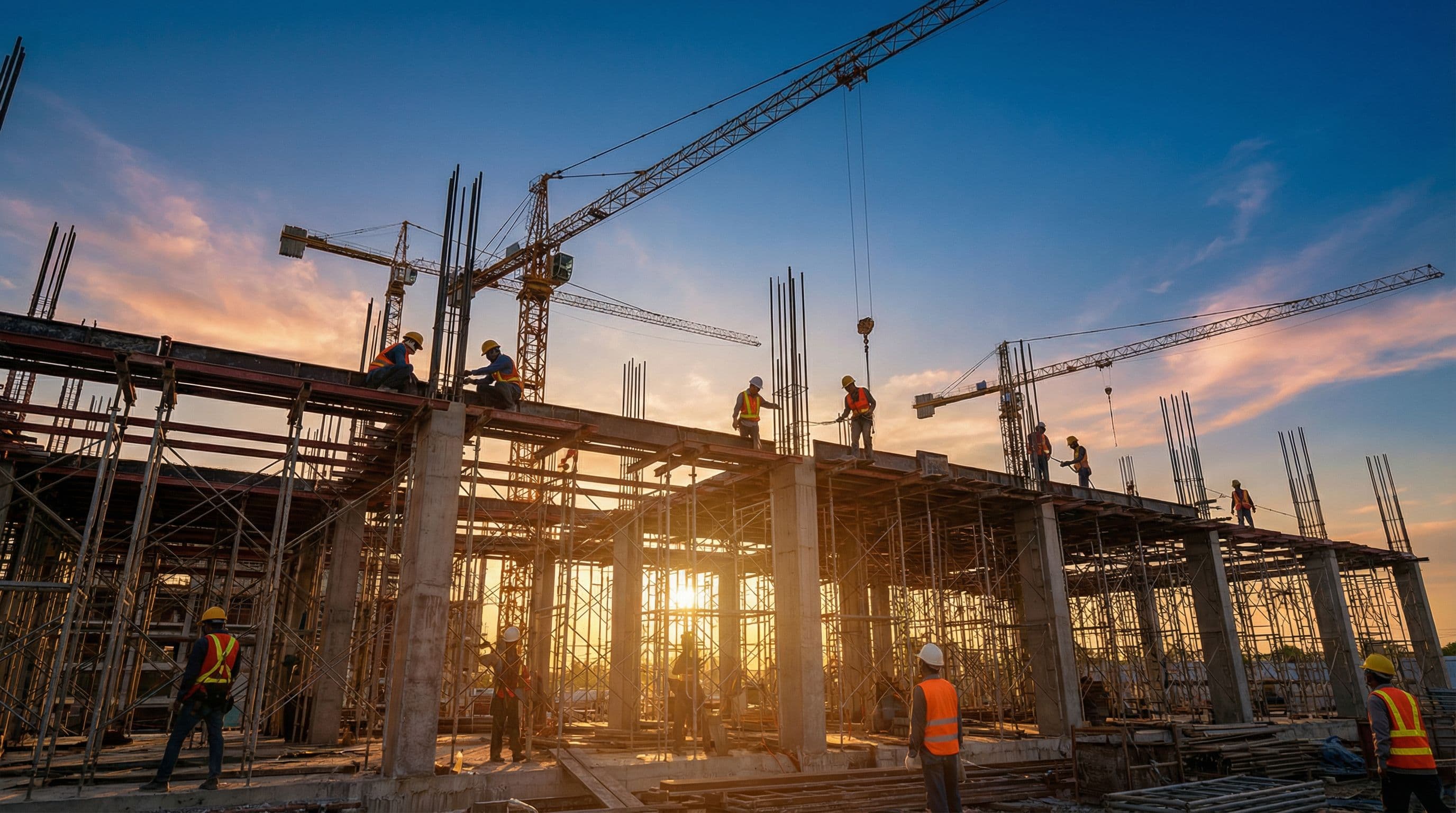
A contractor in Hawaii carries the site's risk: crew injuries, damage to the structure and neighbors, and equipment that disappears overnight. Hawaii adds a legal floor here, because workers compensation is required from the first employee [1]. Hawaii weather adds a second layer, with hurricane exposure showing up in property deductibles and terms before it shows up in premium. The sections below break down those cost drivers and the coverage that answers each.
Recommended Coverage for Construction in Hawaii
Construction businesses face unique risks that require specific coverage types. Here are the policies most construction operations need:

General Liability
Essential coverage for every business, protect against third-party bodily injury, property damage, and advertising claims.

Workers Compensation
Help cover your employees' medical expenses and lost wages for work-related injuries and illnesses.

Commercial Auto
Protect your business vehicles and drivers with comprehensive commercial auto coverage.

Commercial Umbrella
Extend your liability limits beyond your primary policies for extra protection against catastrophic claims.

Inland Marine
Protect tools, equipment, and goods in transit or stored at locations away from your primary premises.
Construction Insurance Overview in Hawaii
Building in Hawaii means planning for more than blueprints, permits, and crews. On Oahu, Maui, Hawaii Island, and Kauai, contractors work across coastal jobsites, steep terrain, and weather that can shift fast from trade winds to hurricane conditions. Insurance decisions belong in your bidding and scheduling process, not on a checklist you rush through at renewal.
Most Hawaii contractors start with general liability and workers compensation, then add commercial auto and inland marine as their equipment and fleet grow. Local projects may also call for commercial umbrella coverage when higher limits are needed for larger bids or layered third-party claims. If you work in Honolulu, Pearl City, or Hilo, your needs can change based on jobsite access, equipment movement, and the kind of work you self-perform versus subcontract out.
Why Construction Businesses Need Insurance in Hawaii
A single jobsite accident can pull in your crew, your subcontractor, the property owner, and neighboring businesses all at once. A slip and fall on scaffolding, for example, can lead to medical costs, lost wages, rehabilitation, and a workers compensation claim. If materials fall or a crew member damages a neighboring structure, third-party claims may follow, and general liability may help pay for repairs or legal costs tied to those incidents.
For contractors working near busy streets, ports, or tight urban sites in Honolulu, Pearl City, or Hilo, even a vehicle accident involving a truck, van, or trailer can create added exposure. Hawaii's mix of strict insurance regulation and severe weather exposure means a single uncovered event can threaten your business more than in many mainland markets. The Hawaii Insurance Division oversees insurance matters in the state, and workers compensation requirements apply to employers with at least one employee, with sole proprietors generally exempt. That makes classification, payroll, and policy setup especially important for growing crews.
The state's high hurricane risk, along with other natural hazards, can disrupt schedules, damage tools, and complicate project timelines. Matching coverage limits to larger bids, reviewing underlying policies, and considering umbrella coverage can help contractors manage catastrophic claims and legal defense needs without relying on a one-size-fits-all approach.
Hawaii requires workers' comp for businesses with employees (exemptions may apply: Sole proprietors). Non-compliance can result in fines and personal liability for owners. Commercial auto minimums are $40,000/$80,000/$20,000.
Key Risks for Construction Businesses
Each of these risks can lead to claims that cost thousands, or more. Make sure your policy addresses every one:
- Workplace injuries
- Property damage
- Equipment theft
- Subcontractor liability
- Project delays
Cost Factors for Construction Businesses in Hawaii
Your price depends on trade, payroll, vehicle count, equipment value, and claims history. The state's premium index is 126 for 2024, which means you may pay roughly 26 percent more for the same coverage than a comparable contractor on the mainland. That gap often shows up in higher deductibles or tighter terms, so budgeting an extra quarter on top of mainland estimates is a reasonable starting point. Actual pricing still varies by contractor profile, trade, and project mix.
Island weather and geography can affect underwriting for jobsites, equipment transit, and fleet coverage. Contractors working on coastal projects or moving tools between islands may see different considerations than firms focused on interior finish work. Higher-risk trades such as roofing, demolition, excavation, and structural steel often face more exposure to workplace injury and property damage than lower-risk trades, which can affect pricing.
Hawaii's construction sector runs heavily on small crews that scale up and down by project, so your insurance should flex with subcontractor counts, crew sizes, and schedules rather than locking you into a fixed annual operation. For a concrete anchor, general liability for small businesses in Hawaii runs about $140 to $600 per month, a bit above the national average. That range typically covers basic third-party protection, so expect your total to climb as you add employees, vehicles, and equipment. Most construction operations layer other coverages on top, so the total moves with employees, revenue, equipment values, and prior claims.
Construction businesses typically carry several separately priced policies. The ranges below are typical figures for Hawaii for each line, except workers compensation, which is rated per $100 of payroll; a quote prices each one against your own operations.
| Coverage | Typical range | What moves your price |
|---|---|---|
| General Liability Insurance | $140 - $600 per month | Industry and risk classification, annual revenue, number of employees |
| Workers Compensation Insurance | $0.75 - $2.74 per $100 of payroll | Employee classification codes, total annual payroll, experience modification rate |
| Commercial Auto Insurance | $190 - $625 per month | Fleet size and vehicle types, driver records and experience, coverage limits and deductibles |
| Commercial Umbrella Insurance | $80 - $310 per month | Umbrella limit requested, limits carried on the underlying policies, loss history on those underlying policies |
| Inland Marine Insurance | $50 - $270 per month | Total insured value of the scheduled property, type and age of the equipment, where it is stored and how far it travels |
Prices shown are general estimates, not guaranteed rates or quotes. Your actual premium will depend on the insurer, coverage selected, business details, location, claims history, and other underwriting factors. Learn about our pricing methodology.
State Requirements
Insurance Regulations in Hawaii
Key regulatory requirements for businesses operating in HI.
Regulatory Authority
Workers' Compensation InsuranceRequired
Required for employers with 1+ employee.
Exempt categories
- Sole proprietors
Commercial Auto Minimum Liability
$40,000/$80,000/$20,000 (bodily injury per person / per accident / property damage)
Source: Hawaii Department of Insurance, U.S. Department of Labor
What Drives Construction Insurance Costs in Hawaii
Crew injuries
Falls and machinery injuries make construction one of the costlier classes for workers compensation insurance. Rates follow trade classification, payroll, and loss history.
Site damage and subcontractors
General liability insurance typically carries the site's third-party risk, and contracts usually dictate its limits. Subcontractor defaults add a layer that certificates alone do not solve.
Hurricane and wind
Storm claims drive commercial property pricing in this market, and wind or hail damage may carry a separate deductible. Hawaii has 71 federal disaster declarations on record with FEMA [2].
Payroll and workers compensation
Average pay in this sector runs $73,700 a year in Hawaii [3], which matters because workers compensation premiums are computed on payroll. Loss history sets a modifier on top of that base, so a clean claims record works in your favor at renewal.
Climate Risk Profile
Natural Disaster Risk in Hawaii
Understanding climate-related risks helps determine appropriate insurance coverage levels.
Hurricane
Very High
Tsunami
High
Volcanic Activity
High
Flooding
High
Expected Annual Loss from Natural Hazards
$380M
estimated economic loss per year across Hawaii
Source: FEMA National Risk Index
Insurance Tips for Construction Business Owners in Hawaii
Match general liability to the largest project you bid in Hawaii, especially if owners ask for higher coverage limits or additional insured status.
Review workers compensation carefully so payroll and trade classifications reflect the work your crew actually performs.
Schedule tools, generators, trailers, and other mobile property under inland marine coverage when they move between jobsites in Honolulu, Pearl City, Hilo, or other areas.
Add commercial auto for trucks, vans, and trailers used to haul materials, crews, and equipment between active projects.
Consider commercial umbrella insurance if your projects, contracts, or subcontractor arrangements call for higher limits and added protection against catastrophic claims.
Confirm how your policy addresses third-party claims tied to property damage, customer injury, or legal defense when work is performed near occupied buildings or public walkways.
If you use subcontractors, ask how your insurance handles their role on your projects and whether your certificate requirements are aligned before work starts.
Recheck coverage whenever you take on coastal work, elevated work, or jobs with unusual weather or geological exposure, since island conditions can change project risk.
Get Construction Insurance in Hawaii
Enter your ZIP code to compare construction insurance rates from top carriers.
Business insurance starting at $25/mo
Construction Business Types in Hawaii
Find insurance tailored to your specific construction business. Select your business type for coverage recommendations, pricing, and quotes:

Roofing Insurance
Get roofing insurance coverage shaped around your crews, tools, vehicles, and job-site requirements. A roofing insurance quote can help you compare limits, certificates, and policy options before you start the next project.

Painting Contractor Insurance
Get a painting contractor insurance quote built for property damage risk, jobsite proof needs, and active project requirements. Coverage can be tailored for residential painters, commercial crews, and interior or exterior jobs.

Electrical Contractor Insurance
Get an electrical contractor insurance quote designed for electricians who need protection for property damage, injury claims, and equipment loss. Compare coverage options and request a quote with less back-and-forth.

Home Builder Insurance
Get a home builder insurance quote built for licensed home builders, custom home builders, and residential contractors. Protect completed operations, worksite liability, subcontractor exposure, and new construction projects.

Pool & Spa Contractor Insurance
Pool & spa contractor insurance helps protect builders and installers from jobsite injuries, equipment damage, and completed operations claims. Request a pool & spa contractor insurance quote for coverage that fits your work.

General Contractor Insurance
A general contractor insurance quote helps you line up coverage for active jobs, finished work, and subcontractor exposure. Build a policy that fits your contracts, jobsite requirements, and project type.

Flooring Contractor Insurance
Get flooring contractor insurance built around installs, hauling, tools, and customer-site work. Compare coverage options and request a quote that fits your crew, materials, and job mix.

Concrete Contractor Insurance
Get a concrete contractor insurance quote built for pouring, forming, finishing, and repair work. Compare coverage for crews, vehicles, tools, and jobsite claims.

Demolition Contractor Insurance
Get a demolition contractor insurance quote built for wrecking work, debris damage, and adjacent property exposure. Coverage options can be matched to your project types, jobsite risks, and contract requirements.

Excavation Contractor Insurance
Get coverage built for excavation and grading work, including liability, heavy equipment, and vehicle exposure. Request an excavation contractor insurance quote tailored to your jobs and operations.

Masonry Contractor Insurance
Masonry contractor insurance helps brick and stone contractors protect jobsites, equipment, and client projects. Request a tailored quote for coverage that fits residential and commercial masonry work.

Drywall Contractor Insurance
Request a drywall contractor insurance quote built for interior rough and finish work, including moisture damage claims, finish defect disputes, tools, vehicles, and jobsite liability. Coverage needs vary by project type, crew size, and contract requirements.

Fencing Contractor Insurance
Request a fencing contractor insurance quote built for property line disputes, installation damage, and crew injury risk. Compare coverage options that fit your services, crew, and service area.

Siding Contractor Insurance
Request a siding contractor insurance quote built around installation work, weather-related liability, crews, tools, and jobsite needs. Compare coverage options for residential, commercial, or mixed siding operations.

Window & Door Installer Insurance
A window and door installer insurance quote helps protect your crews, tools, vehicles, and customer property on every job. It can be built for on-site installations, residential and commercial jobs, and custom-fit work.

Carpenter Insurance
Get carpenter insurance coverage built for cabinet jobs, finish carpentry, and woodworking contractors. Compare options that can help protect tools, client property, and day-to-day operations.

Glazier Insurance
Get coverage built for glass installation crews, subcontractors, and commercial glass installers. A glazier insurance quote helps you compare protection for breakage, liability, and job-site incidents.

Insulation Contractor Insurance
Get coverage built for insulation contractors handling residential and commercial work, including spray foam, fiberglass, and cellulose installs. Request an insulation contractor insurance quote matched to your jobsite risks and business size.

Paving & Asphalt Contractor Insurance
Get a paving & asphalt contractor insurance quote tailored to your crews, equipment, and jobsite requirements. Compare options for liability, equipment, and vehicle protection.

Plastering & Stucco Contractor Insurance
Get a plastering and stucco contractor insurance quote built for workmanship liability, moisture damage claims, and on-site injuries. Coverage needs vary by jobsite, county rules, and project type.

Waterproofing Contractor Insurance
Get a waterproofing contractor insurance quote built for property damage claims, chemical exposure, and jobsite liability. Compare coverage options for your business, vehicles, and projects.

Debris Removal Insurance
Get coverage support for debris hauling and demolition work, including vehicle accidents, site injuries, and improper disposal claims. Request a debris removal insurance quote for your operation.

Sign Installation Contractor Insurance
Request a sign installation contractor insurance quote built for electrical work, elevated surfaces, heavy equipment, and property damage exposure. Compare coverage options for your jobs, crew, and vehicles.

Cabinet Installer Insurance
Get cabinet installer insurance built for finished-home work, job-site property damage, and claims that can surface after the install is done. Request a quote for general liability, completed operations, workers compensation, and more.
Construction Insurance by City in Hawaii
Insurance rates and requirements can vary by city. Find construction insurance information for your area in Hawaii:
FAQ
Construction Insurance FAQ in Hawaii
The working core is general liability plus workers compensation, with commercial auto joining once trucks and trailers are in play. Add inland marine when tools and equipment move between sites, and an umbrella when contracts ask for limits your base policies do not carry. Self-performing trades and heavy subcontractor use each push the review in different directions.
Yes. The general contractor’s policy is not written to stand in for each trade’s separate obligations, and most contracts require subs to show their own certificates before mobilizing. Your vehicles, payroll, tools, and completed work all need coverage under your own name.
Premiums follow payroll and class codes, and construction class codes vary widely by trade. If your crew mix shifts during the term, from demolition to finish work for example, flag it early so the audit and any claims line up with how labor was actually deployed.
Because tools, equipment, and materials rarely stay put. Property in a trailer, at a supplier, or staged overnight on site falls outside a fixed-location property policy, and theft from jobsites is a routine loss. Inland marine coverage is built for exactly that movement.
It addresses owned and hired vehicles, but trailer use, towing, driver selection, and hauled equipment each need specific attention in the policy. A construction fleet backing into congested sites all week is a different risk than a sedan used for estimates.
Size the limit against your contracts, not habit. Look at the largest job you expect to sign, the injury severity possible on your sites, and the auto exposure of your fleet, then compare requested limits before award rather than after.
Sometimes, when the program is structured around the real mix. Occupied commercial interiors, service calls, remodels, and ground-up projects raise different underwriting questions and certificate demands, so spell each one out instead of describing the blend loosely.
Current policies, loss runs, payroll by trade, a vehicle list, equipment values, subcontractor agreements, and a sample contract. Those documents show what you self-perform, how crews travel, and which limits your jobs require.
Sources
- 1.Hawaii Insurance Division(Hawaii requires workers compensation coverage from the first employee.)
- 2.FEMA Disaster Declarations(Hawaii has 71 federal disaster declarations on record.)
- 3.BLS Quarterly Census of Employment and Wages (2024)(Construction workers in Hawaii earn an average of $73,700 a year.)