Updated July 16, 2026

Key Takeaways
- Compare quotes using the same peak inventory value, deductible, and valuation assumptions so you can see real coverage differences.
- Ask in writing how the policy handles hail, flood, theft, vandalism, and test drives before you bind coverage.
- Prepare a current inventory schedule, offsite storage list, and security summary before requesting dealer open lot insurance quotes.
- Review whether flood needs separate placement instead of assuming another policy form includes it automatically.
- Requote after security upgrades, lot layout changes, or improved claims history so pricing reflects your current risk.
Dealer Open Lot Insurance in Illinois
One hailstorm or overnight theft can wipe out a row of sale units before you even open the gate. Your quote usually starts with your inventory file, storage addresses, and loss controls, not with a quick guess. An underwriter wants to see how vehicles are spread across the lot, whether any units sit at overflow storage, who moves them, and how quickly you can document values after a loss. If your schedule is outdated, VIN records are inconsistent, or offsite locations are missing, the quote often comes back slower and with more follow-up questions.
Buyers also benefit from checking who handles title paperwork, transport between locations, and after-hours lot access before they request terms. Those operating details shape what endorsements you may need reviewed. A cleaner submission gives you a better basis for comparing deductibles, location schedules, and any limits tied to theft, weather, or vehicle movement. Before requesting pricing, confirm every storage address and note any seasonal overflow or shared lots so the quote matches how your dealership actually runs.
What Dealer Open Lot Insurance Covers
A dealer open lot policy may help cover vehicles you hold for sale against physical damage from theft, weather, fire, and vandalism. What matters is how your inventory is actually arranged and moved. A dealership with one fenced lot presents a different exposure than an operation using a back lot, a service-area holding row, and temporary overflow storage during buying spikes. That is why your coverage review should map each place where sale units sit, who has access, and when vehicles leave the main premises.
You should also look closely at how the policy treats ordinary dealership handling. That includes employee movement around the lot, transfers between scheduled locations, and any short-term storage arrangement that is easy to overlook during the application. If your operation mixes front-line inventory with units waiting on reconditioning, ask for clear treatment of those vehicles so there is less ambiguity if a claim happens before the car is retail-ready.
Weather patterns also make claim documentation important. If multiple units are damaged in one event, you want a process for proving which vehicles were on hand, where they were parked, and what their values were at the time of loss. Good photos, timestamped inventory reports, and consistent key control can matter as much as the policy form itself when a claim is adjusted.
If you are comparing forms or claim handling language, keep your questions specific and tied to the wording you are being offered. Ask for a line-by-line review of location schedules, valuation method, deductibles, and any exclusions tied to unattended vehicles, offsite storage, or employee use before you bind coverage.

Weather Damage
Covers hail, wind, flood, and storm damage to lot inventory.
Theft Protection
Covers vehicles stolen from your lot.
Fire Damage
Covers fire and explosion damage to inventory vehicles.

Vandalism
Covers intentional damage to vehicles on your lot.
Test Drive Coverage
Covers vehicles during customer and employee test drives.
Transit Coverage
Covers vehicles being moved between lot locations.
Dealer Open Lot Insurance Requirements in Illinois
- Dealerships should review whether every owned-for-sale vehicle is tied to a scheduled location, including overflow space and any secondary lot used during buying surges.
- If your operation moves inventory between display, reconditioning, and storage areas, ask for clear treatment of those routine transfers before binding coverage.
- Lot security procedures matter more when several employees can access keys, reposition vehicles, or release units after hours without a single documented chain of custody.
- Claim preparation should include timestamped inventory reports and current photos, so you can prove which vehicles were on hand after a widespread loss event.
How Much Does Dealer Open Lot Insurance Cost in Illinois?
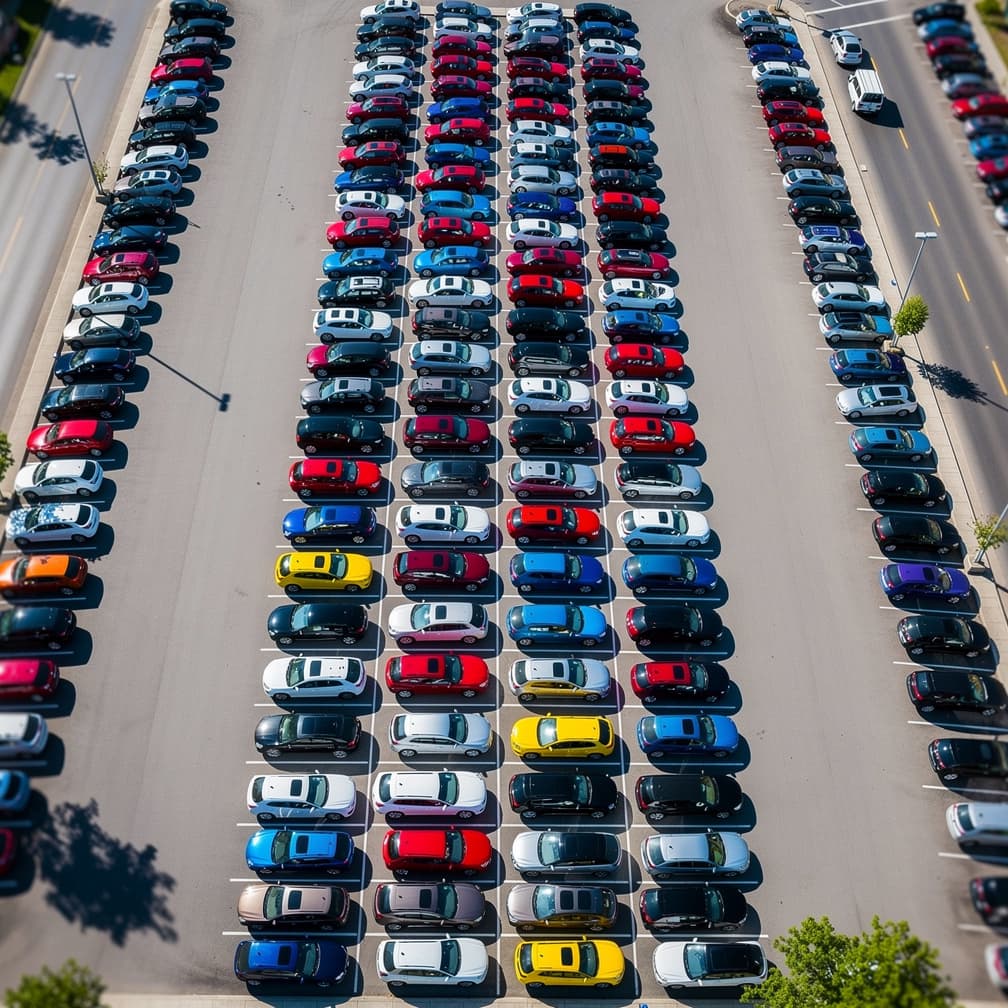
Dealer open lot pricing usually turns on how concentrated your inventory value is, not just on a simple vehicle count. An underwriter will want to know the total value you carry for sale, but the next questions often matter just as much: whether units are stored outdoors full time, how often inventory turns, and whether you use any unscheduled overflow space. In plain terms, a lot with 50 cars spread across two fenced locations may price differently than the same 50 cars crammed into one unlit lot, because the second scenario presents a harder risk to defend. If your records do not clearly separate sale inventory from customer vehicles or personal autos, expect slower quoting and more conservative terms.
Deductible choice is another major pricing lever. A higher deductible can reduce premium, but only if it still fits your cash flow after a weather or theft loss involving several units. Consider a dealer with 30 vehicles averaging $25,000 each, which means $750,000 sitting on the lot. A single hail event could damage all of them. A $2,500 deductible on that loss is manageable, but a $25,000 deductible could strain cash flow for months. Lower deductibles may feel safer, yet they can raise cost without solving the bigger issue, which is whether your limit and reporting process match the inventory you actually hold. Review both together instead of shopping deductible alone.
Operations should also expect pricing to change when storage practices change. Moving units to a second lot, adding transport between locations, or increasing after-hours access can all alter how the risk is viewed. The same is true if your inventory mix shifts toward higher-value vehicles that create more severe loss potential from one event.
The most useful quote comparison is not just premium. Compare scheduled locations, valuation basis, deductible structure, any sublimits or exclusions, and what documentation the carrier expects after a loss. Send a current inventory schedule, identify every storage address, and ask the agent to show you where the quote assumes vehicles are kept so you can catch gaps before binding.
Request a Quote Comparison
Enter your ZIP code to compare dealer open lot insurance rates from top carriers.
Business insurance starting at $25/mo
Who Needs Dealer Open Lot Insurance?
Dealerships that keep titled units for sale on a lot, in overflow storage, or at another scheduled location should review this coverage with their actual operating footprint in mind. The need becomes more urgent when inventory sits outdoors, keys are handled by multiple employees, or vehicles move between buying, reconditioning, display, and delivery areas during the week. Those routine movements create claim questions if your policy setup is too narrow or your location schedule is incomplete.
This matters for independent dealers with a compact city lot, larger suburban operations with multiple rows and service areas, and specialty sellers that rotate units through storage yards or shared spaces. If you buy at auction, hold vehicles pending repairs, or stage inventory at a second address because your main lot is full, your exposure is broader than a single-address application suggests. The same is true if your business uses porters, detail staff, or sales personnel who all have some level of access to inventory.
Buyers should also think about timing. If your inventory values rise during tax season, spring buying, or another local sales cycle, a policy that looked adequate months ago may no longer line up with what is on the ground today. A dealership that expands quickly can outgrow its reporting habits before it realizes the insurance file is behind.
If you own vehicles for resale and can lose money before delivery to the buyer, gather your inventory report, list every storage location, and review how vehicles are secured after hours. That gives you a practical starting point for deciding whether your current setup still matches your exposure.
Dealer Open Lot Insurance by City in Illinois
Dealer Open Lot Insurance rates and coverage options can vary across Illinois. Select your city below for localized information:
How to Buy Dealer Open Lot Insurance
Buying this coverage goes more smoothly when you build the submission the way an underwriter reads it. Begin with a current inventory schedule that shows the vehicles you own for sale, then match that list to every address where units are stored. If some vehicles sit at overflow space, a repair facility, or another lot you control, identify that up front instead of waiting for a follow-up question. Hidden locations are one of the fastest ways to create delays or mismatched terms.
Document how inventory is protected day to day. Underwriters usually want to understand fencing, lighting, cameras, key control, after-hours access, and who is authorized to move vehicles. They also need to know whether employees transport units between locations and how often that happens. A short written summary of these procedures can make the quote process cleaner because it explains the controls behind the application answers.
Review the quote for assumptions, not just price. Check that every location is scheduled correctly, that the valuation approach fits your inventory, and that deductibles are realistic for a multi-unit loss. If the quote includes conditions tied to storage, security, or reporting, make sure your staff can actually follow them. A policy is only useful if your operation can comply with it after binding.
Ready to get started? Request a quote through CPK Insurance to compare your options with participating licensed providers.
How to Save on Dealer Open Lot Insurance
Saving money on dealer open lot insurance usually starts with making your inventory easier to verify and your lot easier to defend after a claim. Keep a current inventory report, reconcile VINs regularly, and make sure every vehicle held for sale is tied to the correct storage address. If an underwriter sees clean records and a clear location schedule, the risk is easier to evaluate than a dealership that cannot quickly show what was on hand and where it was parked.
Security discipline also affects cost over time. Tight key control, documented after-hours procedures, and restricted access to inventory reduce the chance of avoidable theft or unexplained loss. The same goes for lot layout. If high-value units are clustered in the most exposed area, or overflow vehicles are parked in a space with weaker controls, you may be creating a pricing problem that can be improved operationally before renewal.
Another way to save is to review limits and deductibles together instead of chasing the lowest premium. A deductible that is too low can keep cost elevated, while a deductible that is too high can strain cash flow after a loss involving several vehicles. Ask for options and compare them against the inventory values you actually carry during your busiest periods.
Finally, update the policy when your operation changes. Adding a location, using temporary storage, changing who can move vehicles, or shifting into higher-value inventory can all affect pricing and claim outcomes. The costliest mistake is leaving an overflow lot off your schedule and discovering the gap only after a theft. Send updated schedules, note operational changes in writing, and ask for the quote to be reworked around the way your dealership runs now.
Our Recommendation for Illinois
For dealerships, the strongest buying move is to treat this as an inventory-management decision as much as an insurance purchase. Before renewal or a new quote, run a fresh inventory report, compare it to your scheduled locations, and confirm that every place where sale units sit is disclosed. A policy can look adequate on paper and still miss the way your lot actually operates if overflow storage or vehicle transfers are left out.
Next, test your claim readiness. Pick a few vehicles at random and confirm you can show VIN, value, exact location, key assignment, and recent photos without digging through multiple systems. If that process is messy now, it will be worse after a weather or theft loss affecting several units at once.
You should also review who has after-hours access and whether that access is documented. Many dealerships focus on perimeter security but overlook internal controls, especially when sales, service, and detail staff all touch inventory. Clear procedures can improve both underwriting presentation and post-loss documentation.
Finally, compare quotes by assumptions. Ask where the insurer believes vehicles are stored, how offsite units are treated, and what proof will be required after a loss. If the answers do not match your operation, revise the submission before binding.
FAQ
Frequently Asked Questions
Buyers get better quote results when they prepare a current inventory schedule, confirm every storage address, and document key control and after-hours access. Keep your review focused on policy wording, disclosures, and how each location is scheduled before you bind.
Dealerships should list each location where sale inventory is stored, including overflow or secondary space. If a quote assumes one address but vehicles regularly sit elsewhere, you can create avoidable claim questions later.
Dealers should not assume an older setup still fits after adding overflow storage. A new address, different security controls, or regular vehicle transfers can change how the risk is underwritten and how a claim is reviewed.
Dealerships should keep current inventory reports, VIN-level values, photos, and clear location records for vehicles held for sale. Those records help show what was on hand, where it was stored, and how the loss affected each unit.
Insurance is regulated by the Illinois Department of Insurance, which means policy forms, rate rules, and consumer protections are subject to state oversight. If you are comparing quotes, ask for the application, endorsements, and key exclusions in writing so you can review the actual terms before binding.
Underwriters ask about key control and lot access because those procedures affect theft exposure and claim documentation. If multiple employees can move vehicles without a clear process, the risk is harder to evaluate and defend.
Dealerships should review coverage whenever inventory values or storage patterns change materially. A policy that matched your lot months ago may not fit if you now carry more value, use another address, or move vehicles differently.
Dealer open lot insurance nationwide is generally reviewed for damage or loss to vehicles you own for sale, including hail, wind, theft, vandalism, fire, flood, and test drive exposure, depending on your policy terms, deductibles, valuation method, and any location or off-premises limitations.
Sources
- 1.Illinois Department of Insurance(Illinois insurance is regulated by the Illinois Department of Insurance.)
Updated July 16, 2026