Updated July 16, 2026

Key Takeaways
- Gather your current declarations, endorsements, loss runs, vehicle schedule, and driver list before requesting quotes so you can compare terms side by side.
- Review whether you need cargo coverage, trailer interchange, bobtail coverage, or non-trucking liability based on your dispatch pattern and contracts.
- Compare physical damage deductibles and valuation terms before renewing, especially on financed tractors, trailers, or recently added units.
- Check every broker, shipper, lender, and lease agreement against your policy endorsements so certificate wording does not hide a coverage gap.
- Start your renewal review early enough to update drivers, units, garaging, and operating radius before underwriters price the account.
Commercial Truck Insurance in Indiana
An owner-operator pulling regional freight across Indiana has a different insurance problem than a contractor running a dump truck between local job sites. One may need tighter attention on trailer interchange, cargo handling, and filings tied to hired loads. The other may spend more time reviewing radius, vehicle use, driver schedules, and physical damage terms for equipment that works in stop-and-go conditions. Your quote works better when it starts with the work your vehicles perform, where they travel, and what contracts ask you to carry.
Indiana also gives you a clear baseline for road liability. The state insurance regulator lists minimum auto liability limits, so you can treat that as a legal floor, not a business target, when you review limits for a truck that can cause a much larger loss. Before you request quotes, line up your unit list, driver information, garaging addresses, and any shipper or broker insurance requirements. That makes it easier to compare policy terms that actually fit your operation.
What Commercial Truck Insurance Covers
Indiana truck policies are usually built around how your operation creates loss exposure, not around a generic template. If you run interstate loads, your review often centers on liability limits, cargo terms, trailer interchange if you pull someone else's trailer, and physical damage for financed equipment. If you stay local with box trucks, dump trucks, or service trucks, the bigger issue may be whether the policy classifies the vehicle use, operating radius, and driver duties accurately enough to avoid surprises after a claim.
For Indiana buyers, that means looking closely at where a truck is parked, how often it crosses county or state lines, whether drivers take units home, and whether the truck is attached to a trailer you own, lease, or borrow. A straight truck making frequent stops in town can create a different claim pattern than a tractor running longer highway miles, even if both are insured under the same business name. Your quote should separate those exposures clearly.
You should also review what is not automatically solved by carrying only the state's minimum road liability. A commercial buyer should ask whether higher liability limits, cargo protection, downtime planning, and lender-required physical damage terms make more sense for the value at risk. If a broker, shipper, or contract asks for specific limits or endorsements, bring that paperwork into the quote process before binding anything.

Motor Carrier Liability
Can help cover injuries and property damage your truck causes to others, a coverage federal regulators require most for-hire carriers to maintain.

Physical Damage
Can help pay to repair or replace your own truck after an accident, fire, theft, or vandalism.
Cargo Coverage
May pay for damage to or theft of the freight you are hauling while it is in your care.
Trailer Interchange
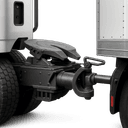
Can help cover damage to trailers you haul under an interchange agreement but do not own.

Bobtail Coverage
May provide liability protection when you drive your tractor without a trailer attached, such as after dropping off a load.

Non-Trucking Liability
Can help cover accidents that happen when you use your truck for personal errands rather than dispatched work.
Commercial Truck Insurance Requirements in Indiana
- Indiana buyers should review liability limits above the state minimum if a single highway loss could involve multiple vehicles, injuries, or damage to commercial property.
- If your truck is financed or leased, confirm the policy's physical damage valuation method and deductible fit your ability to repair or replace equipment quickly.
- Operations that borrow, swap, or pull non-owned trailers should check trailer responsibility in contracts before assuming the truck policy may respond to a claim.
- Local Indiana contractor trucks often need careful vehicle use and radius classification, because short-haul jobsite work can rate differently from regional freight hauling.
How Much Does Commercial Truck Insurance Cost in Indiana?
Average Cost in Indiana
$360 - $925
per month
Businesses in Indiana typically see commercial truck insurance premiums of $360 - $925 per month, which tends to run 16% below the national range of $400 - $1,125 per month.
- Radius of operation
- Commodities hauled and cargo value
- Number and value of power units
- Driver motor vehicle records and CDL experience
- DOT safety record, inspections, and FMCSA scores
- Liability limits and physical damage deductibles
Contact CPK Insurance for a personalized quote.
In Indiana, commercial truck pricing is driven by vehicle type, gross weight, operating radius, cargo, driver records, years of experience, garaging location, prior claims, requested limits, deductibles, and whether you insure one unit or a fleet. A local contractor with a single dump truck can rate very differently from an owner-operator hauling brokered freight across several states, even if both ask for the same liability limit.
Many Indiana businesses see premiums from $360 to $925 per month, depending on those factors and the policy structure. For a small business, that means budgeting somewhere in that range for a single truck, though your actual cost depends on what you haul, how far you drive, and what coverages you include. A $360 premium typically reflects a lighter local truck with modest limits and no physical damage coverage. A $925 premium often points to a heavier unit, broader cargo terms, higher liability limits, or interstate filings. That range is only a starting frame for budgeting. It does not tell you whether your quote includes physical damage, cargo, trailer interchange, or filings tied to your work. A lower premium can simply mean narrower terms, higher deductibles, lower limits, or a vehicle use classification that does not match the truck's actual work pattern.
If you want a quote you can trust, prepare a clean submission. Include VINs, unit values, driver license details, years of commercial driving experience, loss runs if you have prior coverage, and the exact commodities or job types involved. If a truck is financed, leased on, or used under contract, say so up front. Indiana buyers usually get a more useful comparison when they ask each market to quote the same limits, deductibles, and optional coverages, then review what changes the premium most. That lets you decide whether to retain more risk through a deductible or pay more for broader terms.
How Indiana compares with the national baseline
Uninsured drivers
15.8% vs 11.6% baseline
About 15.8% of Indiana drivers are estimated to be uninsured, above the 11.6% average across states.
Fatal crashes per 100 million miles
1.42 vs 1.33 baseline
Indiana sees about 1.42 fatal crashes per 100 million miles driven, above the national average of 1.33.
Blue bar: Indiana. Gray line: national baseline.
Prices shown are general estimates, not guaranteed rates or quotes. Your actual premium will depend on the insurer, coverage selected, business details, location, claims history, and other underwriting factors. Learn about our pricing methodology.
Request a Quote Comparison
Enter your ZIP code to compare commercial truck insurance rates from top carriers.
Business insurance starting at $25/mo
Who Needs Commercial Truck Insurance?
Indiana buyers who use trucks as revenue-producing equipment should review this coverage based on the work the vehicle performs, not just the title on the registration. That includes owner-operators under dispatch, small fleets, contractors with dump or flatbed units, delivery businesses using box trucks, and companies that move tools, materials, or inventory between jobs.
You likely need a closer look if any of these apply to your operation. You haul property for others, pull non-owned trailers, finance your truck, hire drivers, cross state lines, or sign contracts that require certificates before a load is released. Indiana businesses that start with one truck often discover that the real issue is not whether they need coverage at all, but whether the policy matches leased equipment, driver use, and the paperwork expected by brokers or project owners.
State minimums are another reason not to stop at the legal floor. For a commercial truck, that baseline may satisfy a narrow legal requirement while still leaving a business exposed to larger third-party injury, property damage, cargo, or equipment losses. If your truck is central to cash flow, ask for a quote that reflects the actual value of the unit, the loads you move, and the contracts you sign, then compare where higher limits or added coverages change the risk meaningfully.
Commercial Truck Insurance by City in Indiana
Commercial Truck Insurance rates and coverage options can vary across Indiana. Select your city below for localized information:
How to Buy Commercial Truck Insurance
Start your Indiana quote process by defining the operation in underwriting terms, not in broad business language. List each truck, its VIN, stated value, garaging address, ownership status, and normal use. Then list every driver with license details, commercial driving experience, and any recent violations or accidents. If you haul for a motor carrier, broker, shipper, or project owner, gather the insurance requirements they send you so the quote can be built around those obligations instead of revised later.
Next, decide what exposures need to be quoted together. Some Indiana buyers only ask for liability and then realize a lender requires physical damage, or a hauling agreement requires trailer interchange, or a customer expects cargo evidence before dispatch. Once you have a consistent quote request built, submit it to each market so the comparison stays focused on policy terms and pricing differences rather than mismatched submissions.
You should also verify the legal baseline once, then move on to business fit. Use the state minimum as a checkpoint while you review whether your operation needs higher limits or additional protection because of contracts, financing, or the value of the truck itself. Before binding, read the vehicle schedule, covered drivers, garaging locations, and any exclusions line by line. Confirm that the policy describes the truck the way it actually works in Indiana, then request certificates only after those details are correct.
How to Save on Commercial Truck Insurance
The most reliable way to lower truck insurance costs in Indiana is to remove rating surprises before the underwriter finds them. Clean submissions often price better than incomplete ones because they reduce uncertainty. Make sure unit values are current, garaging addresses are accurate, driver lists are complete, and vehicle use is described precisely. A dump truck used on local construction routes should not be submitted the same way as a tractor pulling interstate freight, because the wrong classification can distort both price and coverage fit.
Deductible strategy also matters. If your business can absorb more out-of-pocket cost after a physical damage claim, a higher deductible may reduce premium. If cash flow is tight, a lower deductible may be worth the added cost. The right choice depends on how quickly you could repair or replace a truck without disrupting jobs. Savings only help if the deductible still works in a real loss.
Because pricing varies so widely across truck types, radius, and cargo, shopping intelligently matters. Once you have a consistent quote request built, submit it to each market and compare where one proposal is cheaper. Sometimes the difference comes from a narrower endorsement set, a higher deductible, or a lower stated vehicle value rather than a true pricing advantage.
You can also control cost over time by tightening driver screening, documenting maintenance, and reviewing your policy before adding a new unit or changing operations. If your routes, cargo, or driver roster change, update the policy promptly so the next renewal is based on accurate information instead of avoidable underwriting corrections.
Our Recommendation for Indiana
For Indiana truck buyers, the strongest move is to build the quote around operations first and price second. Separate local service or contractor units from long-haul or regional freight units if they do different work, because mixed schedules can blur rating and coverage decisions. Review garaging carefully, especially if drivers take trucks home or units move between yard locations during the week.
Treat state minimum liability as a compliance checkpoint, not your final limit decision. Indiana auto liability minimums are $25,000/$50,000/$25,000, meaning $25,000 for injury to one person, $50,000 total for injuries in a single accident, and $25,000 for property damage. A loaded commercial truck can exhaust those amounts in a single intersection collision, leaving your business responsible for the remaining repair, medical, or legal costs. Ask what higher liability limits change in premium before assuming the lowest option is the practical one.
If you finance equipment, pull non-owned trailers, or work under broker or shipper contracts, bring those documents into the quote process early. That is usually where coverage gaps show up. You should also ask for a line-by-line review of deductibles, stated values, driver schedules, and any exclusions tied to use, radius, or unattended vehicles. The goal is simple: buy a policy that matches the work your vehicle performs in Indiana, then keep the file updated as the operation changes.
FAQ
Frequently Asked Questions
Indiana trucking businesses should treat the legal minimum as a starting point, then compare higher limits against contracts, vehicle size, routes, and the financial impact of a serious third-party loss.
Indiana uses a minimum auto liability baseline for road compliance. That helps you confirm the legal floor, but your quote should still be built around truck type, operating radius, cargo, driver history, and any broker, shipper, or lender requirements.
Indiana startups can usually request coverage for a single truck, but the quote depends heavily on driver experience, vehicle value, planned radius, and the kind of loads or jobsite work involved. Bring complete driver and unit details so the first quote is usable.
Indiana local work trucks often rate on a different exposure pattern than freight haulers because use, radius, stop frequency, and jobsite conditions can change claim expectations. Your quote should describe the truck's actual work instead of using a broad trucking label.
Indiana buyers should gather VINs, unit values, garaging addresses, driver license information, prior loss details, and any contract insurance requirements. If a truck is financed, leased on, or used with non-owned trailers, include that information before the quote is built.
Indiana requires a minimum level of auto liability for road use. That satisfies the legal floor, but many trucking operations review higher limits and added coverages because contracts and loss severity can exceed that baseline.
Once you have a consistent quote request built, submit it to each market and review whether a lower premium comes from pricing efficiency or from narrower terms that shift risk back to you.
Commercial truck insurance can be written for many working vehicles, including semis, tractor-trailers, box trucks, flatbeds, dump trucks, refrigerated units, tankers, tow trucks, and delivery vehicles. The key question is how each unit is used, who drives it, and whether trailers or cargo create added exposure.
Sources
- 1.Indiana Department of Insurance(Indiana auto liability minimums are $25,000/$50,000/$25,000.; Many Indiana businesses see premiums from $360 to $925 per month.)
Updated July 16, 2026