Updated July 16, 2026

Car Insurance in Las Vegas
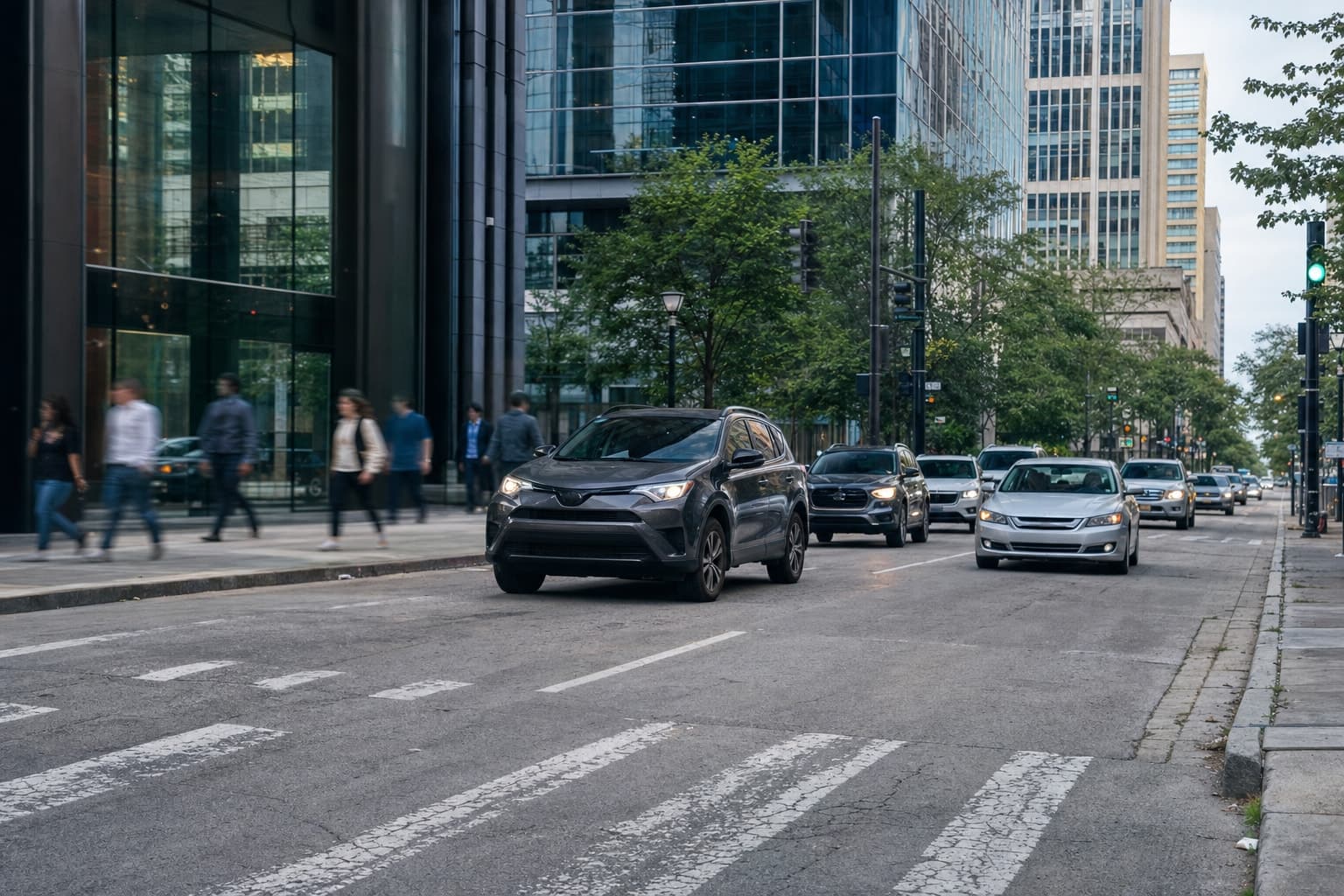
Professional services, health care, and retail make up the largest shares of local business, which means your daily route likely weaves through the same corridors where those industries cluster. Local traffic is not just commuting. It is consultants crossing town for client meetings, clinical staff working irregular shifts, and retail employees driving at peak shopping hours, all of which puts more cars on the road during the hours you are likely behind the wheel. You also share the road with a constant flow of service vehicles, delivery traffic, and customers moving between commercial corridors. Your policy review should start with how often you drive between appointments, whether your car sits in large employee or customer lots, and who else regularly uses it. That density matters when you choose liability limits, uninsured motorist options, and physical damage deductibles. If your week includes short neighborhood trips, Strip-area parking, and freeway miles in the same vehicle, ask for quotes built around actual use, garaging, and mileage instead of a generic commuter profile.
Nevada has a moderate climate risk rating. Top hazards: Wildfire (High), Earthquake (High), Extreme Heat (High), Flash Flooding (Moderate). The state's expected annual loss from natural hazards is $320M, which influences car insurance premiums and may affect coverage availability in high-risk areas.
What Car Insurance Covers
Car insurance in Nevada is built around the same core protections offered nationwide, but the way drivers choose limits often reflects the state's accident and weather profile. Liability coverage is the foundation for injuries you cause to other people. Collision coverage can help pay for damage to your own vehicle in an accident, and comprehensive coverage can help with non-collision losses such as wildfire, theft, weather, or other covered events.
Nevada drivers also commonly review uninsured motorist coverage because the state's uninsured driver rate is 10.2%, which can matter after an auto accident in busy metro areas or on rural highways. Medical payments coverage can help with medical expenses after a crash, and rental reimbursement can keep you mobile while your car is in the shop. State requirements are regulated by the Nevada Division of Insurance, and commercial auto minimums are $25,000/$50,000/$20,000, though personal auto needs can vary by driver and vehicle.
In practice, Nevada shoppers often compare liability, collision, and comprehensive coverage together because extreme heat, wildfire exposure, earthquake risk, and flash flooding can all affect how a policy responds. Because exclusions and endorsements vary by carrier, reading the policy form closely can help you avoid surprises at claim time.
Coverage Included

Liability
Can help pay for injuries and property damage you cause to others in an accident, coverage most states require drivers to carry.

Collision
Can help pay to repair or replace your car after a crash with another vehicle or object, regardless of fault.

Comprehensive
Typically covers damage to your car from events other than collisions, such as theft, hail, fire, flooding, or hitting an animal.

Uninsured Motorist
May pay for your injuries and, in some states, car damage when an at-fault driver has no insurance or too little.

Medical Payments
Can help cover medical bills for you and your passengers after an accident, no matter who was at fault.

Rental Reimbursement
May pay for a rental car while your vehicle is in the shop for repairs after a covered claim.
Car Insurance Cost in Las Vegas
Average Cost in Nevada
$130 - $310
per month
In Nevada, car insurance premiums typically run $130 - $310 per month, which tends to run 29% above the national range of $110 - $230 per month.
- Driving record and age
- Vehicle make, model, and year
- Location and commute distance
- Credit-based insurance score
- Coverage limits and deductibles
Contact CPK Insurance for a personalized quote.
Prices shown are general estimates, not guaranteed rates or quotes. Your actual premium will depend on the insurer, coverage selected, personal details, location, claims history, and other underwriting factors. Learn about our pricing methodology.
Car insurance cost in Nevada depends on several local factors, and the state's premium index of 124 means pricing runs roughly 24% above the national average, which translates to real dollars added to your monthly bill. That higher cost is shaped by the state's 52,000 total crashes in 2023, which means a meaningful chance of involvement on busy roads. A fatal crash rate of 1.38 also contributes to the elevated pricing, signaling that serious accidents happen often enough to push premiums upward. Claim severity averaged $15,880 per incident, a figure high enough to make adequate liability limits worth serious consideration. Drivers in higher-traffic areas like Las Vegas, Reno, and the Carson City corridor may see different pricing than drivers in lower-density communities because location is a rated factor.
Coverage choices also move the number up or down. Higher limits, lower deductibles, and add-ons such as medical payments or rental reimbursement generally increase the quote, while higher deductibles can reduce the monthly premium. Nevada's market is competitive with 340 active insurers, so a quote can vary meaningfully from one company to another.
State-specific risk also plays a role. Wildfire, earthquake, and extreme heat are rated high in the state's climate profile, and flash flooding is a moderate hazard. That means comprehensive coverage may be especially relevant for drivers who park outdoors, commute through storm-prone areas, or travel in places where debris and weather-related damage are more common. A personalized quote is the best way to see where your premium lands.
What Makes Las Vegas Different
Clark County has 53,591 business establishments, which translates to more commercial vehicles, tighter parking, and more lot exposure than a typical suburban driver faces. Professional, scientific, and technical services account for 14.4% of those businesses, with health care and social assistance at 12.5% and retail trade at 12.1%, so the roads you use most are shared by consultants, clinical staff, and retail workers running similar multi-stop schedules. That mix can change which questions matter most on a quote. It is worth checking whether your insurer classifies your use correctly, whether your liability limits still make sense for frequent multi-stop driving, and whether comprehensive and collision deductibles fit where the car is parked during work and errands. If more than one household driver uses the same vehicle for different routines, review each driver's mileage and primary use before you bind coverage.
Our Recommendation for Las Vegas
Your real driving pattern is the right starting point, not the shortest version of it. If you rotate between office visits, school pickup, shopping corridors, and evening errands, tell the agent how the car is actually used and where it is usually parked. That detail helps confirm your coverage fits the actual risk of frequent stops and shared lots. If your household income is close to the area median of $70,723, a practical move is to compare deductible options against what you could comfortably absorb after a loss, instead of defaulting to the lowest premium. Ask for the same quote with at least two deductible structures and review any gap between them. If a teen, roommate, or partner drives the vehicle regularly, list that use clearly up front. Correct classification up front can help avoid claim complications later.
Get Car Insurance in Las Vegas
Enter your ZIP code to compare car insurance rates from carriers in Las Vegas, NV.
Car insurance starting at $59/mo
FAQ
Frequently Asked Questions
Describe your actual routine, including client visits, shift work, errands, and who parks or drives the car most often. In a county with heavy business activity, that detail can matter more than a simple commuter label.
Local traffic often mixes office, retail, and health care travel, not just one daily commute. Because the leading sectors include professional services, health care, and retail, it is smart to revisit your liability limits whenever your driving routine changes.
Compare deductible options against cash reserves, not just the monthly premium. With median household income at $70,723, the better choice is often the deductible you could realistically handle after a covered loss.
Report where the vehicle is usually kept overnight and during the workday. In a county with dense office, retail, and medical activity, parking patterns can affect how an insurer evaluates use and exposure.
In Nevada, liability coverage helps with injuries you cause to others, collision coverage can help repair your car after an accident, and comprehensive coverage can respond to non-collision losses such as wildfire or weather-related damage. Medical payments coverage can help with medical expenses, and rental reimbursement can help keep you driving while your car is in the shop.
Nevada car insurance is regulated by the Nevada Division of Insurance, and commercial auto minimums are $25,000/$50,000/$20,000. Personal auto requirements can vary by situation, so drivers should confirm the coverage that fits their vehicle use and compare policies carefully.
Your premium can move up or down based on location, claims history, coverage limits, deductibles, endorsements, and the vehicle you drive. Because Nevada's premium index sits at 124, most drivers pay above the national average, with typical monthly costs ranging from $130 to $310.
Many Nevada drivers compare all three because each protects against a different risk. Liability addresses damage or injury you cause to others, collision helps with accident damage to your own car, and comprehensive can matter more in Nevada because wildfire, earthquake, extreme heat, and flash flooding are local hazards.
Sources
- 1.U.S. Census Bureau, County Business Patterns, Clark County(Clark County has 53,591 business establishments.; The leading establishment shares in Clark County are professional, scientific, and technical services at 14.4%, health care and social assistance at 12.5%, and retail trade at 12.1%.)
- 2.U.S. Census Bureau, ACS 5-Year Estimates, table B19013(Las Vegas median household income is $70,723.)
Updated July 16, 2026