Updated July 16, 2026

Key Takeaways
- Review your construction contract before requesting a quote, so the named insureds and insurance responsibility match the job documents.
- Prepare the project budget, timeline, address, and scope summary before applying, so the quote reflects the work actually being built.
- Check whether the policy addresses on-site materials, transit, temporary structures, and soft costs before the first delivery arrives.
- Compare the policy term against your realistic completion schedule, then ask about extension options before the original term gets close to expiring.
- Map builders risk against your liability, installation, and equipment policies, so you avoid both coverage gaps and overlapping property insurance.
Builders Risk Insurance in New Hampshire
If you are building, renovating, or expanding in New Hampshire, someone with money at risk will likely demand proof of coverage before loan draws continue, a lease is finalized, or site access is granted. They usually expect a certificate that matches the construction contract, shows the right named insureds, and lines up with the project address, term, and valuation approach. If you are arranging this coverage, that paperwork matters as much as the policy itself because a mismatch can slow funding, delay mobilization, or leave a dispute over who was supposed to insure materials and work in place. This is especially important on renovations, additions, and phased jobs where ownership, occupancy, and responsibility can overlap. Gather the owner contract, lender requirements, and any subcontract language that shifts responsibility for temporary structures, stored materials, or installation exposures. Then review how the policy term fits your build schedule, including delivery lead times and closeout, so the coverage you buy matches how the job may actually move.
What Builders Risk Insurance Covers
A policy may need to address materials at the site, items in temporary storage, and property in transit if your schedule depends on staged deliveries or long lead items arriving in sequence. That matters on projects where weather, access, or subcontractor timing can leave valuable materials waiting to be installed.
You should also look closely at soft cost and delay-related options when the financing structure makes timing important. If a covered loss pushes back completion, the real problem is often not just replacing damaged work, but dealing with extra interest, additional carrying costs, or postponed occupancy. For example, a six month delay on a financed commercial build can add tens of thousands in interest and lost rental income. Those items are not automatic in every form, so they need to be reviewed against the contract and budget.
Renovation work deserves extra attention because the existing building, occupied areas, and new construction often share the same site. In that setting, you want the quote to distinguish between the portion under construction and property that belongs under another policy. That helps avoid assumptions about what policy responds first after a loss.
Temporary works and site security details also affect how the coverage should be structured. Fencing, scaffolding, construction forms, and similar jobsite property may be handled differently depending on policy terms. If your project uses specialty materials or equipment that arrives well before installation, ask for those exposures to be addressed directly in the quote request instead of assuming they are picked up automatically.

Structure Coverage
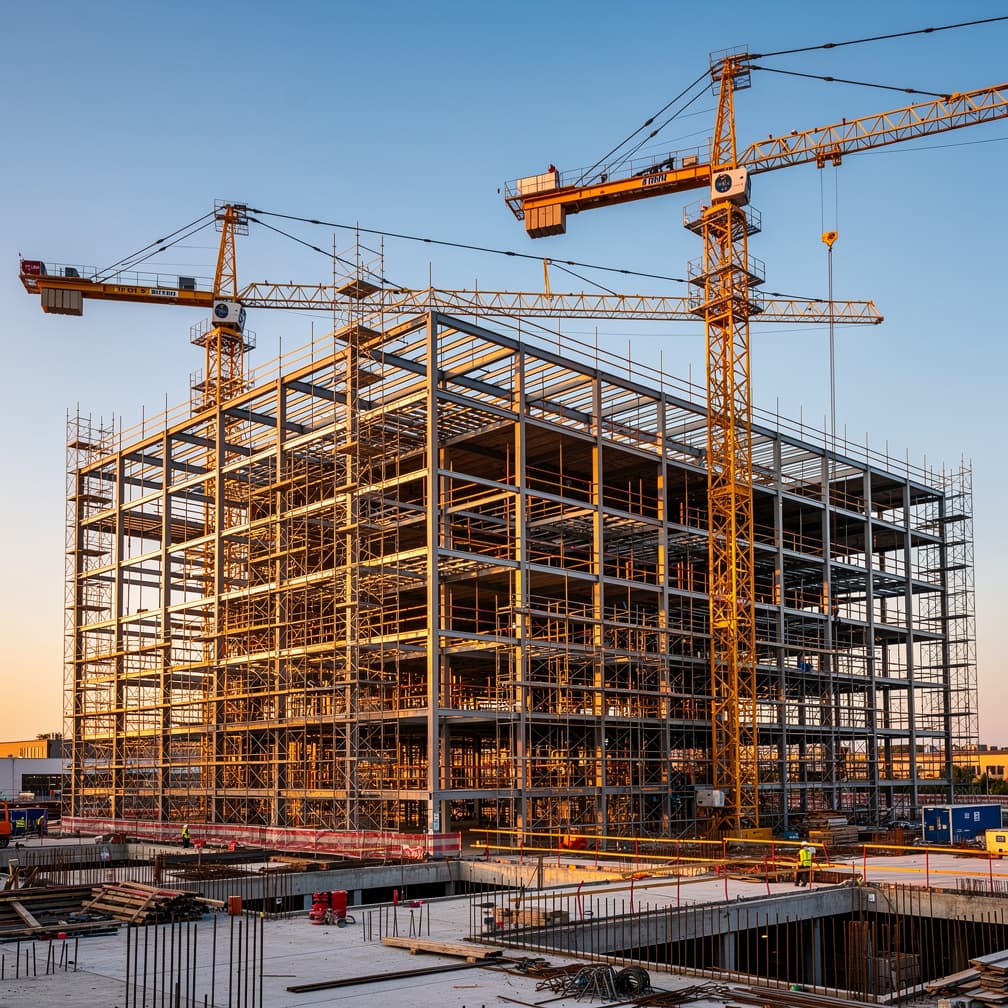
Covers the building or structure under construction.
Materials on Site
Covers building materials stored at the construction site.

Materials in Transit
Covers materials being transported to the job site.
Temporary Structures
Covers scaffolding, fencing, and temporary buildings.

Soft Costs
Covers additional expenses from construction delays due to covered losses.
Equipment Coverage
Covers permanently installed fixtures and equipment.
Builders Risk Insurance Requirements in New Hampshire
- New Hampshire's cold weather season can compress construction timelines, which makes accurate policy terms and realistic completion dates especially important.
- Winter projects may also face higher deductibles for freeze-related water damage, so ask how that peril is handled before binding.
- If your project sits in a coastal or high-wind zone, review named storm deductibles and how they apply to materials stored outdoors.
How Much Does Builders Risk Insurance Cost in New Hampshire?
Builders risk pricing is usually shaped by the job's total insured value, construction type, project length, location, and how exposed the site is during each phase of work.
Underwriters also focus on how values are reported. If the completed value is understated, the quote may look better at first but create problems later if a loss occurs and the policy was not written on the right basis. If the value is overstated, you may pay for limits you do not need. That is why your estimate should separate permanent work, temporary works, owner-furnished materials, and any soft costs you want reviewed.
A short, well-defined project with a realistic completion date is generally easier to place than a job with uncertain phasing, open-ended change orders, or a start date that keeps moving. The same applies to site protection. Clear plans for fencing, lighting, water control, locked storage, and delivery management can help an underwriter understand the loss profile more accurately.
The state regulator is the New Hampshire Insurance Department. They license insurers, review policy forms for compliance, and handle consumer complaints. If a dispute arises over policy language or claim handling, you can file a complaint with them at 21 South Fruit Street, Concord, NH, or by calling 603-271-2261. When comparing forms, endorsements, or policy language, keep your review tied to the actual quote documents rather than assumptions from another state or a prior project. Ask each quoting source to show the valuation basis, covered property categories, term, extensions, and any major exclusions in writing. That makes the price comparison useful, not just cheaper-looking.
Request a Quote Comparison
Enter your ZIP code to compare builders risk insurance rates from top carriers.
Business insurance starting at $25/mo
Who Needs Builders Risk Insurance?
The buyer is often the party named in the contract as responsible for insuring the work, but the real review should include everyone with money at risk if the project is damaged before completion. That can include the property owner, a developer, a general contractor, or another party that has agreed to carry the coverage for the job.
You should pay particular attention when the project involves lender oversight, phased draws, or owner-furnished materials. In those situations, proof of coverage is not just a formality. It can affect whether funds are released, whether materials can be delivered, and whether a dispute starts after a loss over whose property was actually insured.
This coverage is also worth a close look on additions and remodels where part of the building remains in use. Those jobs create more room for confusion because the existing structure, the new work, and the business or household property inside the building may belong under different policies. If your contract is silent or vague, that is a sign to slow down and clarify responsibilities before work starts.
Subcontractors usually do not solve this issue by carrying their own liability or other property-related policies. Those policies may address their legal liability or certain property interests, but they do not automatically replace a properly structured builders risk policy for the project itself. If you are the owner or GC, ask for a coverage review whenever the contract requires completed value protection, names multiple stakeholders, or involves stored materials, custom components, or a long construction timeline.
Builders Risk Insurance by City in New Hampshire
Builders Risk Insurance rates and coverage options can vary across New Hampshire. Select your city below for localized information:
How to Buy Builders Risk Insurance
Start by collecting the documents that control the insurance requirement: the prime contract, lender instructions, project budget, draw schedule, and any exhibits that define who insures what. Then build your quote request around the actual job instead of a generic application. That means listing the project address, construction type, completed value, start date, expected completion date, occupancy status, and whether the work is new construction, an addition, or a renovation.
Next, identify every party that may need to be shown on the policy or certificate. Owners, lenders, and other stakeholders often expect their interest to be reflected correctly, and small naming errors can create delays when you need proof fast. If materials will be stored off site, shipped in stages, or supplied by the owner, include that up front so the quote addresses those exposures from the beginning.
After that, compare policy structure, not just premium. Review the covered property categories, valuation method, term length, extension options, and any conditions tied to vacancy, security, water damage prevention, or theft controls. On a renovation, ask how the quote treats the existing structure versus the portion under construction. On a phased project, ask whether the term and limits still fit if the schedule slips.
Before binding, read the certificate request against the policy draft and the contract side by side. Confirm the named insured, project description, location, and dates all match. That final check is often what prevents a closing delay, a rejected draw request, or a dispute after a covered loss interrupts the job. Request a quote through CPK Insurance to compare your options with participating licensed providers.
How to Save on Builders Risk Insurance
The most effective way to control cost is to make the submission precise and easy to trust. Start with a realistic completed value and a clean scope summary that explains exactly what is being built, renovated, or added. Underwriters price uncertainty, so vague descriptions, missing values, and shifting schedules usually work against you.
You can also save by tightening project controls before the quote goes out. If the site will have locked storage, documented delivery procedures, water shutoff protocols, temporary heat safeguards, and clear responsibility for daily cleanup, include those details. They help show how losses are being prevented, especially on jobs where materials may sit before installation or where multiple trades rotate through the site.
Another common savings move is matching the policy term to the real construction timeline. If you underestimate the term, you may face an extension later under less favorable conditions. If you overbuild the timeline from the start, you may pay for months you do not need. A realistic schedule with room for normal closeout is usually the better approach.
You should also avoid paying for the wrong limit structure. Separate owner-furnished materials, temporary works, and soft cost needs during the quote stage so each item is reviewed intentionally. Finally, compare exclusions and conditions before choosing the lowest number. A cheaper quote can become the expensive option if it leaves out stored materials, creates a gap during transit, or handles renovation exposures in a way that does not fit the job.
Our Recommendation for New Hampshire
For New Hampshire projects, treat proof requirements as an operational issue, not just an insurance purchase. Ask for the certificate wording and lender requirements early, then compare them to the contract before materials are ordered or the first draw is scheduled. That is often where preventable delays start.
On renovations, request a written explanation of how the quote treats the existing building, the new work, and any occupied areas. If those lines are blurry, a claim can turn into a coverage argument at the worst possible time. The same caution applies when the owner is supplying fixtures, specialty materials, or equipment that arrives long before installation.
If your project runs in phases, review whether the policy term, values, and covered property categories still make sense if one trade falls behind. A policy that fits the original schedule may not fit the job after change orders or delivery delays. Ask how extensions are handled before you bind.
Finally, keep one complete file with the contract insurance requirements, quote options, binder, certificate requests, and final policy documents. If a lender, owner, or landlord asks for proof, you can respond quickly and with the exact wording the project requires. That is usually the difference between a smooth closing step and a last-minute scramble.
FAQ
Frequently Asked Questions
Lenders, property owners, and landlords commonly ask for proof before draws, lease approvals, or site access move forward. They usually want the certificate to match the contract, project address, and named insured details so there is no confusion later.
Renovation projects often deserve a separate review because the existing structure, occupied areas, and new work can involve different policies. You should clarify which property is insured where before work starts, especially if the building stays in use during construction.
Lenders often require proof that lines up with loan documents and draw conditions. If the certificate wording, named interests, or project dates do not match the financing file, funding can be slowed while corrections are made.
Projects can involve staged deliveries and off-site storage, but those property categories should be reviewed in the quote rather than assumed. Ask specifically how stored materials, transit exposures, and owner-furnished items are treated under the policy terms.
Insurance oversight runs through the New Hampshire Insurance Department. They license insurers, review policy forms, and handle consumer complaints. If a dispute arises over policy language or claim handling, you can reach them at 21 South Fruit Street, Concord, NH, or by calling 603-271-2261.
Buyers usually get better results by starting with the contract, lender requirements, and project budget before requesting quotes. That helps the policy reflect the right insured parties, completed value, term, and property categories from the beginning.
Contractors may carry liability or other property-related coverage, but that does not automatically replace a builders risk policy for the project itself. If the contract assigns responsibility for insuring the work, review that obligation directly instead of assuming another policy fills it.
Builders risk insurance may cover, subject to policy terms, the structure under construction, materials on site, materials in transit, temporary structures, and fixtures or equipment being installed. Depending on the policy, you can also review soft costs and delay-related coverage tied to a covered property loss.
Sources
- 1.New Hampshire Insurance Department(The state regulator is the New Hampshire Insurance Department.)
Updated July 16, 2026