Updated July 16, 2026

Key Takeaways
- List every towing and transport service you perform before requesting quotes, so loading, unloading, winching, and recovery exposures are reviewed correctly.
- Compare the on-hook limit, deductible, valuation method, and exclusions side by side instead of choosing a policy on premium alone.
- Ask in writing whether your policy addresses the specific vehicles you tow most often, especially specialty, modified, low-clearance, or higher-value units.
- Use pre-tow photos, condition notes, and signed release procedures on every job to reduce disputes and support claims handling.
- Review on-hook coverage together with auto liability and any garagekeepers coverage before renewal to catch gaps between transport and storage.
On-Hook Towing Insurance in New Mexico
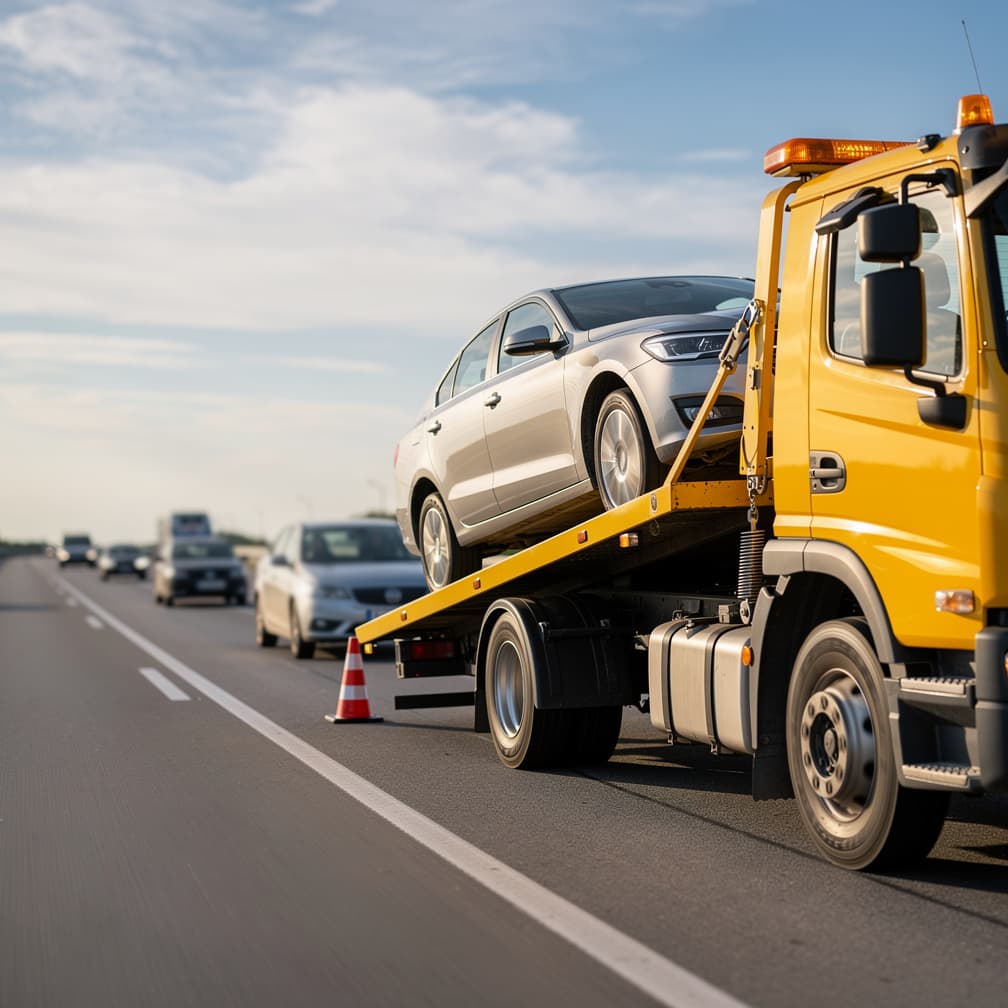
A tow company running mostly dealer transfers between Albuquerque lots faces a different on-hook exposure than a rural operator pulling pickups out of arroyos after a storm. Both may need on-hook towing insurance in New Mexico, but the right limit, deductible, and vehicle schedule can look very different once you account for terrain, travel distance, after-hours calls, and the kinds of units you actually move.
A low-clearance sedan loaded on pavement creates one set of handling issues. A lifted truck recovered off an unpaved shoulder creates another, especially if you use winching, wheel-lift equipment, or a rollback in changing weather. Your quote should match where your calls come from, how often you cross long stretches between dispatch points, and whether your work leans toward roadside assistance, impounds, recovery, or scheduled transport. Before you shop, separate your routine tows from your higher-severity jobs so you can ask for terms that fit the real loss potential.
What On-Hook Towing Insurance Covers
In New Mexico, the most useful review starts with the moments where damage disputes actually develop during a tow. Think about the jobs that create extra strain on bumpers, undercarriages, suspensions, body panels, and glass. A compact car picked up from a paved parking lot is one exposure. A disabled SUV loaded from a narrow shoulder, a dirt lot, or a sloped driveway is another. If your operation handles both, your policy review should focus on whether your limits and deductibles still make sense for the heaviest and most damage-sensitive vehicles you accept.
State conditions can change how an ordinary tow becomes a more complicated one. Wind, dust, sudden rain, hail, and wildfire-related route changes can all affect loading position, visibility, stopping distance, and where you can safely unload. That does not automatically change what your policy may cover, but it does change how carefully you should document the vehicle condition before hookup, during loading, and at delivery. If your drivers work nights on highways, tribal roads, oilfield-adjacent routes, or remote county roads, ask how the policy responds when a routine tow turns into a longer transport because the nearest safe drop location is farther away than expected.
You should also review the operational edges that often create claim friction. Low-clearance vehicles, modified trucks, electric vehicles, motorcycles, and units with pre-existing damage each carry their own dispute potential. In practice, the strongest buying move is to line up your dispatch records, tow tickets, and photo process with the policy terms before renewal. That gives you a cleaner way to show what happened, what condition the vehicle was in, and whether the loss arose during the tow itself.
Collision on Hook
Covers damage to towed vehicles from collisions during transport.
Comprehensive on Hook
Covers theft, fire, and weather damage to vehicles being towed.
Loading & Unloading
Covers damage during the process of loading and unloading vehicles.
Winching Coverage
Covers damage to vehicles during winching and recovery operations.

Multiple Vehicle
Covers all vehicles on multi-car carriers and rollback flatbeds.
On-Hook Towing Insurance Requirements in New Mexico
- Towing operations that cross long rural stretches should review whether longer transport times change the practical claim exposure for vehicles in transit. The same review matters for dirt shoulders, sloped driveways, and unpaved access roads, where loading conditions often shape later damage disputes.
- Operators handling wildfire detours, dust, hail, or sudden rain should confirm their incident reporting process captures weather and road conditions at the scene. A mixed fleet serving both Albuquerque-area traffic and remote county calls should be described by unit and job type, not as one uniform towing exposure.
How Much Does On-Hook Towing Insurance Cost in New Mexico?
The price of this coverage in New Mexico usually moves with severity drivers inside your operation, not with a one-size-fits-all towing label. Underwriters want to know what kinds of vehicles you handle, how often you perform recovery work instead of straightforward transport, whether you use flatbeds or wheel-lift units, how far your average tow runs, and how often your drivers work in remote areas where a simple breakdown can become a longer, more technical job. If your book includes impounds, accident scenes, or off-pavement recoveries, expect those details to matter.
Geography also affects how a quote is built. A metro-focused fleet with short urban runs may present a different loss profile than a business covering wide service territory between towns, repair facilities, and storage yards. Longer distances can mean more time with a customer vehicle in your care, and rougher access points can increase the chance of scrape, shift, or loading damage allegations. If your operation changes by season, say so clearly, because a carrier can only price what you describe and vague submissions often lead to terms that may not fit your real work.
Your deductible choice, requested limit, truck values, driver experience, and claims history all influence cost. So does the quality of your documentation. If you can show consistent pre-tow photos, signed condition reports, driver training, and a clear process for handling modified or low-clearance vehicles, you give the underwriter a stronger file to work with. Ask for quote options built around your actual mix of dealer moves, roadside calls, recovery, and impound work, then compare how each option changes your retained risk after a loss.
Request a Quote Comparison
Enter your ZIP code to compare on-hook towing insurance rates from top carriers.
Business insurance starting at $25/mo
Who Needs On-Hook Towing Insurance?
In New Mexico, this coverage deserves a close look if your business regularly takes possession of vehicles in conditions that make damage allegations more likely or more expensive to resolve. That includes operators serving interstate corridors, mountain routes, rural highways, reservation-adjacent areas, and metro traffic where a vehicle may need to be loaded quickly in a tight or unsafe location. If your dispatch board includes both routine breakdowns and more technical recoveries, your exposure is broader than a simple tow count suggests.
You should pay particular attention if your company handles pickups, SUVs, work trucks, lifted vehicles, motorcycles, or vehicles with prior body damage. Those jobs often create disputes about what happened before the tow, during hookup, or at unloading. The same is true if you move vehicles for repair shops, body shops, auctions, lenders, apartment complexes, or law enforcement-related impound activity.
This also matters for smaller operators who think their risk is limited because they run only a few units or take mostly local calls. A short tow can still produce a costly claim if the vehicle is low-clearance, heavily modified, or already compromised before loading. Review your need for coverage whenever you add a new truck type, expand into recovery work, start serving a wider territory, or begin accepting jobs that your drivers used to decline. Those changes often alter your exposure faster than your policy paperwork catches up.
On-Hook Towing Insurance by City in New Mexico
On-Hook Towing Insurance rates and coverage options can vary across New Mexico. Select your city below for localized information:
How to Buy On-Hook Towing Insurance
Start your New Mexico quote process by separating your operation into real job types instead of describing everything as towing. Break out dealer transfers, roadside calls, impounds, accident recovery, off-road winching, long-distance transports, and any specialty work involving motorcycles, electric vehicles, or modified trucks. Then note which truck handles each type of job. That helps an underwriter match limits and deductibles to the units and services that create the largest on-hook loss potential.
Next, prepare the records that answer the questions a careful market will ask. Gather a current vehicle schedule, driver list, service territory description, recent loss runs if available, and a short written explanation of how your drivers document vehicle condition before hookup and after delivery. If your routes regularly include remote highways, steep grades, dirt access roads, or weather-related detours, say that plainly. It is better to explain difficult work up front than to buy a policy built around a cleaner operation than the one you actually run.
You should also review your paperwork flow before requesting terms. Make sure tow tickets, dispatch notes, storage records, and photos can be tied back to a specific date, driver, and unit. In a disputed claim, that file often matters as much as the policy language. New Mexico's insurance regulator is the New Mexico Office of Superintendent of Insurance, so if you want to verify licensing or consumer resources while comparing options, keep that office on your checklist. Before binding, ask the agent to walk through exclusions, deductible application, reporting expectations, and any mismatch between your highest-risk jobs and the quoted terms. Request a quote through CPK Insurance to compare your options with participating licensed providers.
How to Save on On-Hook Towing Insurance
The most reliable way to lower your long-term insurance cost in New Mexico is to make your operation easier to underwrite and easier to defend. Start with a photo standard your drivers can follow on every call, including approach shots, close-ups of existing damage, wheel position, hookup points, and delivery condition. That process is especially important on dusty vehicles, older units, and pickups with prior bumper or suspension issues, where a customer may not notice damage until after the tow is complete.
Next, tighten job classification. If you mix dealer moves, roadside assistance, impounds, and recovery work under one vague description, you make it harder for an underwriter to price your account accurately. A cleaner submission can prevent you from paying for exposures you do not have, while still disclosing the ones you do. Review whether certain high-severity jobs should be limited to specific drivers or specific trucks, because restricting who handles difficult recoveries can improve your loss profile over time.
Driver training also saves money when it is specific. Focus on loading angles, low-clearance handling, wheel-lift limitations, EV procedures, and when to decline a job until the right equipment arrives. Pair that with a documented post-incident routine so small scrapes or shifting events are reported immediately, not discovered later through a complaint. Finally, revisit your deductible and limit structure at renewal instead of auto-renewing last year's setup. If your mix of work has shifted toward shorter urban tows or away from severe recovery jobs, ask for the quote to be rebuilt around the current operation, not the old one.
Our Recommendation for New Mexico
For New Mexico towing operators, the smartest buying move is to build your quote around route reality. If one truck spends most of its time on paved metro calls and another handles rural recoveries, do not let both units be described the same way. Separate them by service type, territory, and the kinds of vehicles they move. That gives you a better chance of getting terms that fit each exposure instead of averaging everything together.
Ask for a policy review that focuses on severity, not just frequency. A business with fewer calls can still face larger on-hook losses if those calls involve lifted trucks, remote recoveries, or long transports to the nearest shop or storage yard. Review your highest-value and hardest-to-handle tows first, then decide whether your current limit and deductible still make sense. For example, if your three toughest jobs last quarter involved a winched pickup from an arroyo, a low-clearance sedan on a steep driveway, and a long-haul transport to a storage yard sixty miles out, your limit and deductible should be built around what those specific tows would cost to defend, not what a routine roadside call would run. You should also test your claim file before you buy. Pull a recent tow ticket and see whether it clearly shows pre-existing damage, hookup method, driver identity, timestamps, and delivery condition. If that file would be weak in a dispute, fix the process now so your next quote is based on how your company actually works.
FAQ
Frequently Asked Questions
Operators doing rural recovery work should review on-hook coverage closely because off-pavement loading, longer hauls, and difficult access points can increase damage disputes. Ask for terms built around your actual recovery jobs, not just routine roadside towing.
Buyers should compare quotes using the same truck schedule, driver list, service territory, and job mix each time. Then review differences in limits, deductibles, exclusions, and how each option treats your hardest-to-place vehicles and longest tows.
Weather can affect buying decisions because wind, dust, hail, and sudden rain change loading conditions and documentation needs. If weather regularly complicates your calls, describe that in the submission so the quote reflects the operation more accurately.
Tow companies should prepare a current unit list, driver information, service territory notes, loss history if available, and sample tow documentation. A cleaner submission helps the underwriter understand whether your exposure is mostly transport, impound, roadside, or recovery.
Insurance complaints and consumer resources fall under the New Mexico Office of Superintendent of Insurance. If you are comparing policies, use that office to verify licensing information and keep your policy documents organized before you bind coverage.
Operations based in Albuquerque may have shorter, denser traffic exposures, while remote routes can mean longer time in your care and more difficult loading conditions. That difference can justify a more detailed review of limits, deductibles, and truck assignments.
Small tow companies may still need this coverage because claim severity does not depend only on fleet size. One difficult tow involving a modified truck, prior damage, or a disputed unload can create a meaningful loss for a small operator.
On-hook towing insurance may cover damage to a customer vehicle while it is being loaded, attached, carried, winched, or unloaded by your tow truck, depending on the policy terms. Buyers should review collision, fire, theft, weather, and loading-related damage carefully.
Sources
- 1.New Mexico Office of Superintendent of Insurance(New Mexico's insurance regulator is the New Mexico Office of Superintendent of Insurance.)
Updated July 16, 2026