







































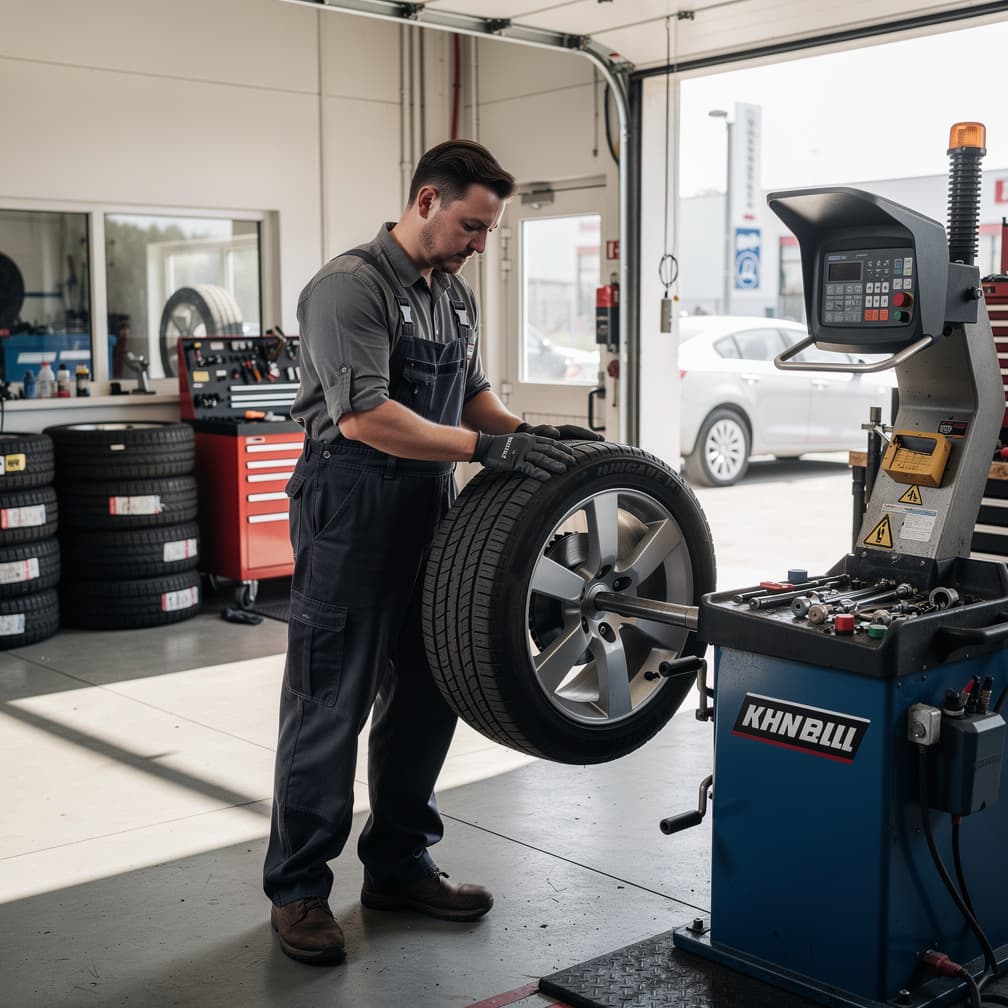

Fire in a tire shop is rarely a small event: rubber, solvents, and a compressor room make for a loss that takes the building and the stock together. Auto tire shop insurance in Fargo has to answer for the structure, the lifts and balancers inside it, and the income that stops while the bay is dark. Theft is the quieter version of the same problem, since wheels and hand tools move easily and resell without much trouble. A shop can be mounting tires again in a week or shut for a season, and the difference usually sits in endorsements nobody read. Ask what the policy does about equipment that fails on its own rather than burning. Then ask what your Cass County lease already obligated you to carry.
What Makes Fargo Different
Where about 14 auto tire shops serve Cass County, your competition is distance rather than the shop next door. Customers drive past two towns to reach you, so they arrive already annoyed and in a hurry. A hurried bay is where wheels get torqued wrong and door panels meet rolling jacks. Volume does not protect you from that, because one bad install still travels the whole county. Thin markets also mean fewer adjusters, fewer body shops, and much longer waits after any loss. A car you cannot return sits on your lot while the queue moves at its own pace. Ask a carrier how claims get assigned in rural areas before you ask about the premium. The answer changes what a policy is worth to you far more than the rate does.
Local Risk Factors in Fargo
Photograph your equipment and your stock before the season that brings this weather. A claim after a severe storm gets settled on evidence, and shops that cannot show what was in the tire room before the roof came off spend months arguing about it. Serial numbers on the balancer and the alignment rack are worth ten minutes now. Commercial Property may respond to what you can prove you owned, at whatever valuation basis the policy names, and replacement cost and actual cash value are very different answers. Check which one your Fargo quote uses. Then keep the photographs somewhere that is not inside the building in Cass County.
What Coverage Does an Auto Tire Shop in Fargo Need?
General Liability
Landlords, fleet accounts, and dealers all ask to see this line before they let you touch anything, and it is the limit a certificate advertises. It is generally meant for third-party injury and property damage: the customer who goes down in your entryway, or the wheel that comes off a mile after an install. It typically does not reach your own building, your own tools, or your own employees.
Example: A customer crosses the waiting room floor, slips on water tracked in from the bay, and leaves with a fractured wrist and a lawyer. The medical bill and the defense costs are what this line is generally asked to answer.
Garage Keepers
A customer's car sits in your bay, on your lift, or out on the lot overnight, and none of it belongs to you. This line is written for vehicles in your care, and the forms vary: some respond only to enclosed storage, some carry a deductible for each vehicle, and some stop at the lot line. Your own property coverage will not stand in for it.
Example: A hail burst dents nine cars waiting on the lot for tires arriving tomorrow, and every owner phones you rather than their own insurer. Depending on the form you bought, this coverage might pick that up.
Commercial Property
The lifts, the balancer, the mounting machine, the compressor, and the rubber stacked to the ceiling are what this line is built around, alongside the building or your improvements to it if you lease. Named causes like fire, theft, and storm are the usual triggers. A machine that fails on its own is normally a separate purchase, and rising water sits outside the standard form.
Example: A fire starting in the compressor room of a Fargo shop takes the tire room with it and leaves the bays dark for a season. The building and the machines inside are what this line can respond to.
Workers Compensation
Liability lines stop at your own staff, and this is the one that starts there. It is generally intended for medical costs and lost wages when an employee gets hurt on the job, which in a tire shop usually means backs, shoulders, and hands. It is rated against payroll and class code rather than revenue, and rules on who must carry it vary by state.
Example: A tech wrestling a truck tire onto a rim tears a shoulder and is off the floor for two months. Wage replacement and treatment are typically where this line does its work.
Product Liability
A customer blames the part rather than the install, and this is the line that argument lands on. It is meant for claims that a tire, a valve stem, or a wheel you supplied was itself defective, and a demand letter naming you alongside the manufacturer is the ordinary shape of it. A manufacturer's warranty is no substitute, since it does not defend you.
Example: A casing sold across your counter fails at highway speed, and the driver's attorney names your shop, the distributor, and the maker in one filing. Defense costs are what this coverage could be asked to carry.
How Much Does Auto Tire Shop Insurance Cost in Fargo?
Auto Tire Shop Insurance is a bundle of separate policies, priced separately. The ranges below are typical figures for Fargo for each line, except workers compensation, which is set by the state fund; a quote prices each one against your own operations.
| Coverage | Typical range | What moves your price |
|---|---|---|
| General Liability Insurance | $110 - $320 per month | Industry and risk classification, annual revenue, number of employees |
| Garage Keepers Insurance | Varies | Quoted individually based on your operations and limits |
| Commercial Property Insurance | $130 - $390 per month | Building value and construction type, roof age and condition, fire protection class |
| Workers Compensation Insurance | Set by the state fund | Employee classification codes, total annual payroll, experience modification rate |
| Product Liability Insurance | Varies | Quoted individually based on your operations and limits |
Prices shown are general estimates, not guaranteed rates or quotes. Your actual premium will depend on the insurer, coverage selected, business details, location, claims history, and other underwriting factors. Learn about our pricing methodology.
What Are the Insurance Requirements for an Auto Tire Shop in Fargo?
Workers' comp is generally required once you have your first employee, through the state fund. North Dakota runs workers' compensation through a state fund: employers buy coverage from the North Dakota Workforce Safety & Insurance (WSI), not from private carriers. Common exemptions include sole proprietors with no employees and partners in partnerships without employees. Confirm current requirements directly with the fund before you hire.
Flood damage is typically excluded from standard policies. Standard commercial property and builders-risk-type policies typically exclude flood damage. Flood exposure varies address by address, so check your premises in FEMA's Flood Map Service Center before deciding; if you sit in a mapped flood zone, a separate policy through the National Flood Insurance Program is the usual starting point.
Where to verify licensing and coverage rules. The North Dakota Insurance Department publishes consumer guidance and current insurance requirements for North Dakota businesses. When a contract or lease demands specific wording, the North Dakota Insurance Department's guidance is the authoritative place to check.
Get Your Auto Tire Shop Quote in Fargo
Compare rates from multiple carriers. Free quotes, no obligation.
Operating in Fargo
- A property manager in Fargo can hold your access badge until a current certificate is on file, so a lapsed renewal stops work that has nothing to do with insurance.
- Wheel weights, torque sticks, and impact guns walk out of open bays, and a theft claim on hand tools often costs more in deductible and loss history than the tools were worth.
- Customers wait inside while their car is on the lift, which puts untrained people a few feet from moving equipment and makes your waiting room a liability question rather than a courtesy.
- The keys drawer is your real inventory: every set in it stands for a vehicle you are answerable for until the owner drives away.
How to Buy: Advice for Fargo Owners
Every quote answers the question you asked, so ask a better one. Send the same submission to everybody: same payroll, same revenue, same equipment values, same overnight vehicle count, same requested limits. Different inputs produce different prices, and then you learn nothing about the carriers themselves. Once the inputs match, what remains is appetite, form wording, and claim handling, which are the things actually worth choosing between. Ask each one what Garage Keepers excludes and whether Commercial Property addresses machines that fail on their own. Ask how fast a claim gets assigned in Fargo, and ask who you talk to when one gets denied. CPK is built for exactly this: one submission, several participating carriers in North Dakota, answers you can lay next to each other.
FAQ
Auto Tire Shop Insurance in Fargo: FAQ
The account tends to find out at the worst moment, which is the moment it needs proof. Gates stay closed, invoices sit, and work you already finished can go unpaid until a current copy is on file. Nobody calls to warn you first. Setting a reminder ahead of the renewal date and sending the replacement unprompted is a small habit that prevents a genuinely expensive week.
Yes, and it usually works, though the real question is what you would fund yourself. A higher deductible stops you filing small claims, and small claims are what push a shop out of a good rate across three renewals. It only makes sense when the cash is genuinely there the day a customer's fender needs paying for. That is a bank balance decision more than an insurance one.
Driving a customer's vehicle raises a custody question your form answers in its own words. Some garage forms speak to vehicles in your care while being moved; others stop at the lot line. Read the definition of custody in your own policy before anyone road-tests anything, and get a carrier's answer in writing rather than over the phone. Assumptions on this point are how uncovered losses start.
It is an endorsement that lets another party stand behind your policy limit when a claim names them alongside you. Landlords, fleet accounts, and dealers ask for it because it moves their defense costs onto your form. Carriers do not add it automatically and some decline to add it at all. That is how a Fargo contract can commit you to something your current policy cannot deliver, which is worth checking before you sign.
Revenue is only one input. Claims history usually explains the gap, and a pattern of small liability losses reads worse to an underwriter than one large loss does. Payroll and class codes move the workers side on their own. The building, its age, and its protection move the property side. Two shops in Cass County with identical sales can look completely different on paper, and the paper is what gets priced.
Non-renewal is the more common outcome, and it usually arrives at the end of the term rather than mid-policy. Rules on notice, mid-term cancellation, and what options you have differ by state. The North Dakota Insurance Department publishes the current requirements for cancellation and non-renewal notice in North Dakota. The practical protection is a clean loss run and a deductible set high enough that small claims never get filed.
Sources
- 1.U.S. Census Bureau, County Business Patterns (2023), Cass County(Cass County has about 14 businesses in this trade's category (NAICS group 441320).)
- 2.North Dakota Insurance Department(North Dakota Insurance Department publishes consumer guidance for insurance buyers.)
- 3.FEMA / FloodSmart(Flood coverage is typically purchased separately; FEMA administers the National Flood Insurance Program.)


