Updated July 16, 2026

Key Takeaways
- List every towing and transport service you perform before requesting quotes, so loading, unloading, winching, and recovery exposures are reviewed correctly.
- Compare the on-hook limit, deductible, valuation method, and exclusions side by side instead of choosing a policy on premium alone.
- Ask in writing whether your policy addresses the specific vehicles you tow most often, especially specialty, modified, low-clearance, or higher-value units.
- Use pre-tow photos, condition notes, and signed release procedures on every job to reduce disputes and support claims handling.
- Review on-hook coverage together with auto liability and any garagekeepers coverage before renewal to catch gaps between transport and storage.
On-Hook Towing Insurance in South Dakota
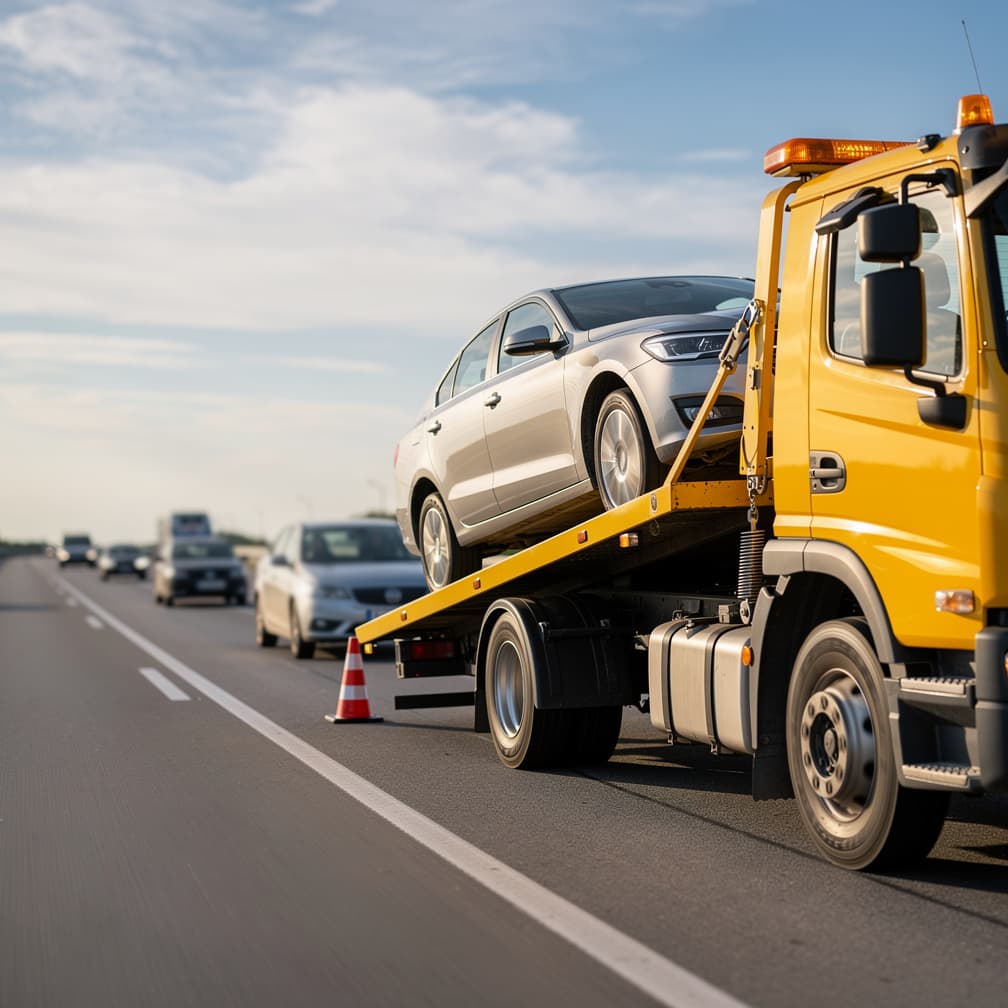
You just finished a hard roadside recovery, and now the storage lot wants proof that your policy addresses damage to vehicles while they are attached, winched, or carried. That is the moment on-hook towing insurance becomes a real buying decision. You need limits that match the vehicles you actually move, territory details that fit long rural runs as well as town calls, and policy language you can explain if a customer questions damage after loading or unloading. A January ditch recovery near Huron or a muddy farm-road pull outside Yankton can turn a routine tow into a disputed claim fast. Ice does not void exclusions by itself, but it does complicate the question of whether damage happened before hookup or during recovery, and gravel roads do not automatically raise premiums, though carriers may price rural exposure differently if your trucks run long distances between calls. Before you shop, line up your truck list, service mix, towing radius, and the top-tier vehicles you handle so the quote reflects your real exposure.
What On-Hook Towing Insurance Covers
The practical question is not whether on-hook coverage exists in the abstract, but where your operation creates the most damage potential during the tow. A truck that spends most of its week on paved roadside calls in Sioux Falls or Rapid City can present a different claim pattern than a unit that regularly pulls vehicles from ditches, gravel shoulders, ranch roads, or winter-slippery approaches outside town.
As you compare policies, ask the agent to walk through your actual job flow. You want to know how the policy responds when a vehicle is being secured, when it is already attached, when it is carried on a bed, and when it is being set down at a shop, yard, residence, or impound location. If you handle police-ordered tows, private property impounds, dealer transfers, or recovery work, say so clearly. Those details help shape whether the policy is being matched to your operation or just quoted broadly.
State conditions also make claim documentation more important. Mud, ice, wind, and low-visibility conditions can complicate the question of whether damage happened before hookup, during recovery, or at delivery. That is why you should review not only limits, but also exclusions, valuation language, and any conditions tied to unattended vehicles, keys, storage transitions, or subcontracted work. In the kinds of tows you actually perform across the state, where could a customer vehicle claim still fall back on your business?

Collision on Hook
Covers damage to towed vehicles from collisions during transport.
Comprehensive on Hook
Covers theft, fire, and weather damage to vehicles being towed.

Loading & Unloading
Covers damage during the process of loading and unloading vehicles.
Winching Coverage
Covers damage to vehicles during winching and recovery operations.

Multiple Vehicle
Covers all vehicles on multi-car carriers and rollback flatbeds.
On-Hook Towing Insurance Requirements in South Dakota
- Towing operations here often mix town calls with long rural runs, so territory descriptions should match where your trucks actually recover and deliver vehicles.
- Winter recovery work can complicate damage disputes, which makes photo documentation, condition notes, and securement records especially important before and after movement.
- If you tow pickups, farm-use vehicles, or work trucks on gravel roads or uneven shoulders, review limits and exclusions with those heavier, harder-to-value units in mind.
- A policy review should address how your operation moves vehicles from roadside recovery to storage or repair locations without leaving unclear responsibility points.
How Much Does On-Hook Towing Insurance Cost in South Dakota?
For most operators, on-hook premiums start in the range of a few hundred dollars per truck annually for routine transport work, but recovery-heavy operations or higher limits can push that cost meaningfully higher. Your premium usually moves with the kinds of vehicles you tow, the equipment you use, the distances you run, your claims history, and whether your work leans toward routine transport or higher-dispute recovery and impound activity. A flatbed used for scheduled moves can be viewed differently from a wheel-lift unit that handles after-hours roadside calls, accident scenes, and difficult extractions in changing weather.
State geography can also affect how you think about cost, even if the quote does not break it out line by line. If your trucks cover long stretches between calls, work on rural roads, or respond in winter conditions, the chance of a complicated loading or recovery event may be different from a tighter urban route pattern. Your application should describe where and how the trucks operate so the underwriter is pricing the right exposure.
A $50,000 limit with a $1,000 deductible will price differently than a $100,000 limit with a $2,500 deductible, and the gap can be significant. If you regularly tow newer pickups, commercial vans, or heavier vehicles, a low limit may look cheaper at first and still leave you exposed in a serious claim. The better buying move is to compare quotes at the limit levels that match the premium vehicles you are willing to accept. Ask each carrier option to show the same operational details, the same deductible structure, and the same service mix. That gives you a cleaner comparison and helps you see whether a lower premium comes from real value or from narrower terms you may not want after a loss.
Request a Quote Comparison
Enter your ZIP code to compare on-hook towing insurance rates from top carriers.
Business insurance starting at $25/mo
Who Needs On-Hook Towing Insurance?
This coverage deserves a close look if your business takes possession of customer vehicles in any way that creates responsibility during towing or transport. That includes dedicated towing companies, but it also reaches operators whose work blends roadside assistance, recovery, transport, impound, salvage movement, or dealer and auction runs. If a customer can argue that damage happened while the vehicle was attached to your truck or being moved by your equipment, you should review on-hook terms carefully.
This matters even more if your operation is not limited to one clean service type. Many towing businesses shift between local breakdown calls, law-enforcement rotations, private property work, seasonal weather-related recoveries, and longer-distance transports. Each of those jobs can change the condition of the vehicle at pickup, the amount of winching involved, and the likelihood of a dispute over pre-existing damage. If your invoices say one thing but your drivers routinely perform more involved recovery steps, your quote should reflect that reality.
You should also review this coverage if you tow vehicles that are harder to value or harder to handle. That can include modified pickups, work trucks with attached equipment, SUVs loaded with personal property, or vehicles recovered from snow, mud, or uneven terrain. The issue is not just whether damage occurs, but whether you can show what condition the vehicle was in before movement began. A simple test helps. If your driver ever hooks, lifts, winches, loads, carries, or unloads a vehicle that does not belong to your business, and your company could be blamed for damage during that process, this coverage may belong in your insurance review.
On-Hook Towing Insurance by City in South Dakota
On-Hook Towing Insurance rates and coverage options can vary across South Dakota. Select your city below for localized information:
How to Buy On-Hook Towing Insurance
Before you request quotes, build an operations file. List every truck, every towing method, your service territory, your storage arrangements, and the kinds of calls you actually accept. Include whether you do police work, private impounds, dealer moves, repossessions, recoveries, seasonal overflow, or long-distance transport. The more complete and specific your submission is, the more accurately an underwriter can match your operation to a policy that fits.
Prepare examples of the toughest jobs you handle, not just the easiest ones. If your drivers recover vehicles from ditches, tow in snow and ice, move heavier pickups, or work on gravel and rural roads, say that up front. Operations across the state often cover a wide mix of conditions, and a quote built only around routine paved-road tows can leave gaps between how the policy was described and how your crews actually work.
Review policy terms with a claims mindset. Ask how damage is evaluated during hookup, winching, transport, and unloading, what documentation the carrier expects after a loss, and whether photos, dispatch notes, signed condition reports, or driver statements will matter if a customer disputes when damage occurred. Those questions help you buy a policy you can actually use.
Verify the agency or carrier you are considering is properly positioned for insurance business in your state. Before binding coverage, confirm the named insured, truck schedule, service descriptions, limits, and deductibles match your current operation, not last year's version of it. Ready to get matched with participating licensed providers? Request a quote today.
How to Save on On-Hook Towing Insurance
The strongest way to control on-hook insurance cost is to make your operation easier to underwrite and easier to defend after a claim. Start with job documentation that matches the realities of towing in mixed road and weather conditions. Require clear intake photos when practical, note pre-existing damage before hookup, and document where the vehicle was found, how it was recovered, and who received it at drop-off. That record can matter as much as the policy itself when a customer challenges a damage timeline.
Driver process is the next savings lever. Standardize securement steps, winching procedures, and handoff documentation across every truck, not just your most experienced operators. If one driver uses detailed condition notes and another relies on memory, your claim file becomes harder to defend. Consistent procedures can help show underwriters that your business is disciplined, which is often more persuasive than simply asking for a lower premium.
You can also save by matching your coverage structure to the vehicles you actually accept. If you have changed your service mix, added heavier units, or stopped doing certain high-dispute jobs, update the application before renewal. Paying for exposures you no longer take on is wasteful, but underreporting current work can create bigger problems after a loss. Describe what your crews actually do, not the smallest version of it.
Finally, review deductibles and limits together instead of shopping on premium alone. A higher deductible may reduce cost if your cash flow can absorb it, while a limit that is too low can turn one serious claim into an out-of-pocket business problem. Ask for side-by-side quote options built on the same truck list and service profile so you can see where savings are real and where they come from tradeoffs.
Our Recommendation for South Dakota
For towing businesses, buy this coverage around your hardest recoveries, not your easiest dispatches. If your trucks move between town calls, rural roads, winter weather, and occasional heavy pickups or work vehicles, make sure your quote review reflects that full mix. A policy that looks fine for routine transport can feel very different once a disputed damage claim involves winching, uneven terrain, or a long tow back to storage.
You should also treat documentation as part of the coverage purchase, not as an afterthought. Before binding, decide how drivers will photograph vehicles, note pre-existing damage, record securement steps, and document delivery condition. Changing road and weather conditions can blur the story of when damage happened, so your internal process should be strong enough to support the policy you buy.
Keep the state review practical. Confirm the named insured matches the entity on your contracts, the truck schedule is current, and the service descriptions include the work you actually perform. Then compare quotes with your real truck list, real territory, and real service mix, so the coverage decision is based on your operation instead of assumptions.
FAQ
Frequently Asked Questions
Compare quotes using the same truck list, service mix, limits, and deductibles. It also helps to verify licensing and complaint resources through the state insurance regulator before you bind coverage.
Rural routes can change the kinds of recoveries your drivers handle, especially where gravel roads, ditches, and longer transport distances are common. That is why your quote should describe actual territory and recovery work, not just routine paved-road towing.
Document vehicle condition before hookup, securement steps, recovery conditions, and delivery condition. Clear photos, dispatch notes, and signed handoff records can help if a customer later disputes whether damage happened before the tow or during it.
Insurance regulation is overseen by the South Dakota Division of Insurance. You can reach them at 605-773-3563 or visit their website at [dlr.sd.gov/insurance](https://dlr.sd.gov/insurance). If you are checking licensing, complaint information, or general regulatory resources while shopping coverage, start there before you bind a policy for your towing business.
Review limits against the premium vehicles you are willing to accept. If your operation regularly handles newer pickups, commercial vans, or equipment-heavy work trucks, a low limit may leave too much of a serious claim on your balance sheet.
Operations that mix routine roadside tows with more involved recovery work should be careful here. A policy should be reviewed against the full service mix, because the claim exposure from a simple tow can differ from a ditch pull or winter recovery.
Start by organizing an accurate operations summary: trucks, towing methods, service territory, storage locations, and every type of call accepted. That gives the underwriter a clearer picture and helps you compare quotes built on the same facts.
On-hook towing insurance may cover damage to a customer vehicle while it is being loaded, attached, carried, winched, or unloaded by your tow truck, depending on the policy terms. Buyers should review collision, fire, theft, weather, and loading-related damage carefully.
Sources
- 1.South Dakota Division of Insurance(South Dakota insurance regulation is overseen by the South Dakota Division of Insurance.)
Updated July 16, 2026