Updated July 16, 2026

Key Takeaways
- List every towing and transport service you perform before requesting quotes, so loading, unloading, winching, and recovery exposures are reviewed correctly.
- Compare the on-hook limit, deductible, valuation method, and exclusions side by side instead of choosing a policy on premium alone.
- Ask in writing whether your policy addresses the specific vehicles you tow most often, especially specialty, modified, low-clearance, or higher-value units.
- Use pre-tow photos, condition notes, and signed release procedures on every job to reduce disputes and support claims handling.
- Review on-hook coverage together with auto liability and any garagekeepers coverage before renewal to catch gaps between transport and storage.
On-Hook Towing Insurance in Alaska
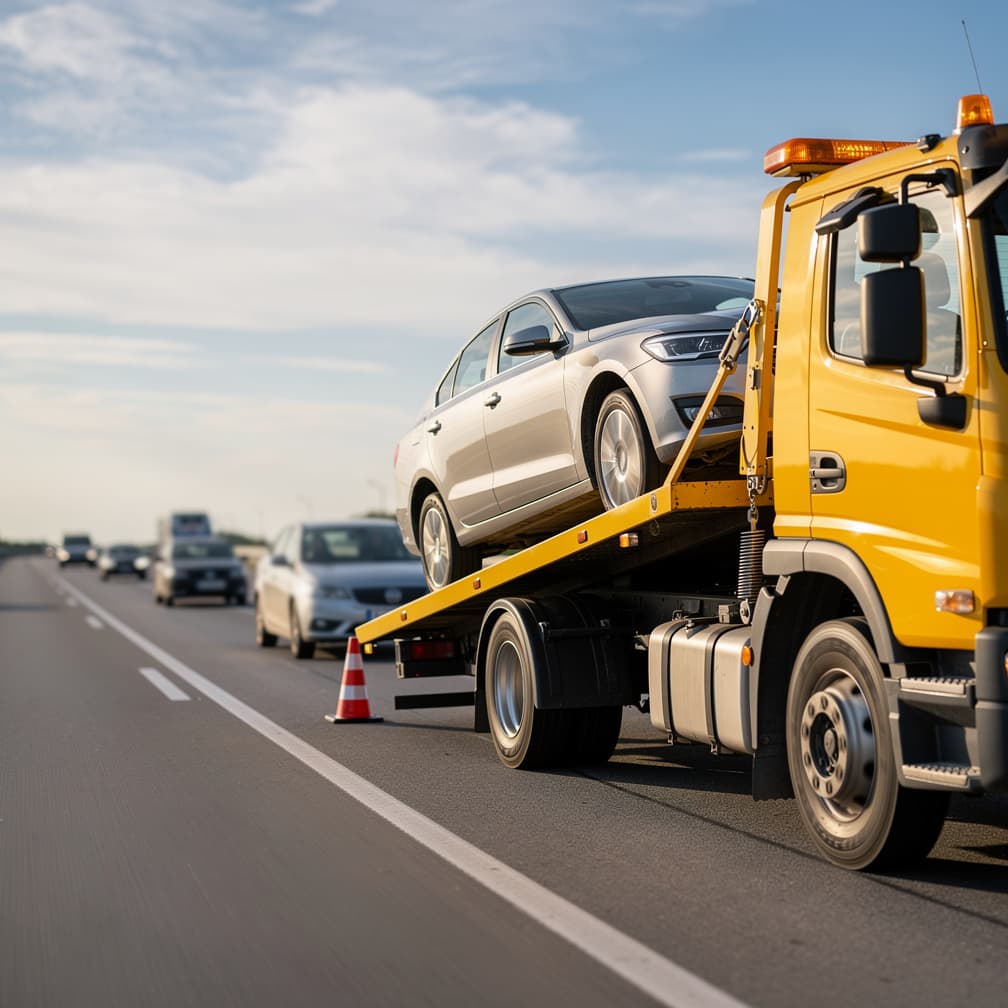
Route conditions usually move the price of on-hook towing insurance in Alaska more than almost anything else, because a truck working short urban tows on clearer streets is underwritten differently from a unit handling long highway runs, winter recoveries, ferry-linked moves, or remote dispatches where a small mistake can turn into a larger vehicle damage claim. When you shop, be specific about your service radius, equipment, and job types so the insurer can evaluate what your drivers actually face.
Alaska also rewards detail because underwriters want to see how your operation handles weather interruptions, limited daylight, road surface changes, and handoff points when a vehicle moves between storage, repair, and final delivery. If your submission is vague, your quote often comes back slower, narrower, or priced for more uncertainty than you actually present. Lay out your dispatch territory, truck type, towing method, driver experience, and typical jobs clearly from the start.
What On-Hook Towing Insurance Covers
In Alaska, the practical review is less about repeating the basic definition of on-hook coverage and more about matching it to the way your jobs actually unfold. A straightforward in-town tow can become a more complicated file if the vehicle is picked up on ice, transferred at a repair facility after hours, or unloaded on a narrow shoulder where traction and visibility change the risk. Your policy review should focus on those operating moments, because that is where disputes over damage often start.
Ask for wording that fits your real towing methods. If you run flatbeds, wheel-lifts, dollies, or winching equipment in the same operation, the quote should reflect that mix instead of assuming one uniform job type. If you handle disabled pickups, SUVs, work vans, or vehicles carrying tools and gear, tell the agent how often each shows up.
You should also review how the policy interacts with the rest of your towing program. A claim involving a customer vehicle can overlap with questions about storage, garagekeepers, general liability, or physical damage to your own truck, depending on what happened before and after the tow. That is especially important if your operation moves vehicles between roadside pickup, temporary lot storage, and a repair shop in one chain of custody.
Alaska buyers should be especially careful with exclusions tied to recovery work, unattended vehicles, specialty units, or jobs outside the normal dispatch area. If a large share of your work comes from difficult recoveries or long-distance transport, ask the agent to walk through sample claim scenarios before committing to a policy. That gives you a cleaner picture of what is being insured, what needs endorsement review, and where a gap could still remain.
Collision on Hook
Covers damage to towed vehicles from collisions during transport.
Comprehensive on Hook
Covers theft, fire, and weather damage to vehicles being towed.
Loading & Unloading
Covers damage during the process of loading and unloading vehicles.
Winching Coverage
Covers damage to vehicles during winching and recovery operations.

Multiple Vehicle
Covers all vehicles on multi-car carriers and rollback flatbeds.
On-Hook Towing Insurance Requirements in Alaska
- Alaska towing operations often need closer review of territory and dispatch distance because a customer vehicle may remain in your care longer before reaching a repair facility or final destination.
- If your work includes winter roadside hookups, uneven shoulders, or limited-visibility loading conditions, ask for claim examples tied to those exact operating situations before purchase.
- Mixed fleets in Alaska should be scheduled carefully when one truck handles routine local tows and another takes recovery or longer transport assignments with a different damage profile.
- Remote or less frequent handoff locations can make documentation more important, so align your on-hook review with dispatch logs, condition photos, and delivery records.
How Much Does On-Hook Towing Insurance Cost in Alaska?
In Alaska, on-hook pricing usually turns on claim severity potential, not just whether you own one truck or several. Think of a severe claim as an $80,000 luxury vehicle rolling off a flatbed during a winter highway transport. Underwriters look closely at call locations, towing frequency in difficult weather, the value of vehicles you move, and how long a customer vehicle stays in your care during a typical job. A short local tow with predictable loading conditions is viewed differently from a dispatch that involves remote roads, steep grades, limited lighting, or a long trip to the nearest repair facility.
Be ready to describe your service radius, whether you cross water by ferry or coordinate handoffs, what percentage of work is emergency roadside versus scheduled transport, and whether your drivers handle impounds, accident scenes, or off-road recoveries. If you leave those details out, the insurer may price for uncertainty, and a vague file can cost 20 to 40 percent more than a documented one.
Equipment setup also changes the picture. Flatbeds, wheel-lifts, dollies, winches, and specialty attachments change how a vehicle is loaded and secured, which changes the damage profile the insurer is evaluating. Driver experience, loss history, storage practices, and your photo documentation process also affect how the account is viewed. A towing company that can show consistent pre-tow and post-tow condition records often gives the underwriter more confidence that a disputed damage claim can be investigated cleanly.
It is worth confirming who is issuing the policy and how endorsements are being applied before you compare quotes. When you shop, ask each carrier or broker to explain which operational assumptions are driving the price. That lets you compare the real cause of the premium instead of only comparing the final number.
Request a Quote Comparison
Enter your ZIP code to compare on-hook towing insurance rates from top carriers.
Business insurance starting at $25/mo
Who Needs On-Hook Towing Insurance?
In Alaska, the buyers who most need a careful on-hook review are often the operators whose work changes by season, terrain, or dispatch source. If your trucks handle routine roadside assistance one week and more difficult recoveries the next, your exposure is not static. The same is true if you alternate between urban towing, highway calls, impounds, dealer transfers, and transport tied to repair shops or fleet accounts.
This matters for small fleets and owner-operators as much as for larger towing businesses. A single truck can still create a serious claim if it tows higher-value vehicles, works in poor surface conditions, or takes calls where loading and unloading happen in tight spaces. If you subcontract overflow work, use temporary drivers, or rely on a rotating dispatch pattern, mention that early. An underwriter cannot price what you have not disclosed, so spell out every service your trucks actually perform.
You should also review this coverage if your business touches vehicles in ways customers may not separate clearly. For example, a client may see one continuous service event even though the vehicle is first recovered, then towed, then stored, then delivered to a shop. If your insurance program treats each step differently, you need to know where responsibility begins and ends. That is especially important if your invoices, dispatch logs, and storage records are handled by different people.
Alaska operators serving remote communities, industrial traffic, tourism-related travel, or long-distance highway routes should be especially direct about their dispatch reality. A business that regularly works far from repair facilities or secure lots may need a more careful review of limits, exclusions, and claims procedures than a company doing short, repeatable city tows. If a customer vehicle stays in your care longer because geography slows the handoff, ask how that affects the way the exposure is classified.
On-Hook Towing Insurance by City in Alaska
On-Hook Towing Insurance rates and coverage options can vary across Alaska. Select your city below for localized information:
How to Buy On-Hook Towing Insurance
To buy this coverage well in Alaska, start by building a submission that mirrors your dispatch board. List each truck, the towing method it uses, the kinds of vehicles it usually handles, and the territory it serves. Then separate your work by job type: roadside calls, accident recovery, impounds, dealer or auction moves, long-distance transport, and any specialty recovery. Underwriters need that breakdown because a mixed operation cannot be priced accurately from a short application alone.
Next, prepare the documents that prove how you control damage risk. That usually includes driver lists, motor vehicle record review practices, equipment inspection routines, securement procedures, photo documentation steps, and any written process for noting pre-existing damage before hookup. If you use dispatch software, keep sample logs ready. If you rely on paper tickets, make sure they are legible and consistent. A clear, organized file helps the underwriter see what is normal for your business.
Then ask quote sources to walk through Alaska-specific scenarios instead of only sending a premium. Have them explain how the policy responds if a vehicle is damaged during a winter roadside hookup, during a long transfer between communities, or during unloading at a repair facility after a delayed trip. Those examples often reveal more than a summary of limits.
Review named insured details, truck schedules, territory assumptions, and any restrictions tied to recovery work or vehicle type. Compare quotes on the same facts. If one quote assumes only local towing and another assumes recovery and long-haul work, the cheaper option may simply be insuring less than your operation actually does. Ready to build your submission? Request a quote through CPK Insurance and we will match you with participating licensed providers.
How to Save on On-Hook Towing Insurance
In Alaska, the most reliable way to save on on-hook coverage is to reduce uncertainty in your file. Underwriters charge more when they cannot tell where you tow, what kinds of vehicles you move, or how your drivers document condition before and after the tow. Start by tightening your dispatch records. Every job should show pickup point, destination, towing method, driver, time, and any unusual conditions that affected loading, securement, or unloading.
Photo discipline is one of the strongest practical steps you can take. Build a routine for capturing vehicle condition before hookup, after loading, and at delivery, especially on difficult roadside calls or in poor weather. Pair that with written notes on pre-existing damage and customer acknowledgments where possible. This does not just help after a claim. It can also make your operation easier to underwrite at renewal because you can show a repeatable process instead of promising one.
You can also save by matching coverage to the work each truck actually performs. If one unit mainly handles scheduled local transport and another takes the harder recovery calls, ask whether the underwriting can reflect that difference rather than treating the fleet as one undifferentiated exposure. The same logic applies to driver assignments. More experienced operators on higher-risk jobs can improve how the account is viewed if that practice is documented.
Finally, review your insurance program before busy seasonal shifts, not after. If your operation expands into longer routes, more remote calls, or a different vehicle mix, update the submission before renewal or midterm changes. Better rates come from giving the underwriter a clear, accurate picture of your operation, not from cutting protection you may need on the next difficult tow.
Our Recommendation for Alaska
For Alaska towing operators, the smartest buying move is to treat geography as an underwriting fact, not a background detail. Tell the market whether your work is concentrated in town, spread across highway corridors, or pushed into remote pickups where the vehicle stays in your care longer before final delivery. That single distinction often changes how an underwriter views claim severity.
I would also separate routine towing from recovery work as clearly as possible in your submission. If those jobs are blended together, the insurer may assume the harder exposure applies to every dispatch. A simple breakdown by truck, driver, and job type can produce a more accurate quote and a cleaner coverage discussion.
Ask for a claim-scenario review early in the quoting process. Use examples that match Alaska operations: winter loading, delayed handoff to a repair shop, long-distance transport, and unloading on uneven surfaces. If the answers sound vague, keep asking until the policy response is clear.
Finally, review your documentation process with the same seriousness as your limits. Good photos, consistent dispatch notes, and written condition records can matter as much as price when a customer disputes damage. Bring those procedures into the quote conversation early, then compare options on equal assumptions before you choose a policy.
FAQ
Frequently Asked Questions
Longer, more remote, or more difficult runs can increase the chance of a severe claim, so pricing reflects that reality. When you request a quote, describe where your trucks actually operate so the policy is built around your real dispatch territory.
Alaska tow companies should disclose recovery work early because it can be underwritten differently from routine roadside towing or scheduled transport. If recovery jobs are part of your week, ask how they are classified before committing to a policy.
Alaska insurance policies are regulated by the Alaska Division of Insurance. That matters when you review forms, endorsements, and complaint procedures, so confirm the issuing insurer and policy paperwork before you choose between quotes.
Alaska owner-operators can buy on-hook coverage for a single truck, but the quote still depends on towing method, vehicle mix, territory, and job type. A one-truck operation should submit the same detailed operating information as a larger fleet.
Alaska tow companies should prepare truck schedules, driver information, service types, dispatch territory, and documentation procedures before shopping. Clear records help the underwriter understand whether your work is mostly local towing, recovery, impounds, or longer transport.
Alaska winter conditions can change how a towing account is reviewed because loading, securement, and unloading may happen on more difficult surfaces. Bring those operating details into the quote conversation so the insurer is not guessing about your exposure.
Alaska towing businesses should not compare quotes on price alone because one policy may assume routine local towing while another assumes broader or harder work. Compare the operational assumptions, endorsements, and restrictions before deciding which quote fits.
On-hook towing insurance may cover damage to a customer vehicle while it is being loaded, attached, carried, winched, or unloaded by your tow truck, depending on the policy terms. Buyers should review collision, fire, theft, weather, and loading-related damage carefully.
Sources
- 1.Alaska Division of Insurance(Alaska insurance policies are regulated by the Alaska Division of Insurance.)
Updated July 16, 2026