Updated July 16, 2026

Key Takeaways
- Review your construction contract before requesting a quote, so the named insureds and insurance responsibility match the job documents.
- Prepare the project budget, timeline, address, and scope summary before applying, so the quote reflects the work actually being built.
- Check whether the policy addresses on-site materials, transit, temporary structures, and soft costs before the first delivery arrives.
- Compare the policy term against your realistic completion schedule, then ask about extension options before the original term gets close to expiring.
- Map builders risk against your liability, installation, and equipment policies, so you avoid both coverage gaps and overlapping property insurance.
Builders Risk Insurance in Georgia
The gap that catches many buyers is not the building shell itself, it is everything around the job that can sit exposed between delivery, installation, and final sign-off. On a Georgia project, that matters because weather shifts, site access, and staggered subcontractor schedules can leave materials, temporary works, or partially completed phases vulnerable at exactly the wrong moment. It is worth reviewing that gap before ground is broken, not after a lender, owner, or general contractor asks for proof.
A Georgia quote works better when it follows the actual job sequence. A custom home in the suburbs, an infill renovation in a dense commercial corridor, and a light industrial build on the edge of town do not present the same storage, fencing, water intrusion, or theft concerns. You want the policy terms lined up with where materials are kept, who has site control, how change orders are handled, and whether soft costs or delay-related exposures should be reviewed. That gives you a cleaner path to bind coverage, satisfy contract requirements, and avoid finding out after a loss that a key category of property or expense was never scheduled for the project.
What Builders Risk Insurance Covers
Your policy can help cover supplies in transit, items stored on site, and temporary works like scaffolding and fencing during construction. That is why your focus should be on how property moves through the site and when responsibility changes hands. If framing lumber is dropped before crews are ready, if mechanical equipment is stored off the slab for a short period, or if a renovation leaves part of an occupied structure open during phased work, those details can change what should be scheduled and how limits should be set.
For a Georgia build, ask specifically about materials in transit, materials stored on site, and materials stored temporarily at another location tied to the job. Those categories matter when delivery timing does not match installation timing. Temporary structures, scaffolding, fencing, and site security measures also deserve a direct review if they are part of how the project is being executed. On renovation work, clarify whether existing structure exposure is being addressed elsewhere or whether the policy is being tailored around the work area and project materials only.
If a covered loss delays completion, the financial hit may show up through added interest, extra carrying costs, or postponed occupancy rather than just damaged materials. These are known as soft costs, and they are worth discussing early if the project has financing milestones, lease-up timing, or a narrow completion window. In Georgia, where weather-related interruptions can affect sequencing, it is smart to match the policy period and any extension options to the real construction schedule, including inspection delays, punch-list work, and change orders that can push completion beyond the original target date.

Structure Coverage
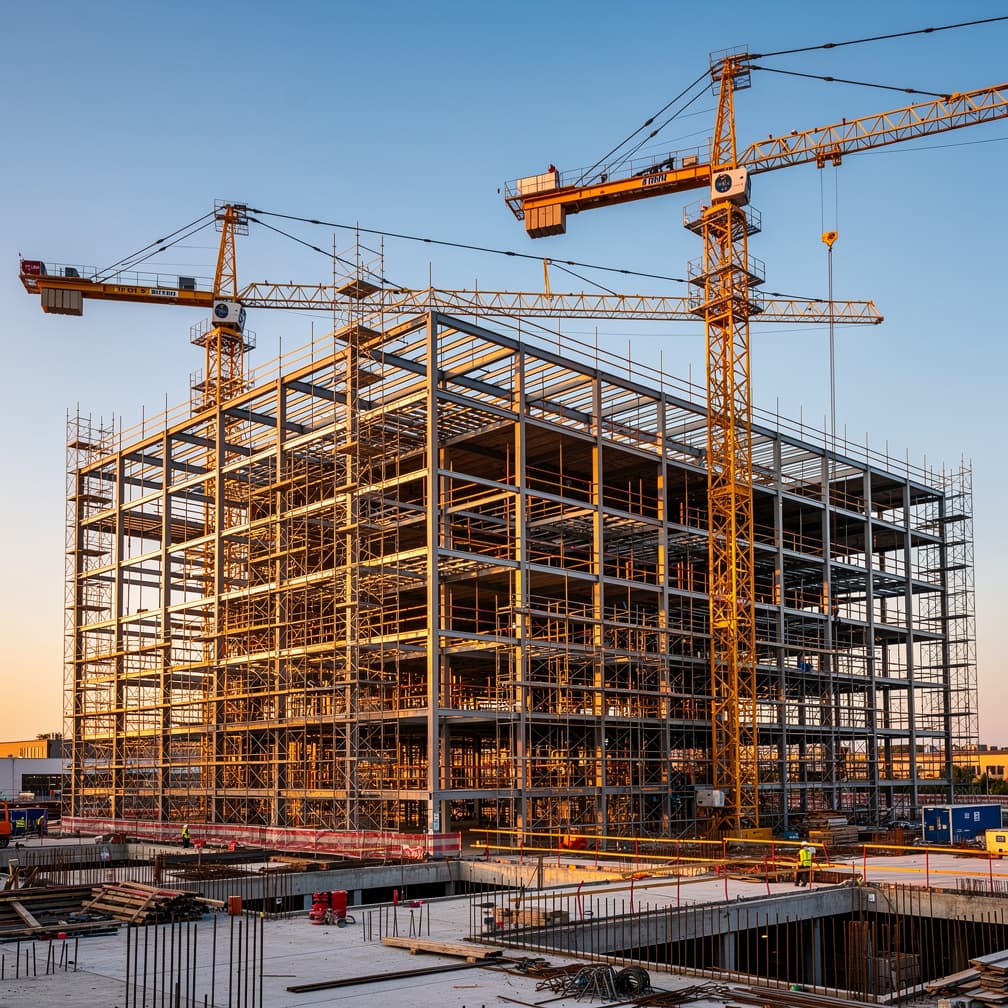
Covers the building or structure under construction.
Materials on Site
Covers building materials stored at the construction site.

Materials in Transit
Covers materials being transported to the job site.
Temporary Structures
Covers scaffolding, fencing, and temporary buildings.

Soft Costs
Covers additional expenses from construction delays due to covered losses.
Equipment Coverage
Covers permanently installed fixtures and equipment.
Builders Risk Insurance Requirements in Georgia
- Georgia storm exposure can make partially dried-in structures and staged materials more vulnerable, so review temporary protection and water intrusion controls before binding.
- Lender-backed construction in the state often moves on draw schedules and certificate deadlines, so policy wording should be checked against contract requirements early.
How Much Does Builders Risk Insurance Cost in Georgia?
In Georgia, builders risk policies often start in the range of $1 to $4 per $1,000 of completed value, which means a $500,000 project might run roughly $500 to $2,000 before project specifics adjust the final number. Your actual premium depends on the details. The real question is which parts of your job make the underwriter more or less comfortable with the risk. Start with completed value, then work outward into construction type, job duration, site security, and whether the work is new construction, an addition, or a renovation inside an existing structure.
A Georgia project with clean plans, a realistic timeline, and clear values is easier to quote than one with shifting scopes and incomplete schedules of materials. If high-value items will arrive early and sit before installation, that can affect how the carrier looks at theft, weather exposure, and storage controls. If the site is in a dense area with limited staging space, the quote may turn on where property is stored and how often it is moved. If the project is a renovation, underwriters often want a sharper picture of what remains occupied, what is being demolished, and how water, fire, and access hazards are being managed during each phase.
Your contract structure also affects cost. If the owner buys the policy, the named insured setup and reporting process may look different than a contractor-purchased form. If lenders, owners, and upstream parties need to be reflected correctly, getting that right at quote stage helps avoid mid-project endorsements that slow things down. Georgia buyers usually get the best pricing outcome by submitting a complete package the first time: signed contract requirements, project address, completed value, timeline, construction details, security measures, and a clear list of any soft costs or temporary works that need to be reviewed.
Request a Quote Comparison
Enter your ZIP code to compare builders risk insurance rates from top carriers.
Business insurance starting at $25/mo
Who Needs Builders Risk Insurance?
In Georgia, the parties who typically need this coverage are property owners, developers, and general contractors. The key is not the job title, it is who is carrying the risk of damaged work in place, delayed completion, or materials that have already been paid for but not yet installed.
Owners often need to review builders risk when construction financing, draw schedules, or lease commitments depend on the project staying on track. General contractors should pay close attention when the agreement pushes site control, temporary protection, or responsibility for stored materials onto them. Subcontractors may not be the party buying the policy, but they still need to know what the project form may help cover so they can coordinate their own inland marine, installation, or equipment coverage around it.
Georgia projects with multiple stakeholders need especially careful role definition. If the contract requires certain parties to be named, or if title to materials transfers before installation, the policy setup should mirror that reality. The same goes for phased renovations, where one part of the property remains in use while another is under active construction. In that setting, a buyer should not assume the project policy automatically addresses every property interest on site.
The state regulator is the Georgia Office of Insurance and Safety Fire Commissioner, so if you are comparing forms, endorsements, or complaint handling standards in Georgia, keep your review grounded in policy language and state oversight rather than assumptions carried over from another state or a prior project.
Builders Risk Insurance by City in Georgia
Builders Risk Insurance rates and coverage options can vary across Georgia. Select your city below for localized information:
How to Buy Builders Risk Insurance
In Georgia, buying builders risk efficiently starts with collecting the documents that show how the job will actually run. Pull together the construction contract, statement of values, project timeline, site address, plans or scope summary, lender requirements if any, and a list of parties that may need to be named, because that package tells the underwriter more than a short application ever will.
Next, map the project flow. Identify when materials are purchased, where they are delivered, whether any are stored off site, and when title or responsibility transfers. On a Georgia renovation, spell out what parts of the structure remain occupied, what utilities stay live during construction, and how the work area is separated from the rest of the property. On new construction, be ready to explain fencing, lighting, water control, and who checks the site after hours or before severe weather.
Then review the contract against the quote before binding. Make sure the completed value is aligned, the policy term matches the realistic build schedule, and any requested soft costs, temporary works, or delay-related exposures have actually been addressed. If the lender or owner requires specific wording, ask for that review before the effective date, not after certificates are requested.
Finally, confirm the operational details that cause mid-project problems. Know how to report change orders, how to request a term extension if completion slips, and what documentation will be needed after a loss. In Georgia, the smoothest purchase is usually the one where the buyer treats builders risk as part of project administration, not as a last-minute certificate request the day before mobilization. To compare your options, request a quote through CPK Insurance and connect with participating licensed providers.
How to Save on Builders Risk Insurance
In Georgia, the most practical way to save is to remove uncertainty from the submission. If your values are documented, your schedule is realistic, and your site controls are specific, the quote has fewer reasons to build in extra caution. That means giving a clear completed value, a credible start and finish timeline, and a direct explanation of any unusual materials, phased occupancy, or off-site storage tied to the job.
Security and housekeeping can also affect how your project is viewed. If materials will sit before installation, explain where they are kept, how access is controlled, and who is responsible for site checks. If water damage is a concern during a renovation or interior build-out, describe shutoff procedures, temporary protection, and how the site is secured at the end of each workday. Those details do not just help with claims prevention, they can make the risk easier to underwrite.
Another way Georgia buyers control cost is by avoiding avoidable endorsements and rewrites. Get the named insured structure, lender requirements, and contract obligations sorted before binding. Mid-term corrections can create delays and extra friction, especially if certificates have already gone out to owners or funding parties. It also helps to align the policy term with the real schedule so you are not paying for unnecessary extension activity later.
Most important, do not buy a stripped-down form just to force a lower number. If your project has meaningful soft cost exposure, stored materials exposure, or a renovation setup with occupied areas, leaving those issues unreviewed can cost far more than the premium difference after a covered loss interrupts the job.
Our Recommendation for Georgia
For Georgia projects, review the build calendar as closely as the budget. If your schedule runs through seasons with heavier storm exposure, ask how materials, temporary protection, and water intrusion controls should be documented before binding. That is often where claim disputes start, especially on jobs with staggered deliveries or partially enclosed structures.
On renovations, clarify in writing whether the policy addresses the work area and project materials only, or whether existing structure exposure is being addressed elsewhere. If part of the property stays occupied, confirm who insures what, how utilities are managed, and whether the contract pushes any responsibility back to the contractor or owner outside the builders risk form. That step matters more than broad assumptions about what a standard policy might include.
For lender-backed Georgia jobs, compare the insurance requirements in the loan documents against the construction contract before you request final terms. Mismatches on completed value, named parties, or extension expectations can slow closing or force last-minute endorsements. A short pre-bind review usually costs less time than fixing the paperwork after certificates are already circulating.
If the project has custom materials, long-lead equipment, or off-site storage, call those out early. The cleaner your submission, the easier it is to get a quote that matches the job instead of a generic form that leaves important property or delay-related costs unaddressed.
FAQ
Frequently Asked Questions
Georgia projects usually place that responsibility on the party named in the construction contract, often the owner or general contractor. Review the agreement first, then confirm the policy setup matches the financial interest that would be affected if the job is delayed or damaged.
Many Georgia builders risk policies may help cover off-site stored materials if you disclose the storage location and tie it to the project schedule during quoting. If deliveries will be staged away from the job before installation, raise that point early so the location is added to the policy.
Georgia lender requirements vary, but many financed projects need proof of coverage before funds are released or work begins. Compare the loan documents with the construction contract early so completed value, named parties, and timing requirements line up.
Georgia renovation work with occupied areas needs a sharper division between the project exposure and the existing building exposure. Ask in writing which property is addressed by the policy and which property is expected to sit under another policy.
Georgia builders risk insurance is regulated by the Georgia Office of Insurance and Safety Fire Commissioner. If you are comparing forms or resolving a policy issue, keep your review tied to the actual policy language and Georgia regulatory oversight.
Georgia projects often need schedule adjustments, especially when inspections, change orders, or material timing push completion back. Ask about extension procedures before binding so you know how much notice and documentation the carrier will expect later.
Georgia underwriters usually move faster when you send the contract, project address, completed value, timeline, scope summary, and any lender insurance requirements together. A complete submission reduces back-and-forth and helps the quote reflect the actual job instead of assumptions.
Builders risk insurance may cover, subject to policy terms, the structure under construction, materials on site, materials in transit, temporary structures, and fixtures or equipment being installed. Depending on the policy, you can also review soft costs and delay-related coverage tied to a covered property loss.
Sources
- 1.Georgia Office of Insurance and Safety Fire Commissioner(The state regulator is the Georgia Office of Insurance and Safety Fire Commissioner.)
Updated July 16, 2026