Updated July 16, 2026

Key Takeaways
- List every towing and transport service you perform before requesting quotes, so loading, unloading, winching, and recovery exposures are reviewed correctly.
- Compare the on-hook limit, deductible, valuation method, and exclusions side by side instead of choosing a policy on premium alone.
- Ask in writing whether your policy addresses the specific vehicles you tow most often, especially specialty, modified, low-clearance, or higher-value units.
- Use pre-tow photos, condition notes, and signed release procedures on every job to reduce disputes and support claims handling.
- Review on-hook coverage together with auto liability and any garagekeepers coverage before renewal to catch gaps between transport and storage.
On-Hook Towing Insurance in Oklahoma
When your operation takes custody of a vehicle in Oklahoma, the part of your insurance program that responds to a loss during the tow is not always the same part that handles your truck, your garage, or your liability to others. On-hook towing insurance is the piece you review when a loss happens while a customer vehicle is being loaded, attached, carried, winched, or unloaded. If your work spans roadside calls, recovery, impounds, or dealer transport, your quote should match the way your drivers actually work. You want limits, deductibles, territory, and vehicle types reviewed against your real dispatch pattern, not against a generic towing description.
What On-Hook Towing Insurance Covers
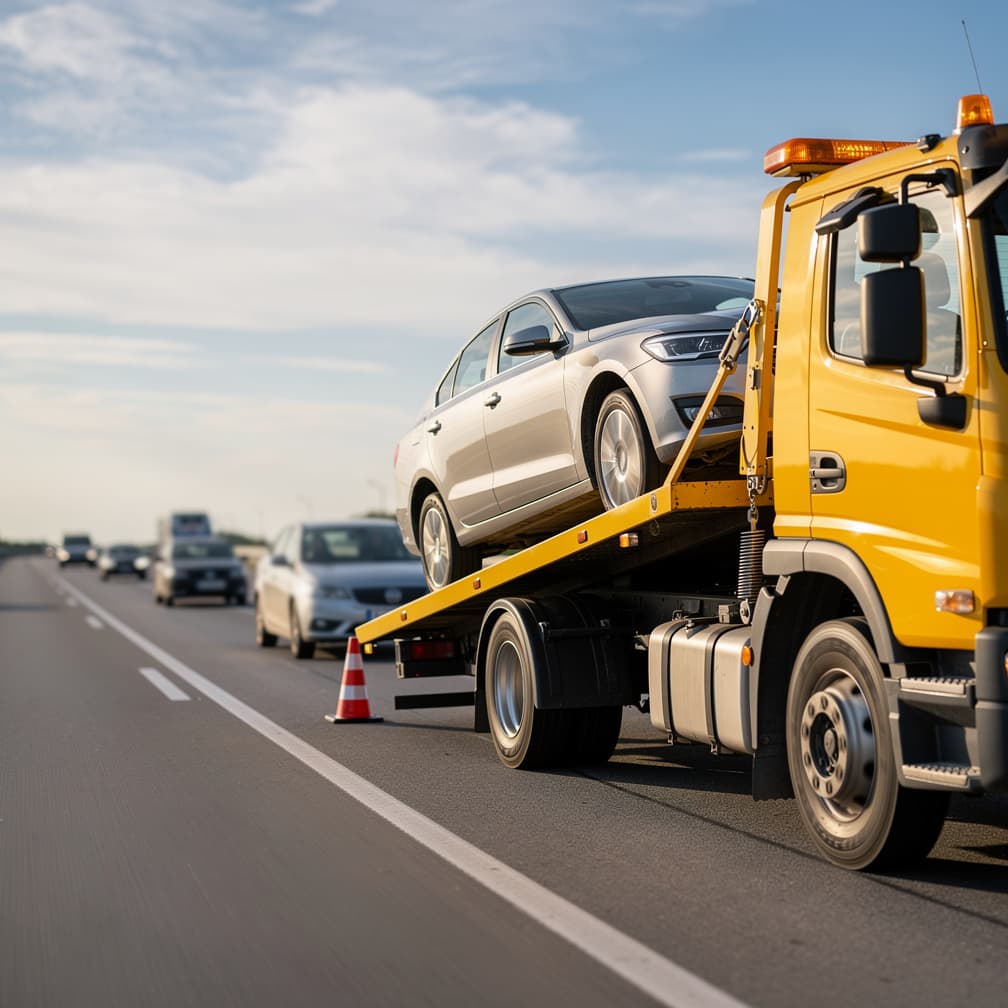
On-hook coverage can help pay for damage to a customer vehicle that happens while it is being handled by your truck during a tow. A wheel-lift call on a narrow shoulder, a flatbed load during heavy rain, a recovery after high wind, or a late-night impound from a crowded lot can all create different damage scenarios and different arguments about handling. Your policy terms and deductible selections shape how those damage claims are evaluated and what you pay out of pocket.
For many towing businesses in the state, the important coverage discussion starts with service mix. Your quote should separate those realities clearly enough that an underwriter can see what each truck is doing.
You should also review whether your contracts create stricter expectations than your policy language. Police rotation agreements, impound contracts, motor club work, and dealer relationships often require prompt certificates and clear evidence of the right coverage parts. If a customer vehicle is damaged and the paperwork around dispatch, photos, condition notes, or release forms is weak, the claim can become harder to defend. Ask for specimen forms and compare them against how your drivers document each pickup and drop-off.
Collision on Hook
Covers damage to towed vehicles from collisions during transport.
Comprehensive on Hook
Covers theft, fire, and weather damage to vehicles being towed.
Loading & Unloading
Covers damage during the process of loading and unloading vehicles.
Winching Coverage
Covers damage to vehicles during winching and recovery operations.
Multiple Vehicle
Covers all vehicles on multi-car carriers and rollback flatbeds.
On-Hook Towing Insurance Requirements in Oklahoma
- Oklahoma's comparative negligence standard can affect how damage disputes are resolved when multiple parties share responsibility for a loss during a tow, so review how your policy coordinates with garagekeepers and auto liability sections.
- If your company handles police rotation or private property impounds in Oklahoma, review certificate wording and named insured details before a contract deadline forces a rushed bind.
- Mixed-use towing fleets in Oklahoma often need more precise applications, because a truck assigned to dealer transport is underwritten differently from one used for recovery calls.
- Documentation standards matter in Oklahoma towing disputes, especially when road conditions, visibility, or storm debris make it harder to separate pre-existing damage from tow-related damage.
How Much Does On-Hook Towing Insurance Cost in Oklahoma?
On-hook towing coverage in Oklahoma commonly starts in the range of a few hundred dollars per truck annually for routine roadside work, but pricing can reach several hundred dollars more per truck when your operation includes recovery, long-distance transport, or high-value vehicle moves. Underwriters usually want to understand what kinds of vehicles you tow, whether you use flatbeds or wheel-lifts, how often you perform recovery work, how far your trucks travel, where units are garaged, and how consistently your drivers document pre-tow condition. If your business mixes routine roadside calls with impounds, accident scenes, and recovery, expect the quote review to be more detailed.
State conditions matter because they affect claim frequency and severity. In Oklahoma, severe weather can turn ordinary dispatches into higher-risk jobs, especially when loading happens on wet pavement, in poor visibility, or around storm debris. That usually means the insurer looks closely at driver experience, dispatch controls, equipment condition, and whether your operation has a repeatable process for photos, hookup verification, and release documentation. Fleets with consistent intake procedures and clean loss runs often see meaningfully lower premiums and broader deductible options than those with spotty records.
Your limit and deductible choices also shape price. A lower deductible may reduce what you pay after a loss, but it can raise the premium. Higher limits may be worth reviewing if you move newer vehicles, dealer inventory, or units that create larger damage disputes. If one truck handles basic roadside work and another takes more complex recovery assignments, ask whether the rating reflects those differences instead of treating the whole fleet the same. Bring your driver list, loss runs, service contracts, truck schedule, and a clear description of your dispatch territory to the quote process. The more specific your submission, the more usable the pricing usually becomes.
Request a Quote Comparison
Enter your ZIP code to compare on-hook towing insurance rates from top carriers.
Business insurance starting at $25/mo
Who Needs On-Hook Towing Insurance?
In Oklahoma, this coverage deserves a close review if your business takes possession of customer vehicles in ways that create a real chance of damage during towing or transport. That includes dedicated towing companies, but it also reaches operators whose work is split across roadside assistance, recovery, transport, impounds, repossessions, salvage movement, or contract work for municipalities, apartments, lenders, auctions, and repair facilities.
This matters especially for smaller operators that wear several hats in the same week. You might run a flatbed for dealer moves during the day, answer roadside calls after hours, and take occasional impound or recovery assignments when local demand spikes. Each of those jobs changes the chance of a damage allegation and the size of a possible claim. If your current policy was quoted around only one part of the business, it may not line up well with the work you actually accept.
You should also review this coverage if your contracts require proof before work starts. A police rotation agreement, private property towing contract, or commercial account may expect certificates that show the right coverage structure for vehicles in your care during the tow. If you cannot produce that documentation quickly, you can lose work even before a claim happens. Mixed fleets need special attention. If some units are used for standard tows and others are equipped for more difficult recoveries, do not assume one broad description is enough. Ask for each truck's role to be described accurately in the application. That gives the underwriter a better basis for terms and gives you a better chance of avoiding surprises later. Before renewal, compare your last year of dispatches against the way the policy application describes your operation.
On-Hook Towing Insurance by City in Oklahoma
On-Hook Towing Insurance rates and coverage options can vary across Oklahoma. Select your city below for localized information:
How to Buy On-Hook Towing Insurance
Buying this coverage in Oklahoma goes more smoothly when you present your operation the way an underwriter sees risk, truck by truck and job type by job type. A current equipment schedule should list each tow unit, its towing method, where it is garaged, and the kinds of calls it handles most often. Then add a service breakdown that shows whether you do roadside towing, accident recovery, impounds, repossessions, dealer transport, winching, or municipal work. If your business changes by season or storm activity, say that clearly instead of leaving the underwriter to guess.
That often includes driver lists, motor vehicle records if available, loss history, dispatch procedures, sample invoices, contracts that require proof of insurance, and any forms your drivers use to record vehicle condition. In Oklahoma, where severe weather can complicate loading and recovery conditions, it helps to show how your team handles photos, scene notes, hookup checks, and customer signoff. A well-documented operation is easier to quote accurately.
As you compare options, focus on fit rather than just whether a policy can be issued. Ask how the insurer wants recovery work described, whether all service types are contemplated, how deductibles apply, and whether any exclusions could affect the jobs you take most often. If you subcontract overflow work or use owner-operators, bring that up early. Those details can change how the account is underwritten. Before binding, read the proposal against your real operation. Make sure the named insured matches your contracts, the truck schedule is complete, and the territory and service descriptions are not too narrow.
How to Save on On-Hook Towing Insurance
Clear documentation that shows exactly what happened before, during, and after each tow can reduce disputes about pre-existing damage and often leads to lower premiums because underwriters can see exactly how claims are managed. Intake photos, condition notes, dispatch timestamps, hookup verification, and signed releases can reduce disputes about pre-existing damage. That kind of file discipline does not just help at claim time. It can also make your account look more controlled during underwriting.
Driver management matters too. Review who is assigned to higher-risk jobs, how new drivers are trained on loading and unloading procedures, and whether your team follows the same photo and signoff process every time. In a state where weather can shift quickly, consistency in bad conditions is part of risk control. If your operation has written procedures for storm dispatches, scene safety, and recovery documentation, include that in the submission. Finally, shop before renewal with a complete package, not a rushed application. Update your truck list, remove units you no longer use, correct service descriptions, and bring current loss information. Ask whether deductible changes, revised limits, or cleaner classification of your work would improve the quote without leaving a gap in the jobs you actually perform.
Our Recommendation for Oklahoma
For Oklahoma towing operators, the smartest buying move is to review this coverage around your hardest calls, not your easiest ones. A quote built around routine roadside towing can miss the pressure points created by recovery work, impounds, storm-related dispatches, and mixed-use trucks. If your operation does more than one kind of job, make the underwriter see that clearly.
Ask for your application to describe each truck's real role. A flatbed used for dealer transfers is not the same exposure as a unit sent to accident scenes or difficult recoveries, even if both sit in the same yard. If your dispatch pattern changes during severe weather, mention that too. Oklahoma conditions can turn loading, winching, and unloading into more complicated loss situations, and your policy review should account for that.
Better documentation can support both underwriting and claims handling. Finally, compare quotes on terms, not just premium. Review deductibles, service descriptions, exclusions, and certificate requirements tied to your contracts.
FAQ
Frequently Asked Questions
If your drivers take physical custody of customer vehicles for towing or transport, on-hook coverage is the part of your policy that can help pay for damage to those vehicles while they are in your care. Without it, a damage claim during a tow may fall on your garagekeepers or general liability, which may not respond the same way.
Oklahoma operators should review storm-related dispatches carefully because severe weather can change loading conditions, visibility, and recovery difficulty. Ask how your policy terms, deductibles, and exclusions apply to the kinds of bad-weather calls your drivers actually accept.
Oklahoma submissions work better when they separate roadside towing, recovery, impounds, repossessions, and dealer transport instead of blending everything together. A clearer service description helps the underwriter match terms to your real dispatch pattern and may reduce avoidable coverage disputes.
Oklahoma fleets should not assume every truck belongs in the same rating picture. If one unit handles routine roadside calls and another takes more difficult recoveries or impounds, ask for the application to reflect those differences before coverage is bound.
Oklahoma buyers should gather a current truck schedule, driver list, loss history, service contracts, and sample tow documentation before requesting quotes. Photos, condition notes, and release forms also help show how your operation handles claims-sensitive moments during the tow.
Oklahoma towing contracts can shape what proof of coverage you need before work starts, especially for impounds, dealer work, or municipal accounts. Review named insured details and certificate requirements early so the policy can support the jobs you are trying to keep.
Oklahoma insurance matters are regulated by the Oklahoma Insurance Department, reachable at oid.ok.gov or by phone at 1-800-522-0071. If you are comparing policies, use that as a cue to confirm licensing, policy form details, and complaint handling information before you choose a carrier or sign a contract requiring proof of coverage.
On-hook towing insurance may cover damage to a customer vehicle while it is being loaded, attached, carried, winched, or unloaded by your tow truck, depending on the policy terms. Buyers should review collision, fire, theft, weather, and loading-related damage carefully.
Sources
- 1.Oklahoma Insurance Department(Oklahoma insurance matters are regulated by the Oklahoma Insurance Department.)
Updated July 16, 2026