


































Updated July 10, 2026

Recommended Coverage for Automotive
Automotive businesses face unique risks that require specific coverage types. Here are the policies most automotive operations need:

General Liability
Essential coverage for every business, protect against third-party bodily injury, property damage, and advertising claims.

Commercial Auto
Protect your business vehicles and drivers with comprehensive commercial auto coverage.

Commercial Property
Safeguard your business property, equipment, and inventory against damage and loss.

Workers Compensation
Help cover your employees' medical expenses and lost wages for work-related injuries and illnesses.
Garage Keepers
Protect customers' vehicles while they're in your care, custody, or control.

Commercial Umbrella
Extend your liability limits beyond your primary policies for extra protection against catastrophic claims.
Automotive Insurance Overview
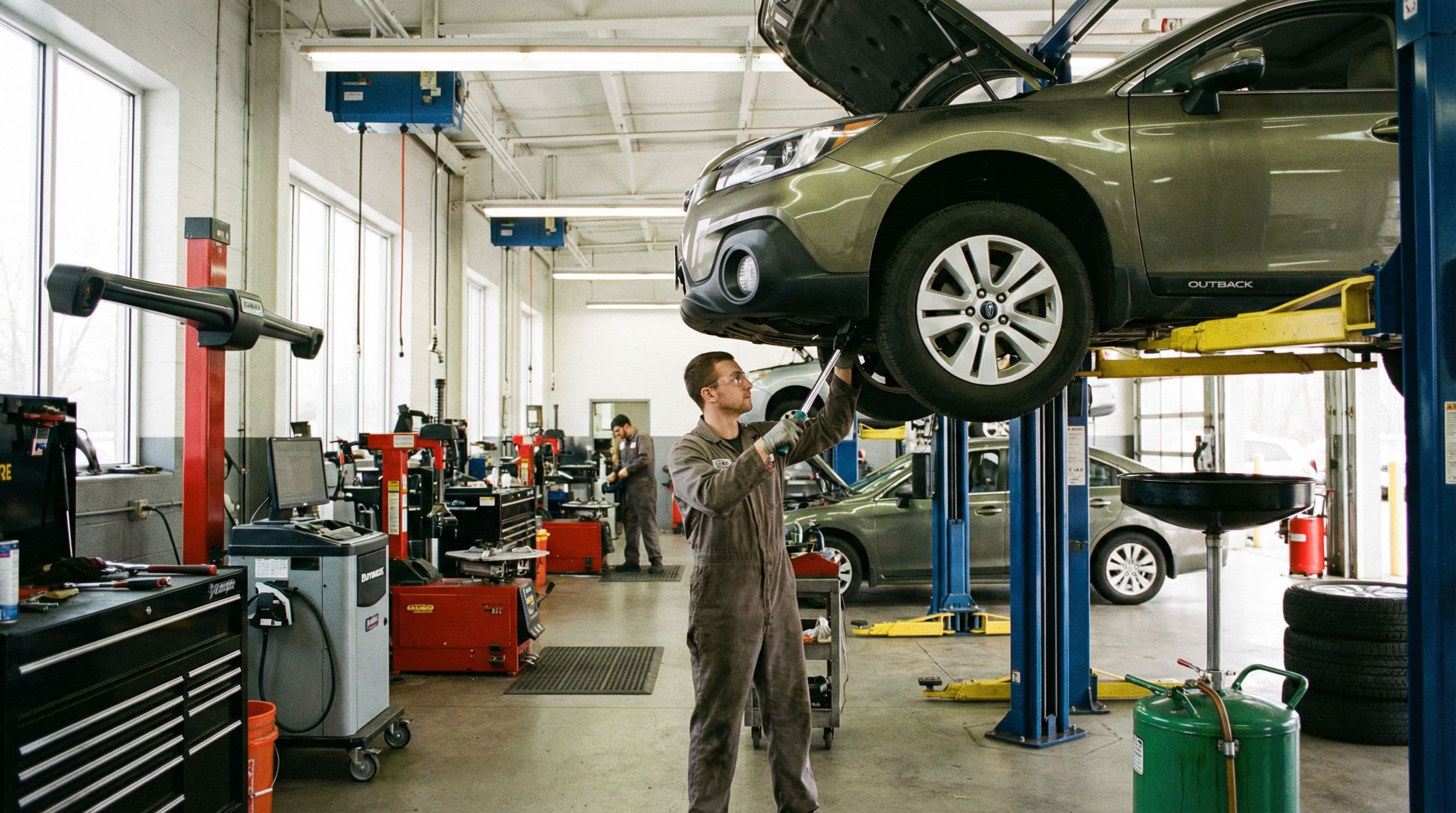
A customer drops off a late model SUV for brake work, another waits on a tire replacement, and a tow truck unloads a collision unit behind the shop. In automotive operations, vehicles, keys, test drives, lifts, parts inventory, and customer traffic all move at once. Your insurance review needs to follow that workflow, because a dealership, repair shop, body shop, tire shop, and car wash do not carry the same loss pattern even when they share a building type or customer base.
A dealership balances showroom exposure, lot operations, service lanes, and employee driving. The insurance questions center on customer slip hazards, damage to inventory on the premises, test drive procedures, and whether service department activity changes the risk profile. If your business moves vehicles between locations, sends staff on dealer plates, or stores units outdoors, commercial auto, commercial property, and umbrella limits deserve a closer look.
A repair shop tends to revolve around bays, diagnostic equipment, fluid handling, welding or cutting in some cases, and customer vehicles left in your care. That makes garage keepers insurance a core discussion, not an add on, because damage to a customer vehicle can become your problem while it is parked, being serviced, or waiting for pickup, depending on policy terms. General liability also needs to match the actual work, from front counter activity to technicians under lifts and on road tests.
Body shops bring a different mix. Paint booths, frame machines, sanding dust, overspray controls, and sublet work create property and liability questions that are more specialized than a basic mechanical shop. If you store vehicles awaiting parts or insurer approval, your property values and garage keepers exposure can build quickly. A body shop quote should account for how many vehicles are on site, where they are stored, and which operations you keep in house.
Tire shops turn vehicles fast, but speed does not reduce exposure. Mounting and balancing, alignment work, mobile service, and wheel related claims can all affect how coverage is structured. If your team drives customer vehicles into bays all day, road tests after suspension work, or delivers fleet service off site, your commercial auto and liability review should reflect that movement.
Car washes have their own pattern: conveyor systems, water intrusion concerns, chemical storage, equipment breakdown exposure within the property discussion, and frequent customer vehicle handling. Even a small wash can face claims involving vehicle damage or a customer fall near wet surfaces. If you offer detailing, pickup and delivery, or operate multiple wash formats, your policies should be reviewed as one operating system rather than as separate purchases.
Across the automotive industry, the right approach is operational. Map who drives what, where customer vehicles sit overnight, which tools and machines would stop revenue if damaged, and how your staff moves between front office, shop floor, and lot. Then request a quote built around those details before renewing or signing a new lease, lender agreement, or service contract.
Why Automotive Businesses Need Insurance
Automotive businesses handle property that belongs to other people while running a workplace with moving vehicles, heavy equipment, and constant public interaction. That combination creates claims that can spread across more than one policy at the same time. A customer can slip in the service drive, an employee can back a vehicle into a bay door, or a fire can damage both your building contents and vehicles left for service. If your policies are not coordinated, you can end up arguing about which coverage should respond while repairs, payroll, and customer relationships are already under pressure.
General liability matters because customers, vendors, and delivery drivers come onto the premises every day. The exposure is not abstract. It is the waiting area floor after rain, the loose hose near a wash tunnel, the parts box left near the counter, or the allegation that your completed work caused damage after the vehicle left. Commercial property matters because revenue depends on usable space, diagnostic tools, lifts, compressors, alignment systems, office equipment, and stocked parts. If a covered loss shuts down a key area of the operation, the interruption can affect scheduling, payroll planning, and customer retention.
Workers compensation deserves close attention because technicians, porters, detailers, and lot staff work around repetitive motion, awkward lifting, chemicals, sharp edges, and vehicle movement. A shop with strong sales can still feel immediate strain if a worker cannot return to regular duties and the remaining team has to absorb the workload. Commercial auto becomes important anywhere the business owns service trucks, parts runners, loaners, courtesy shuttles, or simply uses vehicles in the business on a regular basis.
Garage keepers insurance is where many automotive owners first realize their risk is different from many other industries. Customers leave vehicles with you because they expect professional care, secure storage, and controlled handling. If a vehicle is damaged while in your custody, the claim can involve repair costs, rental demands, and disputes over condition before drop off. Commercial umbrella insurance can help when a serious injury or major property damage claim pushes beyond the underlying policy limits.
Insurance matters here because one incident can interrupt operations, strain cash flow, and weaken trust with customers who may already be stressed about their vehicle. Before you shop quotes, list your services, vehicle handling procedures, overnight storage practices, and any off site work so the coverage review starts with how your business actually runs.
Key Risks for Automotive Businesses
Each of these risks can lead to claims that cost thousands, or more. Make sure your policy addresses every one:
- Vehicle damage while in your care
- Customer injury on premises
- Environmental contamination
- Employee workplace injuries
- Property and equipment damage
What Drives Automotive Insurance Costs
Automotive insurance costs depend less on a generic industry label and more on what happens in your bays, on your lot, and behind the wheel. A dealership with a service department, a collision shop with paint operations, a tire shop with mobile service, and a car wash with customer vehicle handling can all price very differently because the exposure base is different.
Payroll is a major driver for workers compensation, especially when your staff includes technicians, painters, detailers, drivers, or lot attendants with different job duties. The more hands on the work and the more physically demanding the tasks, the more important accurate classifications and payroll estimates become. If roles have changed since your last renewal, update them before quoting.
Commercial property pricing follows the value of your building interest, tenant improvements, tools, machinery, parts inventory, and office contents, along with how vulnerable those items are to fire, theft, water damage, or downtime after a loss. A shop with specialized diagnostic equipment or a wash with expensive fixed systems should schedule a careful property review instead of relying on rough estimates.
Garage keepers cost turns on how many customer vehicles you have in your care, where they are stored, whether they stay overnight, and how employees move them. Commercial auto pricing depends on the types of vehicles you own, who drives them, how often they are used, and whether driving is limited to local errands or includes pickups, deliveries, road tests, or mobile service.
General liability and umbrella pricing reflect customer foot traffic, completed operations exposure, lease or contract requirements, and your chosen limits and deductibles. Claims history also matters across the account. If you want a more usable quote, bring current policy details, driver information, payroll estimates, equipment values, and a clear description of every service you offer.
Automotive businesses typically carry several separately priced policies. The ranges below are typical figures nationally for each line, except workers compensation, which is rated per $100 of payroll; a quote prices each one against your own operations.
| Coverage | Typical range | What moves your price |
|---|---|---|
| General Liability Insurance | $70 - $280 per month | Industry and risk classification, annual revenue, number of employees |
| Commercial Auto Insurance | $180 - $700 per month | Fleet size and vehicle types, driver records and experience, coverage limits and deductibles |
| Commercial Property Insurance | $120 - $500 per month | Building value and construction type, roof age and condition, fire protection class |
| Workers Compensation Insurance | $0.75 - $2.74 per $100 of payroll | Employee classification codes, total annual payroll, experience modification rate |
| Garage Keepers Insurance | Varies | Quoted individually based on your operations and limits |
| Commercial Umbrella Insurance | $65 - $250 per month | Umbrella limit requested, limits carried on the underlying policies, loss history on those underlying policies |
Prices shown are general estimates, not guaranteed rates or quotes. Your actual premium will depend on the insurer, coverage selected, business details, location, claims history, and other underwriting factors. Learn about our pricing methodology.
Insurance Tips for Automotive Business Owners
Separate customer vehicle exposure from your own inventory and equipment during the quote process, because garage keepers, property, and auto policies respond to different kinds of loss.
Review who is allowed to move, road test, pick up, or deliver vehicles, then make sure those driving practices are disclosed before binding commercial auto coverage.
If your shop sublets alignments, glass work, towing, or paintless dent repair, ask how those handoffs affect liability and claim responsibility.
Match property limits to the tools, lifts, diagnostic machines, compressors, wash systems, and stocked parts that would be expensive to replace after a loss.
Compare umbrella limits against the injury potential in your service drive, parking areas, and road test activity rather than choosing a limit by habit.
If customer vehicles stay overnight or outside a fenced area, review storage procedures and security controls so garage keepers terms fit your actual operations.
Update your workers compensation review when technicians change duties, new services are added, or detailing and porter work expands during busy seasons.
Get Automotive Insurance
Enter your ZIP code to compare automotive insurance rates from top carriers.
Business insurance starting at $25/mo
Automotive Business Types
Find insurance tailored to your specific automotive business. Select your business type for coverage recommendations, pricing, and quotes:

Auto Mechanic Insurance
Get coverage built for auto repair shops, from garage liability insurance to garage keepers coverage and commercial property insurance for auto shops. Request an auto mechanic insurance quote tailored to your bays, vehicles, tools, and location.

Towing Company Insurance
Protect tow trucks, customer vehicles, and roadside jobs with coverage built for towing operations. Request a towing company insurance quote tailored to your work, routes, and fleet size.

Auto Dealership Insurance
Get an auto dealership insurance quote built around lot liability, inventory, test drives, and property exposure. Coverage can be tailored for franchise stores, used car lots, and mixed operations.

Auto Tire Shop Insurance
Get an auto tire shop insurance quote built for tire installation, balancing, repair, and customer vehicle exposure. Coverage can be tailored for garagekeepers liability, property, and employee injury needs.

Auto Body Shop Insurance
Get an auto body shop insurance quote built around customer vehicles, paint booth exposure, shop property, and employee-related risks. Coverage options can be tailored for multi-bay shops, independent body shops, and collision repair shops that store vehicles on-site.

Auto Parts Store Insurance
Get an auto parts store insurance quote built around your counter sales, inventory storage, and store property. Coverage options can be tailored to your location, operations, and risk profile.

Car Wash Insurance
Get a car wash insurance quote tailored to your operation, from automated bays to self-service and full-service locations. Compare liability, property, and bundled coverage options.

Oil Change Station Insurance
Get an oil change station insurance quote built for quick-lube operations, customer vehicles, hazardous fluids, and shop property. Compare coverage options for one location or multiple bays.
FAQ
Automotive Insurance FAQ
Garage keepers sits alongside the standard commercial set here, because customer vehicles in your care are the exposure that separates a shop from most other businesses. General liability, property, workers compensation, and commercial auto handle the premises, tools, staff, and road tests, with an umbrella considered as limit requirements grow.
More than almost any other automotive operation. Collision work keeps customer vehicles on site for days or weeks through teardown, parts delays, and refinishing, and damage to a vehicle in your custody is a different claim than damage to your own building or equipment.
If the business owns vehicles, offers pickup and delivery, or moves customer cars as part of operations, yes. The deciding facts are who drives, how frequently vehicles are handled, and whether any service happens off site.
Payroll, customer traffic, vehicle handling, mobile service, owned vehicles, property values, chosen limits, and claims history set the price. A shop that only mounts tires at one location rates differently from one that also runs alignments or fleet service on the road.
Garage keepers addresses damage involving customer vehicles in your care; general liability addresses third party injury and property damage arising from your premises and operations. A fire that burns four customer cars and injures a vendor in the lot touches both, which is why the two get reviewed together.
Lot operations, test drives, employee driving, and service department activity give dealerships more ways than most businesses to produce a large liability claim. When a lease, lender, or vendor agreement requires higher limits, an umbrella is also the usual way to meet those terms.
A coordinated account can sometimes hold all three, but the quote still needs each operation broken out clearly. Vehicle sales, collision work, mechanical service, and lot driving create different exposures that should not be blended casually.
A list of services, payroll by job type, driver details, owned vehicles, equipment values, building information, overnight vehicle counts, and current policy terms. That information lets the quote follow how the operation actually runs.