Updated July 16, 2026

Key Takeaways
- List every towing and transport service you perform before requesting quotes, so loading, unloading, winching, and recovery exposures are reviewed correctly.
- Compare the on-hook limit, deductible, valuation method, and exclusions side by side instead of choosing a policy on premium alone.
- Ask in writing whether your policy addresses the specific vehicles you tow most often, especially specialty, modified, low-clearance, or higher-value units.
- Use pre-tow photos, condition notes, and signed release procedures on every job to reduce disputes and support claims handling.
- Review on-hook coverage together with auto liability and any garagekeepers coverage before renewal to catch gaps between transport and storage.
On-Hook Towing Insurance in Ohio
A Columbus operator running flatbeds for dealer transfers faces a different insurance conversation than a Cleveland tower taking late-night police calls, private property impounds, and winter roadside work. Both move customer vehicles, but the claim scenarios, handoff points, and documentation demands are not the same. That is why a quote for on-hook towing insurance in Ohio should start with how your trucks are actually dispatched, where vehicles are picked up, and who controls the vehicle at each stage of the tow.
In this state, the practical differences often show up in mixed-use fleets. One truck may spend the morning on scheduled transport and the evening on disabled vehicle calls. Another may rarely leave a contracted territory but still handle tight apartment lots, storage yards, and body shop drop-offs where problems start fast. Your review should focus on attachment methods, loading surfaces, after-hours releases, driver experience, and whether your paperwork clearly shows condition before pickup. If your operation crosses from routine towing into recovery, impound, or dealer movement during the same week, make sure your quote reflects those exposures rather than assuming one setup fits every truck.
What On-Hook Towing Insurance Covers
In Ohio, the useful question is not the basic definition of on-hook coverage. It is where your operation creates the most realistic claim scenario once a vehicle is in your care during the tow. For many towers, that exposure begins with loading and unloading on uneven pavement, narrow residential streets, parking decks, gravel lots, and crowded commercial properties. If a vehicle has low ground clearance, prior body damage, modified suspension, or limited rolling ability, the way your drivers document condition and choose equipment matters as much as the limit itself.
You should review how your policy terms respond to the kinds of vehicles and assignments you actually accept. A flatbed handling dealer or auction moves may need a different conversation than a wheel-lift unit taking disabled vehicles from apartment complexes, accident scenes, or private lots. If your drivers regularly winch vehicles out of ditches, mud, snow, or tight spaces, ask where the line sits between ordinary towing activity and higher-hazard recovery work. That means jobs involving steep embankments, water, heavy extrication, or unstable ground where the risk of vehicle damage or personal injury rises sharply. Crossing that line can affect whether a loss is treated as contemplated operations, meaning work the insurer understood you would be doing when the policy was issued.
Ohio weather and road conditions can also change the exposure during the same route. Rain, snow, ice, and debris increase the chance of shifting, scraping, or contact during loading and transport, especially when a vehicle already arrives damaged or inoperable. Review whether your procedures require photos before hookup, written condition notes, signed releases when available, and clear destination instructions. Those details help you match coverage to the work and defend the file if a customer later disputes when the damage happened.
Collision on Hook
Covers damage to towed vehicles from collisions during transport.
Comprehensive on Hook
Covers theft, fire, and weather damage to vehicles being towed.
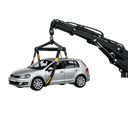
Loading & Unloading
Covers damage during the process of loading and unloading vehicles.
Winching Coverage
Covers damage to vehicles during winching and recovery operations.

Multiple Vehicle
Covers all vehicles on multi-car carriers and rollback flatbeds.
On-Hook Towing Insurance Requirements in Ohio
- Ohio weather can shift a routine tow into a harder loading and unloading exposure, so review how your policy fits snow, ice, wet pavement, and reduced-visibility dispatches.
- If your Ohio operation mixes apartment impounds, dealer transfers, and roadside calls, make sure your quote reflects that blended dispatch pattern rather than a single simplified description.
- Older urban lots, parking decks, gravel shoulders, and rural drop sites create different damage scenarios, so your application should describe where vehicles are actually picked up and released.
- A repair shop, roadside contractor, or salvage-related business using a rollback in Ohio can face the same on-hook dispute as a dedicated towing company once a customer vehicle is attached.
How Much Does On-Hook Towing Insurance Cost in Ohio?
For Ohio towing businesses, on-hook pricing usually turns on claim severity potential, meaning how expensive a single loss could be, and how predictable your assignments are. Underwriters want to know what kinds of vehicles you move, whether you use flatbeds, wheel-lifts, or both, how often you handle after-hours calls, and whether your drivers perform routine tows or more complex recoveries. A truck assigned to scheduled dealer transfers presents a different loss profile than one rotating through roadside dispatch, impounds, and accident scenes.
Your operating territory also matters. Dense urban routes, older parking structures, apartment complexes, and tight private lots can increase the chance of contact damage during hookup or unloading. Rural work can bring its own issues, including soft shoulders, unpaved surfaces, longer transport distances, and delayed inspections at drop-off. If your company serves multiple parts of Ohio, make sure the quote reflects where each truck actually works rather than averaging the whole fleet into one broad description.
Vehicle mix is another major pricing driver. The more often a claim could involve expensive parts, disputed pre-loss condition, or specialized handling, the more closely the file will be underwritten. Limits, deductibles, driver experience, claims history, storage practices, and whether you subcontract overflow work can all change the premium.
The most useful way to control cost is to present a clean, specific submission. Break out each truck, each service type, your normal radius, your documentation process, and any difference between scheduled transport and emergency dispatch. A vague application often gets priced for uncertainty, which can mean a higher premium before you ever take a loss. A detailed one gives the underwriter a reason to rate your operation on what you actually do.
Request a Quote Comparison
Enter your ZIP code to compare on-hook towing insurance rates from top carriers.
Business insurance starting at $25/mo
Who Needs On-Hook Towing Insurance?
In Ohio, this coverage deserves a close look for any business that takes possession of someone else's vehicle and moves it by tow truck, even if towing is only part of the operation. That includes companies built around roadside service, but it also includes operators whose work comes through repair shops, dealerships, auctions, fleets, property managers, finance companies, or municipal relationships. If a customer vehicle is attached to your truck and damage is alleged during that movement, your business may face a claim under this part of the policy.
The need becomes more obvious when your work changes by day or season. Some Ohio operators spend part of the week on routine disabled vehicle calls and the rest on impounds, dealer transfers, or transport between repair facilities. Others add winching or recovery when weather turns bad or when local demand spikes. If your dispatch board mixes predictable work with urgent calls, make sure the policy structure accounts for the higher-risk assignments rather than assuming the same setup works across all jobs.
This also matters for businesses that do not market themselves first as towing companies. A repair business with its own rollback, a salvage-related operation moving damaged units, or a roadside assistance contractor using a tow truck can still face the same allegation: the vehicle was fine before pickup and damaged after your driver took control. What matters is whether a vehicle was in your care during transport, not how your business is classified.
Ohio buyers should also pay attention to who requires proof of insurance and how quickly. Police rotation opportunities, property management contracts, dealer relationships, and commercial accounts often expect current certificates and clear descriptions of operations before they send work. If you are bidding for new accounts, review your towing mix before a contract review exposes a gap.
On-Hook Towing Insurance by City in Ohio
On-Hook Towing Insurance rates and coverage options can vary across Ohio. Select your city below for localized information:
How to Buy On-Hook Towing Insurance
Buying this coverage in Ohio goes faster when you organize the operation the way an underwriter will review it. Start with a current list of every truck, the equipment on each unit, and the jobs each one actually handles. Break out flatbeds from wheel-lifts if their assignments differ. From there, separate scheduled transport from emergency roadside, impounds, police work, recovery, and dealer or auction moves. If one truck does everything, say that clearly instead of leaving the underwriter to guess.
Next, build a short operating file for each service type. Include where pickups usually happen, where vehicles are delivered, whether drivers work after hours, how keys are handled, and what condition documentation is collected before hookup. If you use photos, dispatch notes, signed invoices, or release forms, mention that up front. Those details help the quote reflect your controls, not just your hazard.
You should also be ready to explain exceptions. If you occasionally move exotic cars, motorcycles, electric vehicles, or heavily damaged units, disclose that before binding. If you subcontract overflow work or accept jobs outside your normal radius, note that too. The goal is not to make the operation sound smaller than it is. The goal is to make it legible.
If you want to confirm licensing, consumer resources, or complaint information while comparing options, use the state's insurance regulator during your review. Then ask for a quote comparison that shows limits, deductibles, covered operations, and any restrictions in plain language. Before you buy, read the forms against real recent jobs from your dispatch history and make sure the policy matches the work you actually send out.
How to Save on On-Hook Towing Insurance
The strongest savings move for an Ohio towing business is to reduce uncertainty before the underwriter ever sees the account. Start with dispatch discipline. If your tickets clearly separate routine tows, impounds, dealer moves, and recovery work, your submission is easier to price accurately. If every job is described with the same vague wording, the account can be rated more cautiously because the exposure is harder to measure.
Driver documentation is the next place to focus. Require consistent pre-tow photos, written condition notes, pickup and drop-off timestamps, and a clear record of who released the vehicle. In a disputed damage claim, that file can matter as much as the physical handling itself. Better records may not erase every loss, but they can help prevent small allegations from becoming expensive, hard-to-defend claims that affect future pricing.
Equipment matching also helps. If a truck is routinely assigned work outside its ideal use, the chance of scraping, shifting, or loading damage rises. Review whether each unit is being used for the vehicles and call types it handles best. If not, reassigning jobs or tightening dispatch rules can improve both loss control and the story you present to the market.
You can also save by cleaning up the application process. Keep driver lists current, remove trucks no longer in service, and disclose any operational changes before renewal. If your business has moved toward more scheduled transport and less emergency work, say so with supporting detail. If you have added higher-hazard services, address them directly and ask how to structure the policy around them. The better outcome is a policy that fits the work closely enough to avoid paying for mismatched assumptions later.
Our Recommendation for Ohio
For Ohio operators, the smartest buying move is to test the policy against a real week of dispatches before renewal. Pull a sample that includes a routine disabled vehicle call, a tight-lot impound, a dealer transfer, and any weather-related recovery work you accepted. Then check whether each job fits the quoted operations without relying on assumptions.
Pay close attention to handoff points. Many towing disputes start because the vehicle condition was not documented at pickup, the destination changed after dispatch, or the customer and the property owner gave different instructions. If your drivers work after hours, use a process that records who authorized the tow, where the vehicle was left, and what condition was visible before movement.
If your fleet mixes flatbeds and wheel-lifts, do not let the application blur them together unless they truly perform the same work. Ohio accounts often become harder to underwrite when one description tries to cover every truck, every service, and every territory in one sentence. Specificity usually produces a more useful quote.
Finally, review your contracts and account requirements before you shop. A property manager, dealer, or municipal opportunity can expose a coverage mismatch quickly. It is easier to adjust limits, deductibles, and operational descriptions before a certificate request lands than after a new account is waiting on proof.
FAQ
Frequently Asked Questions
Both settings carry the same core risk: once a vehicle is loaded and moving, any scratch or dent can come back to your business. Dealer transfers often involve newer cars where even minor damage draws scrutiny. Private impounds frequently involve vehicles that already have wear or prior issues, which makes pre-tow documentation especially important. Review your policy terms against each service type before taking on mixed dispatch work.
Snow, ice, rain, and poor loading surfaces can trigger more underwriting questions because those conditions raise the likelihood of shifting, scraping, or contact during hookup. Be ready to explain how your drivers handle weather-related calls, what equipment adjustments they make, and whether you decline certain jobs in bad conditions.
Provide a truck list, service breakdown, operating territory, driver information, and examples of your pickup and drop-off documentation. The more specific you are, the more accurately the quote can reflect your actual towing mix instead of a broad assumption about the whole fleet.
If you move customer vehicles on a rollback and could be blamed for damage during the tow, the coverage question is essentially the same as for a dedicated towing company. What matters is whether a vehicle was in your care during transport, not how your business is classified.
Consumer and licensing resources from the state's insurance regulator can help you verify agent credentials, review complaint histories, and compare policy terms from a neutral source during the buying process.
Both equipment types can often go under one program, but the quote should still describe how each unit is used. If one truck handles scheduled transport and another handles impounds or recovery, say that clearly before binding so the policy matches the actual work.
Claims become difficult when there are no pre-tow photos, no written condition notes, unclear release instructions, or inconsistent dispatch records. Tight documentation at pickup and delivery can make a major difference once a customer disputes timing or cause.
On-hook towing insurance may cover damage to a customer vehicle while it is being loaded, attached, carried, winched, or unloaded by your tow truck, depending on the policy terms. Buyers should review collision, fire, theft, weather, and loading-related damage carefully.
Sources
- 1.Ohio Department of Insurance(Ohio's insurance regulator is the Ohio Department of Insurance.)
Updated July 16, 2026