

































Updated July 10, 2026

Recommended Coverage for Manufacturing
Manufacturing businesses face unique risks that require specific coverage types. Here are the policies most manufacturing operations need:

General Liability
Essential coverage for every business, protect against third-party bodily injury, property damage, and advertising claims.

Commercial Property
Safeguard your business property, equipment, and inventory against damage and loss.

Workers Compensation
Help cover your employees' medical expenses and lost wages for work-related injuries and illnesses.

Commercial Umbrella
Extend your liability limits beyond your primary policies for extra protection against catastrophic claims.

Inland Marine
Protect tools, equipment, and goods in transit or stored at locations away from your primary premises.

Commercial Auto
Protect your business vehicles and drivers with comprehensive commercial auto coverage.
Manufacturing Insurance Overview
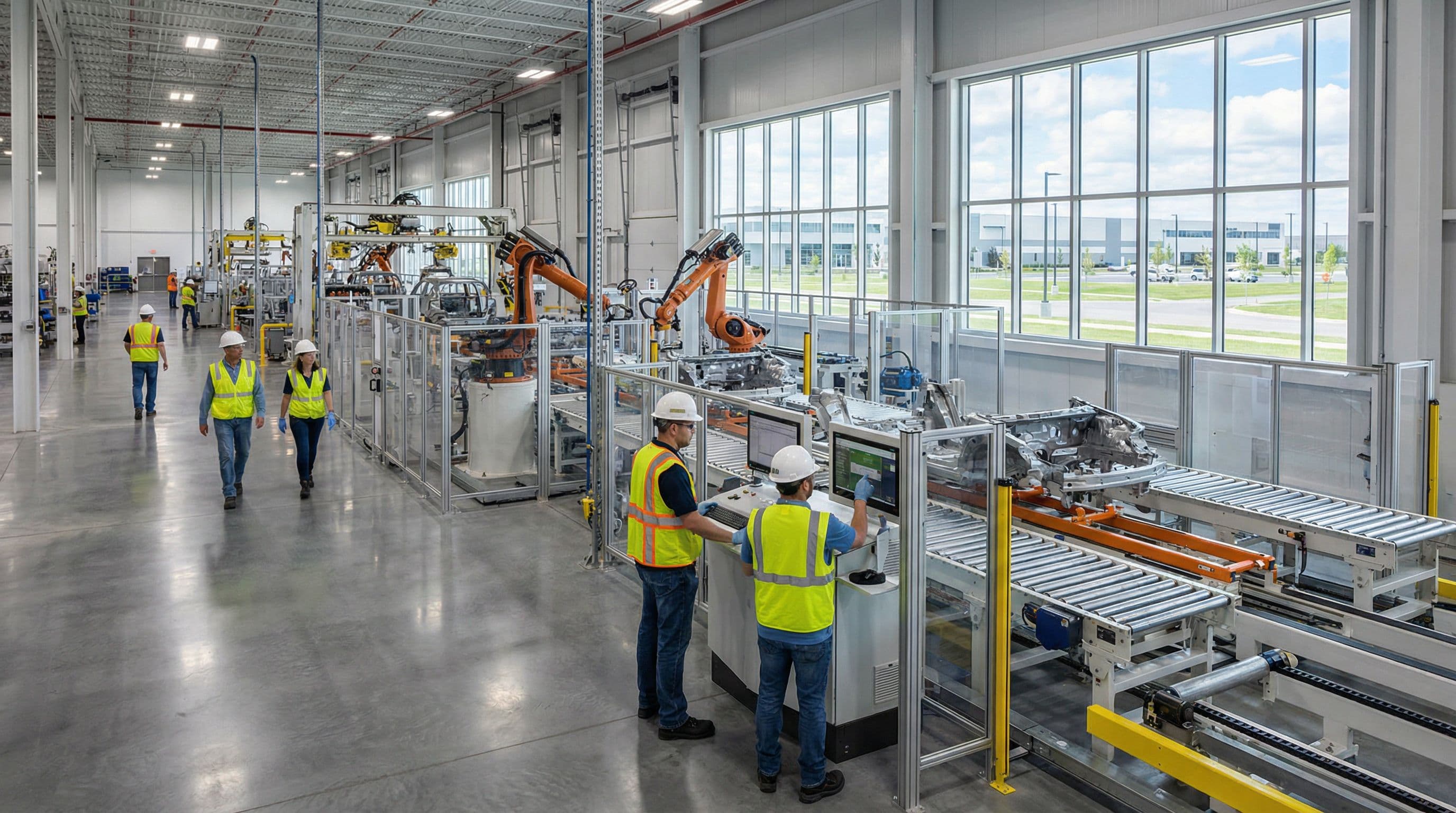
A missed shipment, a damaged die, or a forklift clipping finished inventory can turn a normal production day into a contract problem fast. Manufacturing insurance needs to follow how your operation actually runs: raw materials arriving at the dock, work in process moving between stations, finished goods staged for pickup, and employees working around presses, welders, conveyors, ovens, or CNC equipment. If your quote treats all of that like a generic business, the gaps show up after a loss or during a customer review of your certificates.
Manufacturing is not one exposure. A machine shop cutting short-run parts faces different loss patterns than a food processor, plastics molder, metal fabricator, cabinet maker, contract packager, or electronics assembler. Some manufacturers own a single facility and keep production under one roof. Others split operations between fabrication, finishing, warehousing, and delivery, or send tools, dies, and equipment to outside job sites. The insurance review should match that operating model, not just your NAICS description.
General liability insurance comes into play where your business meets the outside world: customer visits, vendor activity, loading areas, completed work allegations, and property damage or bodily injury claims tied to your operations. Commercial property insurance is the core protection for the physical plant, including buildings if you own them, production equipment, stock, and office contents, but the real work is in scheduling what matters most to output. A facility with specialized machinery, dust collection, refrigeration, or temperature-sensitive stock needs a more careful property discussion than a light assembly space with standard contents.
Workers compensation insurance is central because manufacturing floors combine repetitive motion, material handling, machine guarding issues, slip hazards, and maintenance work. Payroll classification and job duties matter. A shop with office staff, drivers, machinists, welders, and field installers should not be reviewed as if everyone does the same work. Commercial umbrella insurance becomes important once you supply larger customers, sign stronger contracts, run a vehicle fleet, or carry higher liability limits to satisfy landlord or vendor requirements.
Inland marine insurance matters whenever tools, mobile equipment, dies, molds, or products move away from the main premises. That can include equipment in transit between plants, property stored temporarily offsite, or specialized items that are hard to replace quickly. Commercial auto insurance should reflect who drives, what they haul, how often vehicles move between facilities or customers, and whether pickups, box trucks, or service vehicles are part of the operation.
The strongest manufacturing insurance review starts with your production flow. Map where materials come in, where bottlenecks sit, which machines are hardest to replace, what contracts require, and how goods leave your control. Then request a quote built around those details, so the policy set matches the way your plant actually produces revenue.
Why Manufacturing Businesses Need Insurance
Manufacturing losses rarely stay contained to one corner of the business. A property claim can stop output, delay shipments, strain customer relationships, and leave overhead running while production slows. If a key machine goes down or finished goods are damaged before delivery, the immediate issue is not just repair cost. It is whether you can keep orders moving, protect margins, and avoid breaching supply commitments.
Liability exposures also develop in several directions at once. Visitors, vendors, and truck drivers move through yards, docks, and production areas. Products leave your control and are used, installed, or incorporated into someone else’s work. If a customer alleges your operation caused damage or injury, or says a completed product created a downstream problem, you need liability coverage reviewed with your actual manufacturing process in mind.
Property away from the main premises creates another common blind spot. Many manufacturers assume property exposure ends at the building, even though tools, dies, samples, and finished goods often move between plants, warehouses, installers, or customers. Inland marine insurance deserves attention if your operation relies on mobile equipment or property that spends meaningful time away from the scheduled premises.
Growth raises the stakes. A new lease, a larger customer, private-label production, or added delivery routes tends to bring tighter insurance requirements and higher expectations for certificates and limits. Before you sign the next contract or expand the next line, review your general liability insurance, commercial property insurance, workers compensation insurance, commercial umbrella insurance, inland marine insurance, and commercial auto insurance against the way your operation is changing, then request quotes based on those details.
Key Risks for Manufacturing Businesses
Each of these risks can lead to claims that cost thousands, or more. Make sure your policy addresses every one:
- Product liability and recall costs
- Workplace injuries and safety violations
- Equipment breakdown
- Supply chain disruption
- Environmental contamination
- Property damage from fire or explosion
What Drives Manufacturing Insurance Costs
Manufacturing insurance costs depend first on what you make and how you make it. A light assembly operation with limited foot traffic and standard contents is rated differently from a plant with heavy fabrication, heat-producing processes, specialized machinery, or regular product delivery. The more complex the production environment, the more closely underwriters look at injury potential, fire load, equipment values, and the chance that one loss interrupts multiple parts of the operation.
Payroll drives workers compensation insurance because job duties on the floor are not all priced the same way. Office staff, supervisors, drivers, machinists, welders, maintenance employees, and installers can affect the premium differently. Clear role descriptions help keep the quote aligned with actual exposure.
For commercial property insurance, building characteristics, occupancy, protection features, and the value of machinery, stock, and raw materials all matter. Cost also changes based on whether your most important equipment is standard and replaceable or specialized with long lead times. If one machine is a production bottleneck, mention it early in the quote process.
General liability insurance and commercial umbrella insurance are shaped by your operations mix, customer contracts, delivery activity, and the limits you choose. If you manufacture components that become part of another company’s product, or if customers require higher limits before work begins, that usually changes the structure of the quote.
Inland marine insurance and commercial auto insurance depend on how often property and vehicles leave the premises, what is being transported, who is driving, and where those trips occur. Claims history also matters across the full account. To get a useful quote, bring current loss runs, payroll estimates, vehicle details, equipment schedules, and a clear description of your production process.
Manufacturing businesses typically carry several separately priced policies. The ranges below are typical figures nationally for each line, except workers compensation, which is rated per $100 of payroll; a quote prices each one against your own operations.
| Coverage | Typical range | What moves your price |
|---|---|---|
| General Liability Insurance | $130 - $550 per month | Industry and risk classification, annual revenue, number of employees |
| Commercial Property Insurance | $200 - $875 per month | Building value and construction type, roof age and condition, fire protection class |
| Workers Compensation Insurance | $0.75 - $2.74 per $100 of payroll | Employee classification codes, total annual payroll, experience modification rate |
| Commercial Umbrella Insurance | $80 - $360 per month | Umbrella limit requested, limits carried on the underlying policies, loss history on those underlying policies |
| Inland Marine Insurance | $55 - $290 per month | Total insured value of the scheduled property, type and age of the equipment, where it is stored and how far it travels |
| Commercial Auto Insurance | $190 - $725 per month | Fleet size and vehicle types, driver records and experience, coverage limits and deductibles |
Prices shown are general estimates, not guaranteed rates or quotes. Your actual premium will depend on the insurer, coverage selected, business details, location, claims history, and other underwriting factors. Learn about our pricing methodology.
Insurance Tips for Manufacturing Business Owners
Separate your payroll and job descriptions by actual floor duties, because blending office, driving, fabrication, and installation roles can distort a workers compensation insurance review.
Build your commercial property insurance schedule around production bottlenecks, not just total values, so the machines and stock that keep orders moving receive the closest attention.
Review customer and landlord contract language before renewal, because required liability limits and certificate wording often drive whether commercial umbrella insurance should be added or increased.
List tools, dies, molds, and mobile equipment that travel between facilities or job sites, since inland marine insurance is often where off-premises property exposures are addressed.
Match commercial auto insurance to real vehicle use, including pickups, box trucks, and employee driving patterns, rather than assuming occasional deliveries fit a basic fleet profile.
Walk the production flow during your insurance review, from receiving through fabrication, finishing, storage, and shipping, so coverage discussions follow where losses can actually interrupt revenue.
Get Manufacturing Insurance
Enter your ZIP code to compare manufacturing insurance rates from top carriers.
Business insurance starting at $25/mo
Manufacturing Business Types
Find insurance tailored to your specific manufacturing business. Select your business type for coverage recommendations, pricing, and quotes:

Machine Shop Insurance
A machine shop insurance quote helps you compare coverage for CNC work, fabrication, equipment breakdown, and completed-product claims. It’s built for shops that need a fast, tailored path to coverage.

Food Manufacturer Insurance
Get a food manufacturer insurance quote built around contamination events, product recall costs, and production interruptions. Compare coverage for your facility, products, and contracts.

Woodworking Shop Insurance
Get a woodworking shop insurance quote built around fire hazards, heavy equipment, client projects, and shop equipment. Compare coverage for your shop, tools, and customer work.

Printing Company Insurance
Get printing business insurance built for presses, finishing equipment, and client-facing operations. Request a quote to review coverage for equipment failures, premises liability, and job errors.

Textile Manufacturer Insurance
Get a textile manufacturer insurance quote built around looms, dyeing lines, finishing equipment, and the day-to-day risks of fabric and garment production. Coverage can be shaped to your operation, location, and contract needs.

Electronics Manufacturer Insurance
Compare electronics manufacturer insurance options for defect claims, facility risks, and cyber exposures across production and distribution. Request a quote built around how your operation actually runs.

Plastics Manufacturer Insurance
Get a plastics manufacturer insurance quote built around polymer production, chemical exposure, and downstream product claims. Compare coverage options that fit your operation.
FAQ
Manufacturing Insurance FAQ
Start with the pairing that carries most plants: commercial property for the building, machinery, and stock, and general liability for everything that touches the outside world. Workers compensation applies once you have employees, and auto, inland marine, and umbrella coverage enter the program as vehicles, mobile equipment, and larger contracts do.
Premiums are set from payroll and class codes, so the rate for a machinist differs from the rate for a shipping clerk or an estimator. Underwriters look at who operates machinery, who handles material, and who drives, which is why accurate role descriptions matter before you bind coverage.
Only when property leaves the premises, but for many operations that is more common than it sounds. Dies loaned to a vendor, samples in transit, and equipment moving between plants all sit outside the reach of a standard fixed-location property policy, so schedule them deliberately.
Usually because a customer contract, landlord, or lender demands higher limits than the base liability policy carries. It also earns its keep where one loss could run past primary limits, such as a component defect that shuts down another company’s production line.
It can, subject to the policy terms and how each item is scheduled. The practical work is in the values: when bottleneck machines, raw stock, and finished goods are described accurately, a claim settles against reality instead of against an old estimate.
On what you make, how you make it, and what the loss history says. Payroll, property values, vehicle use, and requested limits set the frame, and a detailed submission with a clear process description gets sharper pricing than a generic application.
Yes, a short delivery radius does not remove the exposure. Vehicle type, cargo, driver records, and trip frequency still shape the risk, and a box truck making daily runs near the plant sees plenty of traffic even if it never crosses a county line.
Payroll by role, current loss runs, vehicle details, equipment and inventory values, lease or contract insurance requirements, and a plain description of your production flow. That package lets the quote reflect how the plant actually runs.